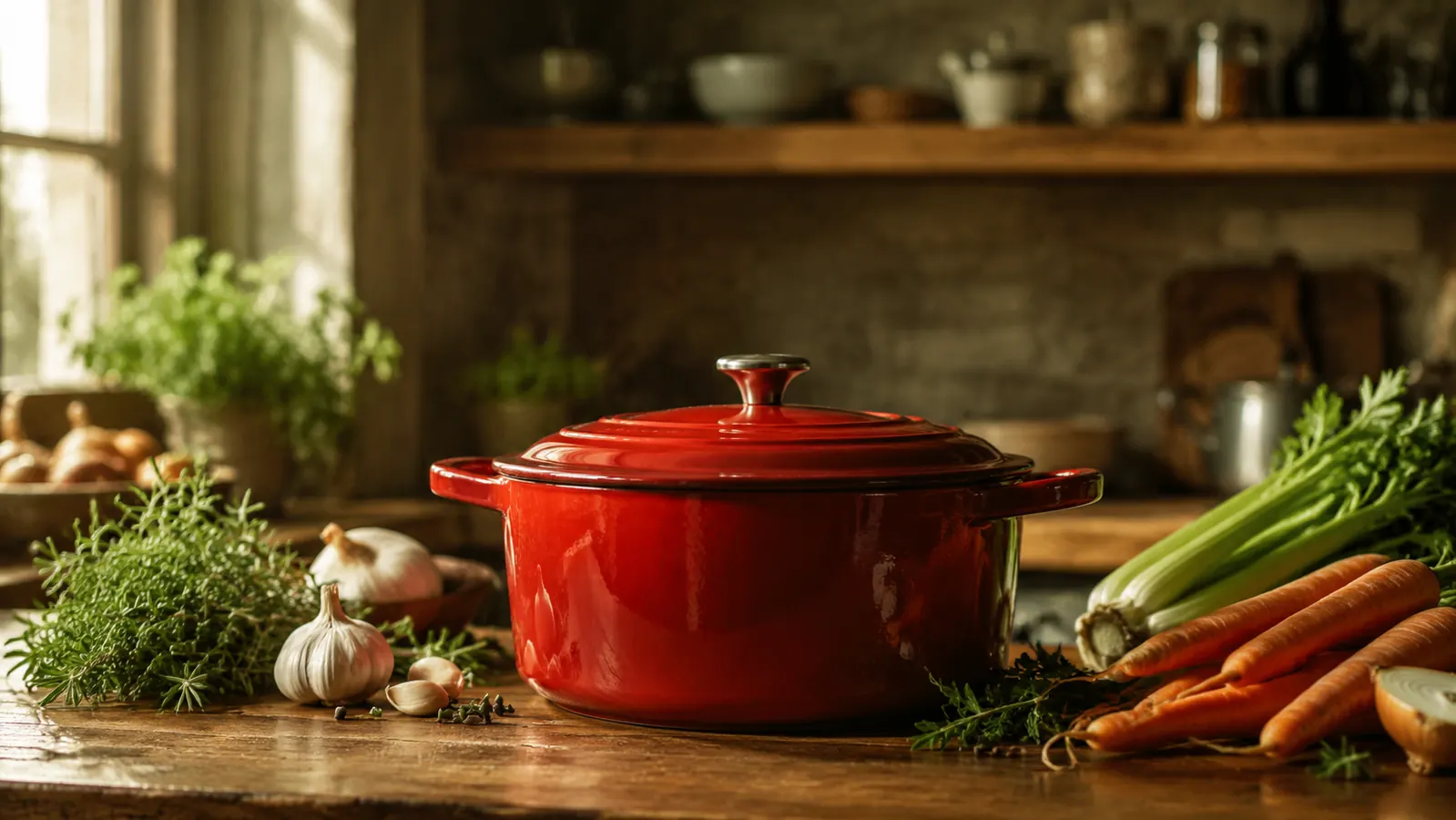
In twenty-plus years as a stroke coordinator, I have had the same conversation more times than I can count. A patient gets discharged. The cardiologist says "cut your sodium" and "eat more whole foods." The family goes home, stares at the kitchen, and does not know where to start. The problem is usually not motivation. It is that no one told them which tool makes the new way of eating actually workable every day. A heavy-bottomed, enameled cast iron Dutch oven is that tool. Not because it is trendy. Because of the specific cooking mechanisms it enables, mechanisms that align almost perfectly with what a sodium-restricted, heart-smart diet requires.
I use the Lodge 6-quart enameled cast iron Dutch oven at home. My patients' families use it. And I am going to walk you through exactly why it earns a permanent spot on a heart-healthy stovetop, one reason at a time.
Tired of heart-healthy food that tastes like cardboard? The Lodge Dutch oven fixes that.
Slow braising pulls deep, layered flavor out of vegetables, beans, and lean proteins without a grain of added salt. It is the one kitchen tool I recommend to every family on my stroke floor.
Amazon Check Today's Price on Amazon →It Extracts Flavor Without Sodium
Salt is a flavor amplifier. When you remove it, most cooking methods leave food tasting flat. Slow braising in a sealed Dutch oven does something different: the moisture-sealing lid traps aromatics and builds internal steam pressure that drives flavor compounds out of herbs, garlic, onion, and vegetables and into the broth. You get depth without the sodium. In a wide skillet or thin pot, that steam escapes and takes the flavor with it. The Lodge's tight-fitting lid changes the equation entirely.
It Makes Low-Fat Braising Practical
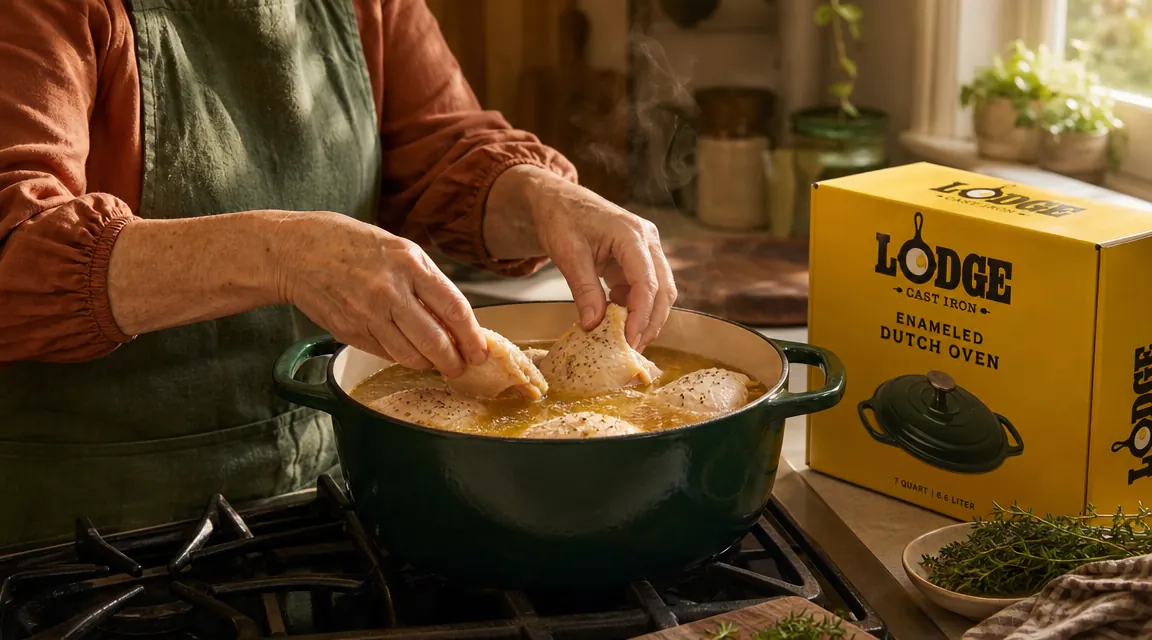
Saturated fat drives up LDL cholesterol, which is directly linked to atherosclerosis and stroke risk. The challenge is that fat carries flavor, so low-fat cooking often tastes punishing. Braising lean proteins like skinless chicken thighs, pork tenderloin, or dried beans in liquid inside a Dutch oven means the meat stays moist through collagen transfer and steam rather than through fat. You get a tender result without coating the protein in butter or oil. This is the single biggest cooking-method shift my post-stroke patients can make.
It Protects Potassium-Rich Vegetables During Cooking
Potassium counteracts the blood-pressure-raising effects of sodium. It relaxes blood vessel walls and helps your kidneys excrete excess sodium. The problem is that boiling vegetables in a large pot of water leaches potassium (and other water-soluble nutrients) right out of them and down the drain. Braising in a Dutch oven uses far less liquid, so the potassium stays in the food and the cooking broth, which you then eat as part of the stew or soup. Leafy greens, sweet potatoes, tomatoes, and beans all retain more of their mineral content this way.
It Enables Batch Cooking for Portion Control
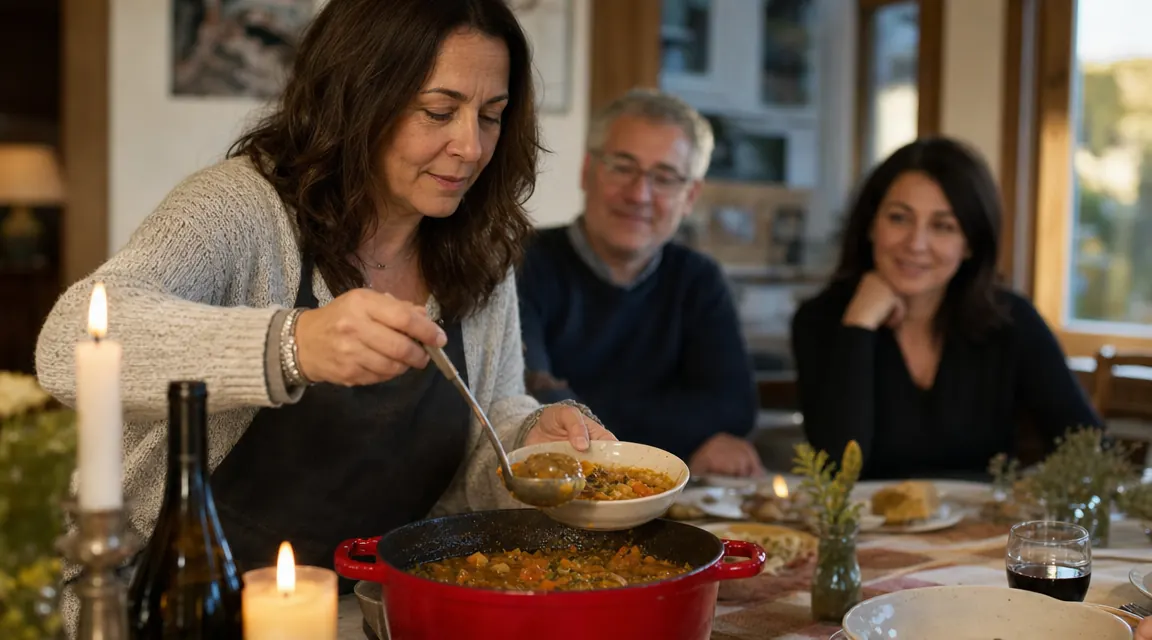
Portion control matters for blood pressure and cardiac risk, but measuring every meal from scratch is exhausting and unsustainable. A 6-quart Dutch oven holds enough soup, stew, or braise for four to six servings. Cook once on Sunday. Portion into containers. You now have measured, known-sodium meals ready for the week without the daily effort. My patients who batch cook have a dramatically easier time staying inside their 1,500mg daily sodium budget than those who cook one meal at a time.
The families who batch cook in a Dutch oven on Sunday are the ones who actually hit their sodium targets by Friday. The ones who try to cook low-sodium from scratch every night burn out by Tuesday.
It Handles Bone Broth for Collagen Without Added Salt
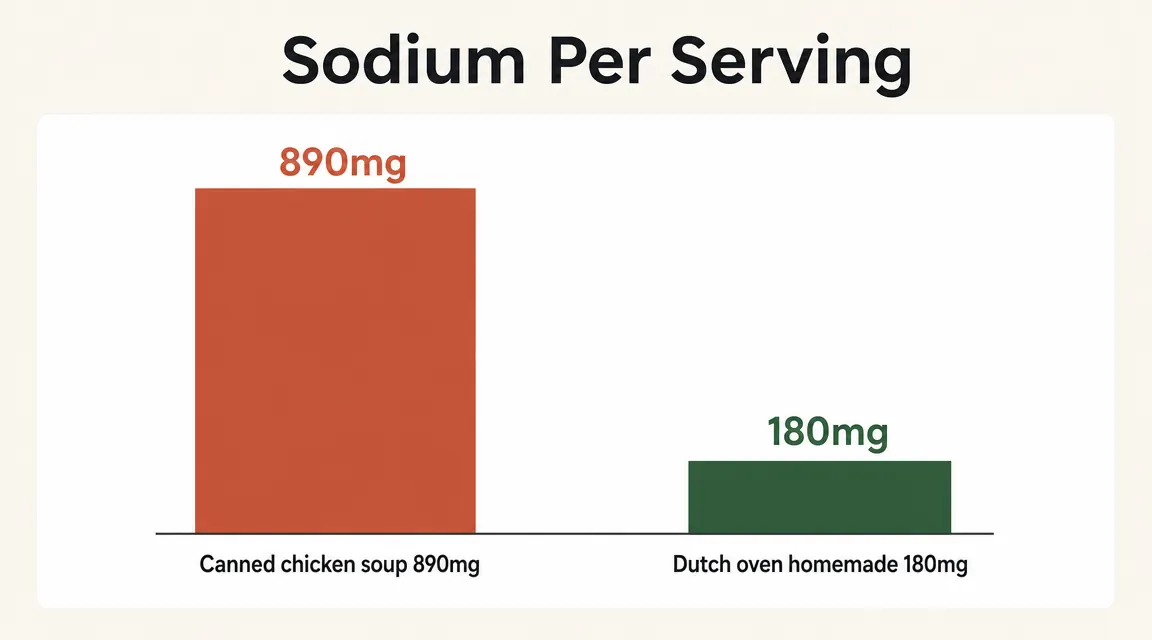
Collagen from slow-cooked bones and connective tissue breaks down into gelatin during long braises, which gives homemade broth its body and richness. Commercially prepared stocks, even the "low-sodium" versions, often contain 140 to 570mg of sodium per cup, and most recipes call for multiple cups. When you make your own broth in a Dutch oven from raw bones, you control every milligram. A proper no-salt bone broth can have fewer than 10mg of sodium per cup, while delivering deep, satisfying flavor that makes the absence of salt nearly unnoticeable.
It Transitions Dry Beans Into a Staple
Canned beans average 300 to 400mg of sodium per half-cup serving, even after rinsing. Dry beans cooked from scratch in a Dutch oven contain virtually no sodium. Beans are one of the most powerful foods for cardiovascular health: high in soluble fiber (which lowers LDL cholesterol), high in potassium, high in plant protein. A Dutch oven makes cooking dried beans straightforward because it distributes heat so evenly that beans simmer gently without scorching, even over low heat for two or three hours. Once you have a pot of cooked beans in the fridge, you have a week of heart-healthy protein ready to go.
It Survives the Oven as Well as the Stovetop
Many heart-healthy recipes involve finishing a braise in the oven, where lower, steadier heat prevents the sugars in onions and tomatoes from scorching and turns connective tissue into tender collagen without burning the bottom of the pot. Cast iron handles oven temperatures up to 500 degrees Fahrenheit, which means you can sear a piece of salmon on the stovetop and slide the entire pot into the oven to finish cooking in two minutes flat. One pan, one cleanup, and no reason to reach for the high-sodium sauces you might use to rescue food that did not cook evenly.
It Reduces the Temptation to Order Takeout
Restaurant food and takeout are the primary drivers of sodium overconsumption for most Americans. The average restaurant meal contains 1,500mg of sodium or more, which is already a full day's allowance on a cardiac-restricted diet. The main reason my patients order takeout is that cooking after a long day feels like too much work. Batch cooking in a Dutch oven on the weekend removes that friction. When dinner is already made and just needs reheating, the pull of a delivery app gets weaker. A Dutch oven sitting on the counter full of Tuesday's soup is the single best defense against Thursday's pizza order.
It Lets Herbs Do the Flavor Work
Fresh and dried herbs contain zero sodium and deliver compounds that have documented cardiovascular benefits of their own. Garlic contains allicin, which has mild blood-pressure-lowering effects. Rosemary contains rosmarinic acid, an antioxidant. Turmeric contains curcumin, which has anti-inflammatory properties. When you slow-braise with herbs in a sealed Dutch oven, those volatile aromatic compounds infuse throughout the liquid and the protein over two or three hours in a way that a quick saute can never achieve. The result is food so deeply flavored that patients genuinely stop missing the salt. That is not a small thing.
It Lasts Long Enough to Become a Habit
Behavior change requires repetition. Repetition requires a tool that does not fail on you. The Lodge enameled cast iron Dutch oven has 38,857 Amazon reviews averaging 4.7 stars. That is not hype. It is the result of a piece of cookware that survives daily use for decades, does not react with acidic foods the way bare cast iron can, and cleans easily enough that people actually use it again the next day. The highest-risk period for dietary backsliding is the first three months after a cardiac event. If the pot is heavy and inconvenient and hard to clean, it goes in the back of the cabinet. If it is on the stovetop ready to go, the habit has a chance.
What I'd Skip
I am not going to tell you to buy a $400 French enamelware pot. The Lodge does everything a post-stroke kitchen needs at a fraction of the price. I also would not buy a smaller version. The 6-quart is the minimum size for batch cooking that actually reduces your weekly effort. A 4-quart pot means smaller batches, more trips to the stove, and less payoff. The one thing to watch: the Lodge lid knob can get hot in a high oven, so keep a silicone potholder nearby. That is the entirety of the learning curve.
If you want to go deeper on the specific techniques that make this pot earn its keep in a low-sodium kitchen, I have written a full step-by-step guide on how to cook low-sodium soups and stews with a Dutch oven. And if you want my complete take on the Lodge after fourteen months of daily use cooking for a stroke survivor, start with the Lodge Dutch oven long-term review.
A cardiologist can prescribe a sodium limit. A Dutch oven is what makes it possible to actually live inside that limit without feeling like you are being punished at every meal.
If you only buy one cooking tool for a heart-healthy kitchen, make it this one.
The Lodge 6-quart enameled Dutch oven is the tool that ties together every low-sodium cooking strategy on this site. Batch cook. Braise. Build flavor without salt. One pan, one habit, one meaningful step toward the numbers your cardiologist is looking for.
Amazon Check Today's Price on Amazon →