
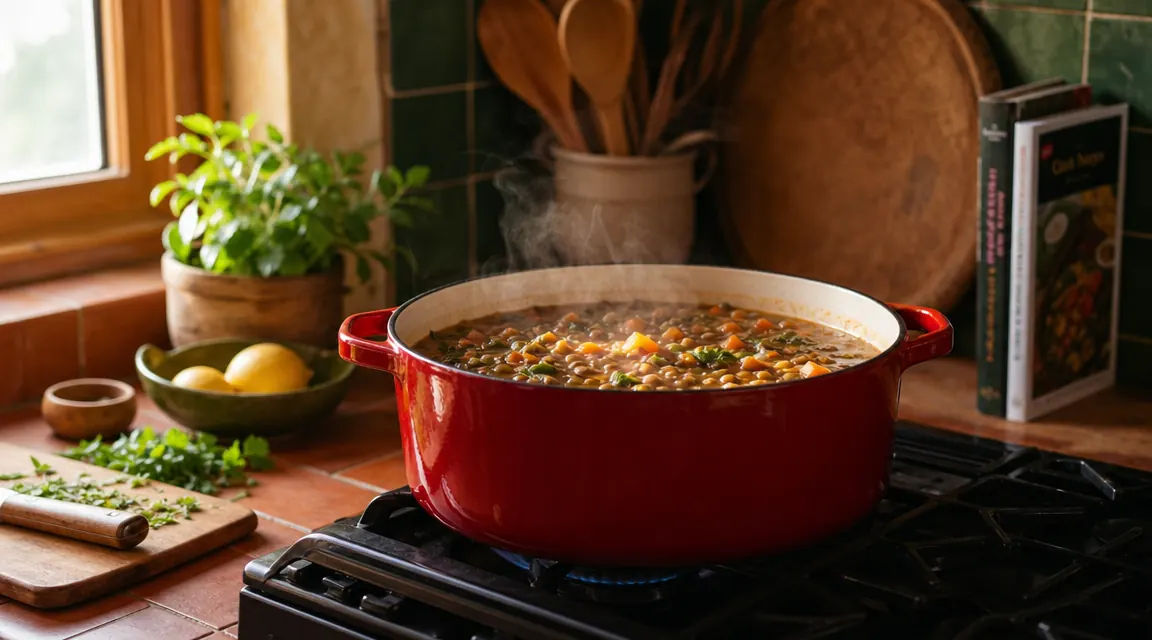
I have worked as a stroke coordinator for 23 years. I have sat with hundreds of families on the day their person came in with a stroke, and I have been there weeks later when the discharge instructions land on the table and the caregiver looks at me like I just handed them a foreign language. The DASH diet. The 1,500 milligrams of sodium limit. The low-saturated-fat guidance. I know what those words feel like when you are scared and exhausted and you still have to go home and make dinner. That is why, when I tell someone that a piece of cookware genuinely helps, I mean it. The Lodge 6-quart Essential Enamel Cast Iron Dutch Oven is the pot I have used in my own kitchen for 14 months now, every week, often multiple times a week, and I want to tell you exactly what I think about it.
Before I bought it, I had already been telling patients and their families for years that slow-braising lean proteins and vegetables in a heavy pot is one of the best cooking methods for a heart-healthy kitchen. The reason is simple: when you build flavor through aromatics, long simmer times, and layered herbs instead of salt and fat, you can hit sodium targets without serving food that tastes like punishment. But I was recommending this method without having tested a mid-price enameled Dutch oven myself. The Lodge is around $90 at current prices, which puts it in a category most people can actually afford. So I bought one. Here is what 14 months of honest use looks like.
The Quick Verdict
A genuinely capable, durable pot that earns its place in a heart-healthy kitchen, with one real limitation around weight that caregivers should think through before buying.
Amazon Check Today's Price →If you are cooking for someone who needs to cut sodium, this pot does the heavy lifting.
The Lodge 6-quart enameled Dutch oven is what I reach for every Sunday when I make a week's worth of low-sodium soups, stews, and braised vegetables. Over 38,000 reviewers agree it holds up. Check today's price on Amazon.
Amazon Check Today's Price on Amazon →How I Have Used It: 14 Months, Weekly
Every Sunday I do a batch cook. It almost always starts in the Dutch oven. A pot of lentil soup that carries me through four lunches. A slow-braised chicken thigh with white beans and rosemary that I portion and freeze. A root vegetable stew with no added salt at all, just long-cooked onions, garlic sweated in olive oil, bay leaves, and a splash of low-sodium stock. I also use it for bread, which surprised me. The moisture-trapping lid creates steam in the oven that gives a bakery-quality crust without any special equipment. If you are on a heart-healthy diet, whole grain bread you bake at home with controlled ingredients is a much better option than most store varieties, which can have 150 milligrams of sodium in a single slice.
I have also used it on a camping trip, on my induction cooktop, in a 450-degree oven, and to reheat leftovers on a low flame on the stovetop. The one thing I have not done is put it in the dishwasher, because the manufacturer says hand wash only for the enamel finish, and I follow that instruction. In 14 months I have seen no cracking, no chipping of the interior enamel, and no rust, which is what I was most worried about with cast iron at this price point.
Why a Dutch Oven Is a Heart-Healthy Cooking Method, Not Just a Pot
I want to explain the mechanism here because it matters. When sodium intake is too high, the body retains more water to dilute the concentration of sodium in the blood. That extra fluid volume raises blood pressure, which strains the vessels that were already stressed by the event. The DASH diet's 1,500 milligram daily target exists for exactly this reason. The challenge is not knowing the limit. Most people who come through my unit know they need to cut salt. The challenge is cooking food that anyone actually wants to eat at that limit.
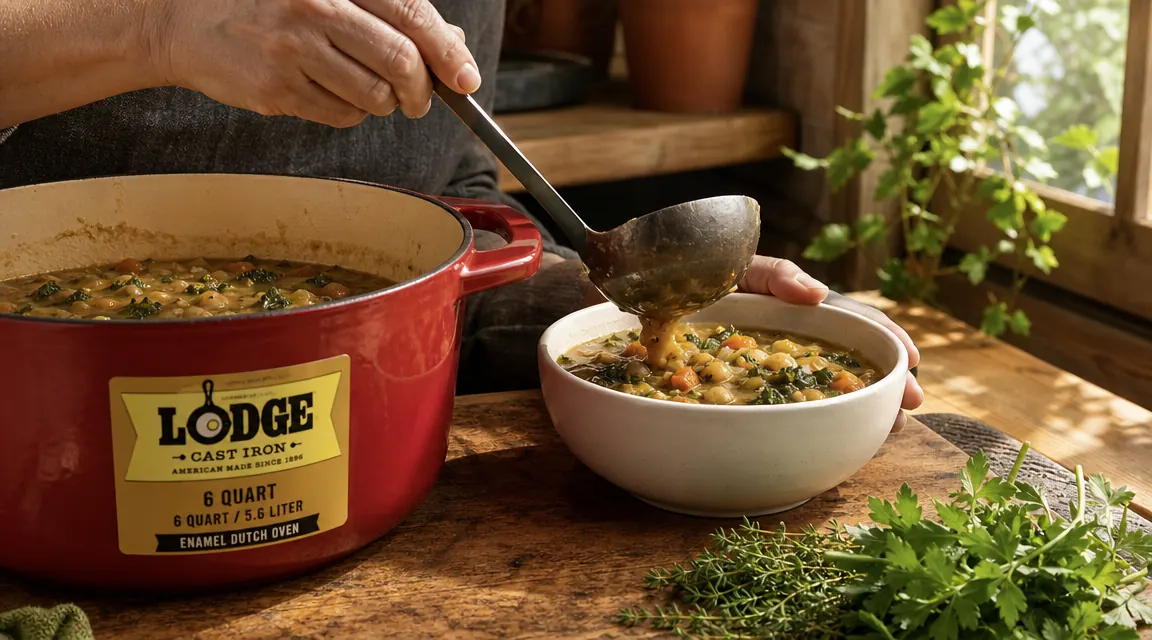
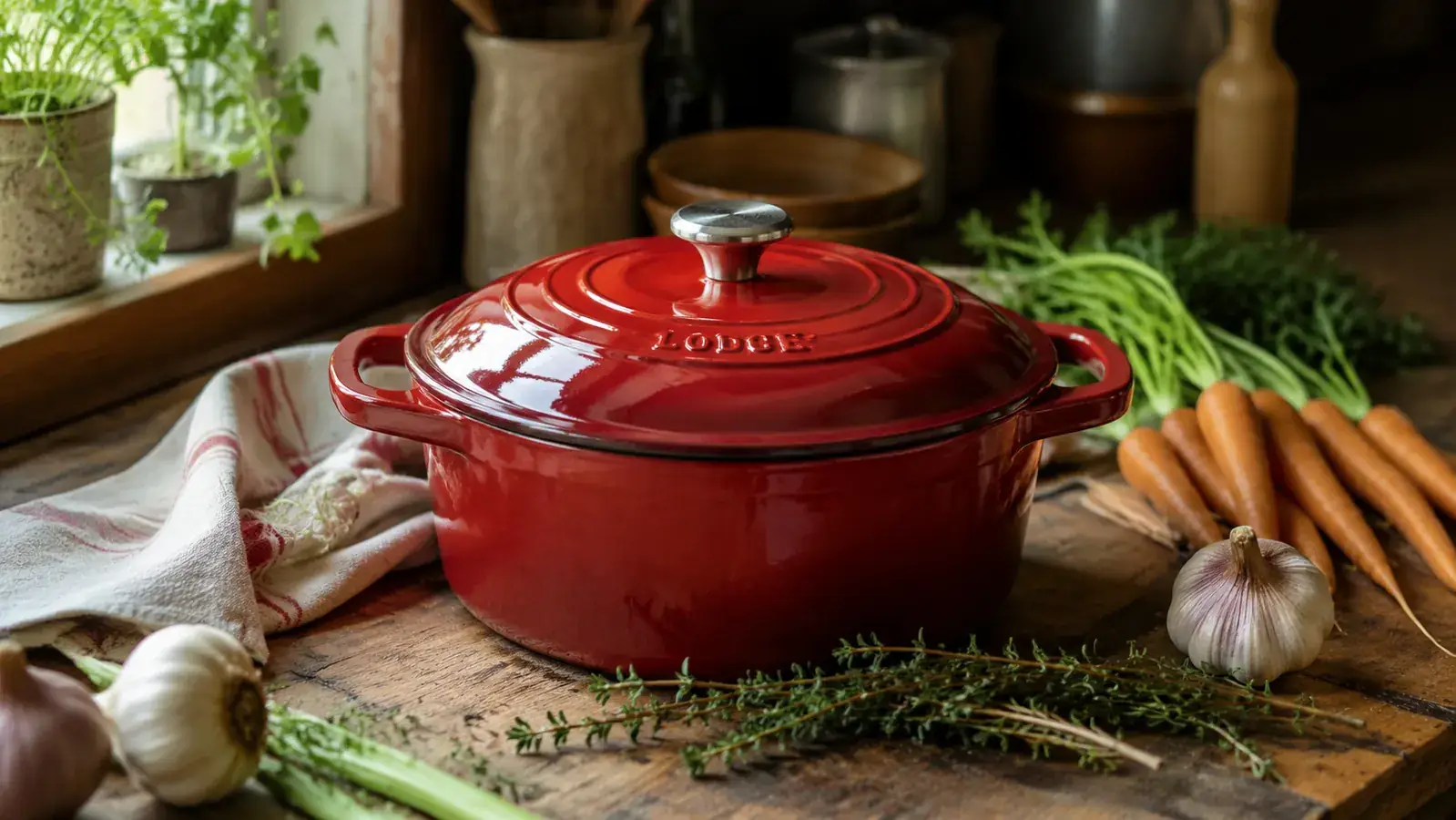
A Dutch oven helps you do that because of how it handles heat and moisture. The heavy enameled cast iron holds an even, steady temperature that allows the Maillard reaction to develop deep flavor in aromatics before you add any liquid. When you sweat onions and garlic for ten minutes in a little olive oil at a steady medium heat before adding anything else, you are building flavor compounds that do not require salt to taste like something. The tight-fitting lid then traps the moisture from the vegetables and proteins you add, which concentrates flavors further. You end up with food that tastes full and satisfying at 180 milligrams of sodium per serving because the cooking process itself has done the flavor work that salt normally shortcuts.
The problem most people have is not knowing the sodium limit. It is cooking food that anyone actually wants to eat at that limit. That is the problem this pot solves.
What the Lodge Does Well
Heat retention is the first thing I noticed. I can bring a soup to a boil on medium-high, drop the flame to low, and the pot holds the simmer without me having to babysit it. For a long-cooked stew where you want to keep things just below a rolling boil for ninety minutes, this is exactly what you want. Cheaper pots with thinner walls develop hot spots and you get unevenly cooked food or scorching at the bottom.
The enamel interior is the second thing that matters for this audience specifically. Bare cast iron is reactive with acidic foods. Tomatoes, lemon juice, wine, citrus, all of these can leach iron into food cooked in bare cast iron, and while that is not necessarily harmful, it can affect flavor and can be a concern for anyone on specific medical protocols. The enamel coating eliminates that issue entirely. You can braise tomatoes or make a citrus-braised chicken without any worry.
The lid fit is tight enough that I consistently get moisture condensation dripping back into the pot rather than escaping, which matters for low-sodium cooking. When you are not salting generously and are relying on the liquid in the pot to carry flavor, you want every drop of that liquid back in the braise. A loose lid loses moisture and concentrates salt without you intending to.
Cleanup is straightforward. Nothing sticks to the enamel if you deglaze properly, and even when I forget and something does catch slightly on the bottom, warm water and a few minutes of soaking handles it. No scrubbing with steel wool, no re-seasoning, no special treatment.
The Real Tradeoffs: What to Think Through Before You Buy
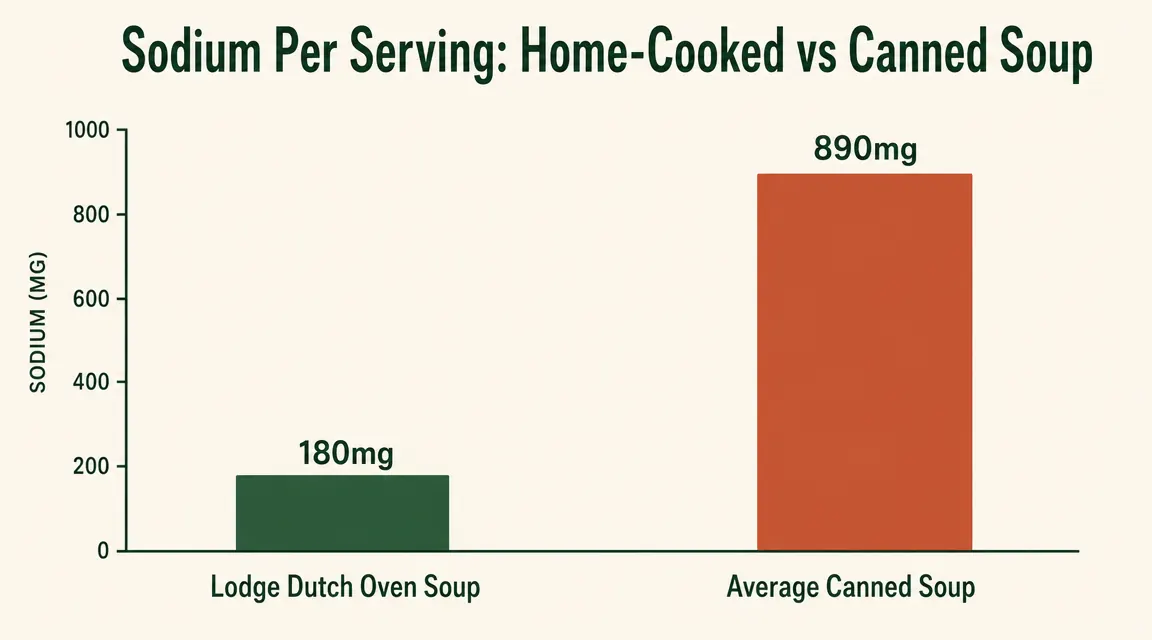
This pot is heavy. The Lodge 6-quart weighs approximately 14 pounds empty. When you fill it with a full batch of soup or stew, you are lifting 20 to 25 pounds from the stovetop to the counter or from the oven to the trivet. For many people reading this, that is not a concern. But if you are cooking for or with a stroke survivor who has hemiparesis, weakness on one side, or any grip strength reduction, please think about this carefully. I would not recommend this pot for one-handed transfers or for anyone with significant upper extremity weakness. For a caregiver who will be doing all the heavy lifting, it is manageable. For a stroke survivor cooking independently with physical limitations, a lighter option may be safer.
The second tradeoff is that this is not a nonstick surface. It performs like a well-seasoned cast iron, meaning it becomes more nonstick with use, but it is not a PTFE-coated pan. If you are making delicate fish or eggs in it, you need to use a little fat and manage your heat. For soups, stews, braises, and bread, this is a non-issue. For everyday frying or sauteing without fat, a different tool is better.
Storage also takes some consideration. This is not a pot you slide into a kitchen drawer. It needs its own shelf, and the lid needs to sit securely. In a small kitchen, that is worth thinking about before you buy a pot this large.
Compared to What I Used Before
Before this Lodge, I was using a stainless stock pot for soups and a separate heavy-bottomed saute pan for building flavor. The workflow was fine but meant two pans, two burners, and more cleanup. The Dutch oven consolidates that into one vessel. I build the flavor base directly in the pot, deglaze, add liquid and ingredients, lid it, and let it go. The fewer steps in a cooking process, the more likely someone is to actually do it consistently. Consistency is what changes health outcomes, not perfection on one meal.
I have also used a Le Creuset Dutch oven at a friend's house over the years. The Lodge performs comparably for everything I do in a heart-healthy kitchen. The Le Creuset interior enamel is smoother and lighter in color, which makes it easier to see fond (the browned bits) forming at the bottom. The Lodge interior is darker. For practical cooking purposes this has not mattered to me, but some cooks prefer the lighter interior for visual feedback. If you want a full breakdown of that comparison, I wrote about it in detail in the Lodge vs Le Creuset comparison.
What I Liked
- Even, steady heat retention that builds real flavor without relying on salt
- Enamel interior is non-reactive, so acidic foods like tomatoes and citrus are no issue
- Tight-fitting lid locks in moisture, which is essential for low-sodium braising
- Works on all cooktops including induction, and goes from stovetop to oven safely
- Durable at this price point: no chipping, no rust after 14 months of heavy weekly use
- Cleans easily with warm water and mild soap, no re-seasoning required
Where It Falls Short
- Heavy at 14 lbs empty, a real consideration for anyone with grip or strength limitations
- Dark interior enamel makes it slightly harder to monitor fond development compared to lighter-colored competitors
- Not a nonstick surface, requires some fat for delicate proteins
- Takes up significant storage space, not a fit for very small kitchens
How It Fits Into Low-Sodium Cooking Specifically
The DASH diet guideline for most stroke survivors is 1,500 milligrams of sodium per day total. The average American eats around 3,400 milligrams. The gap is significant and most of it comes from processed and restaurant food, not from the salt shaker on the table. When you cook from scratch in a Dutch oven, you control every milligram that goes into the pot. A bowl of canned soup can carry 800 to 1,000 milligrams of sodium in a single serving. A batch of the same soup made at home with low-sodium broth, fresh vegetables, and dried herbs comes in around 150 to 200 milligrams per serving. That is the difference this pot enables, and it is not a small difference.
If you want step-by-step guidance on how to actually build low-sodium soups and stews in a Dutch oven, including how to layer herbs to replace salt, I have a full guide in how to cook low-sodium soups and stews with a Dutch oven. The pot is only the tool. The technique is what makes the food good.
Who This Is For
This pot is a good fit for a caregiver cooking weekly batches of heart-healthy soups, stews, braises, or whole grain bread for a stroke survivor or anyone on a DASH or Mediterranean diet. It is also a fit for someone 50 or older who is making their own dietary shift and wants a durable, multi-use pot that will handle the cooking methods that work best for this pattern of eating. If you are cooking three to four nights a week from scratch and your goal is to lower sodium and saturated fat without giving up satisfying food, this pot is built for that.
Who Should Skip It
If you or the person you are cooking for has significant upper body weakness or one-sided motor limitations from a stroke, think carefully before buying a pot this heavy. If your kitchen is very small and storage is already tight, the size may be impractical. If your cooking is mostly quick weeknight sautes and you rarely make soups or braises, a lighter saute pan will serve you better. And if cost is a concern and you already own a large heavy-bottomed pot that holds a good simmer, your existing pot may do the job well enough. The Lodge is not magic. It is a reliable, well-priced tool for a specific style of cooking.
Fourteen months in, this is still the first pot I reach for on Sunday cooking days.
If you are batch-cooking low-sodium soups and stews every week, the Lodge 6-quart enameled Dutch oven is worth the shelf space and the price. It is built for exactly this kind of cooking. Check what it is selling for today before prices change.
Amazon Check Today's Price on Amazon →