
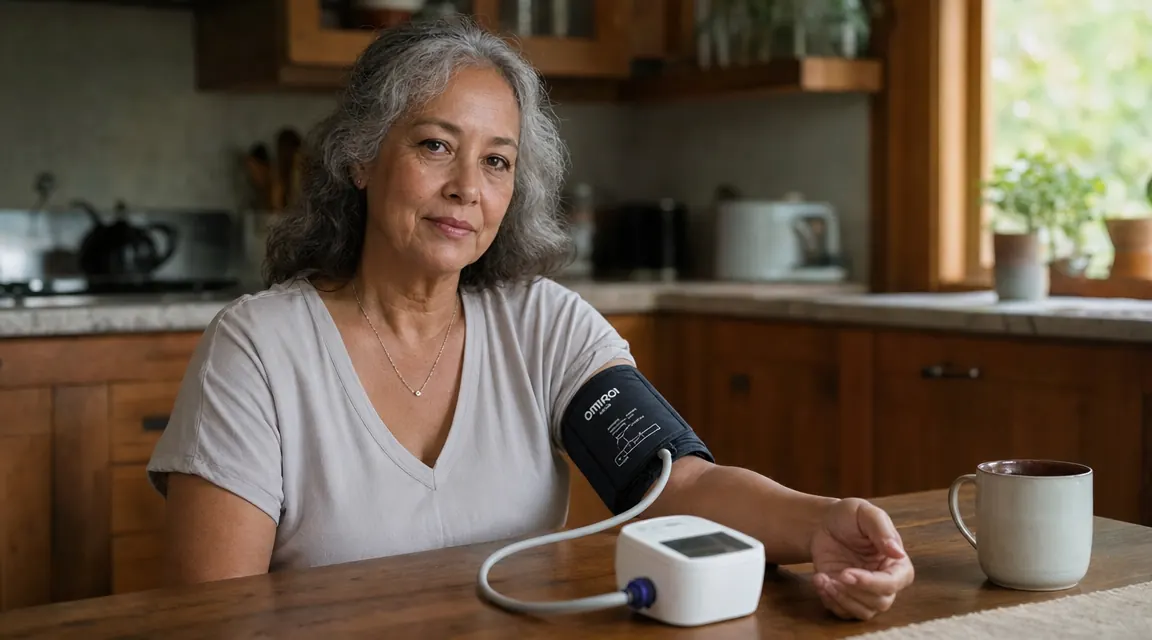
I have been a stroke coordinator nurse for twenty-three years. In that time, I have watched patients get discharged with a brand-new blood pressure monitor, use it every morning, and bring their doctor a month of readings that are essentially useless. Not because the device was broken. Because nobody taught them the five minutes of preparation that make the difference between a number you can act on and a number that misleads everyone.
Poorly done home readings can run ten to twenty millimeters of mercury higher than a well-done reading taken under the same conditions. That is not a rounding error. That is the difference between a doctor increasing your medication and a doctor leaving things alone. If you have had a stroke, a TIA, or a hypertension diagnosis, your home readings are clinical data. They deserve the same care you would give a reading in a doctor's office.
Before you read another number, make sure your monitor is the one your doctor trusts.
The OMRON Bronze is the monitor I recommend to families leaving my unit. It is clinically validated, upper-arm, and connects to the OMRON Connect app so your doctor can see your log directly. Rated 4.5 stars by over 6,000 buyers.
Amazon Check Today's Price on Amazon →Why Technique Matters More Than the Device
People ask me which blood pressure monitor to buy, and that is a reasonable question. But the more important question is how you use it. The American Heart Association has a specific protocol for home monitoring, and there is a physiological reason behind every single step. The steps are not bureaucratic box-checking. Each one controls a variable that shifts the reading.
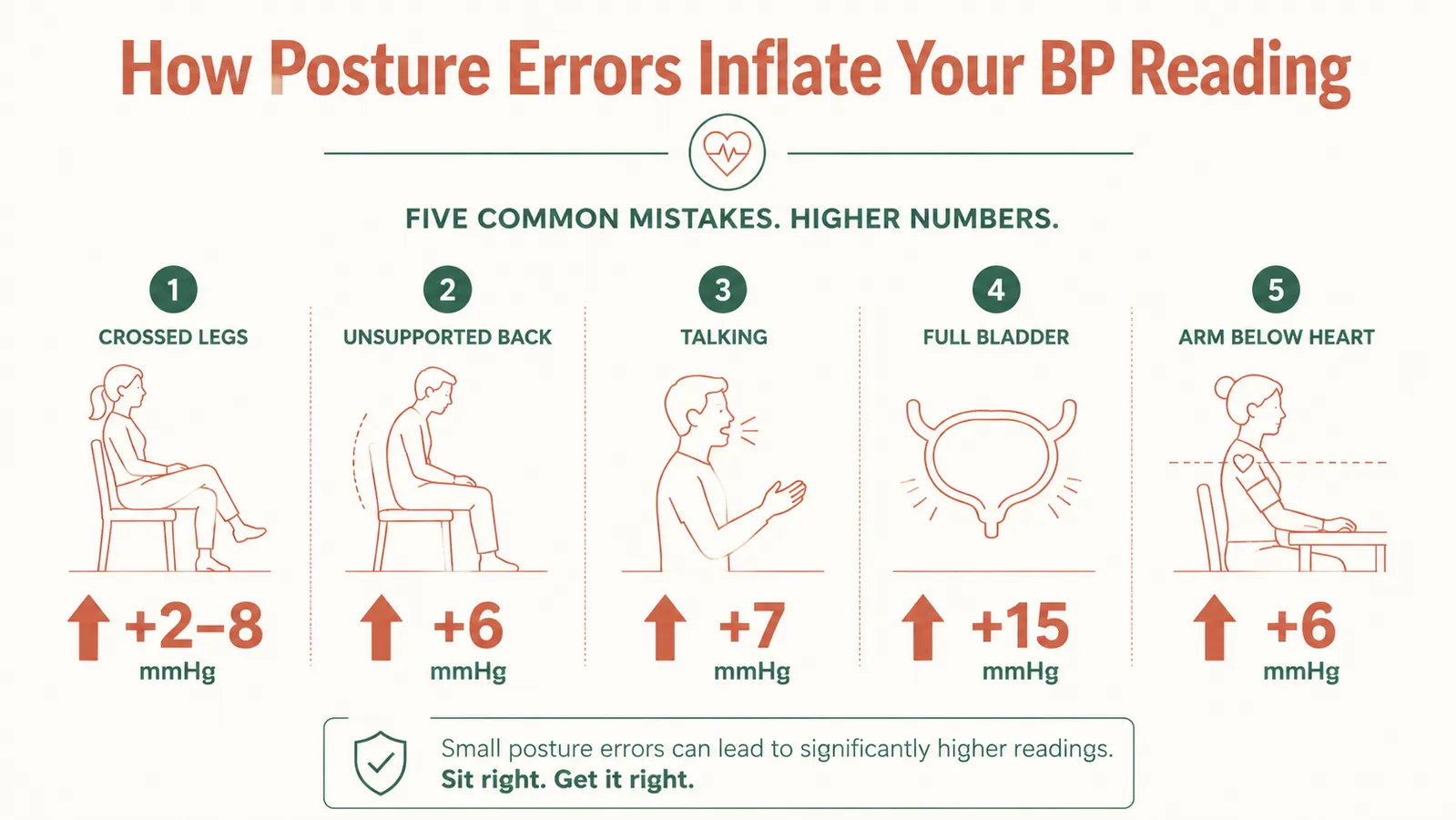
A crossed leg pushes venous blood back toward the trunk and raises peripheral vascular resistance, adding two to eight millimeters of mercury to your reading. An arm hanging below heart level has gravity working against it, adding another six. Talking during a reading can add seven or more. A full bladder adds fifteen. Add those together and you can see why the same person, with the same monitor, can produce readings forty millimeters apart depending on how they sat down. The device is not the problem. The technique is.
Step 1: Use the Bathroom First
Empty your bladder before every reading. This is the step people skip most often because it feels irrelevant, but a full bladder activates the autonomic nervous system and can raise your systolic reading by ten to fifteen millimeters of mercury. If you have been holding it for an hour, your reading will be falsely elevated. This is not something to power through.
Build the bathroom trip into your monitoring routine the same way you would brush your teeth before breakfast. You do not have to think about it; it simply comes first. Once that habit is set, every reading you take starts from a more neutral baseline.
Step 2: Sit Quietly for Five Full Minutes
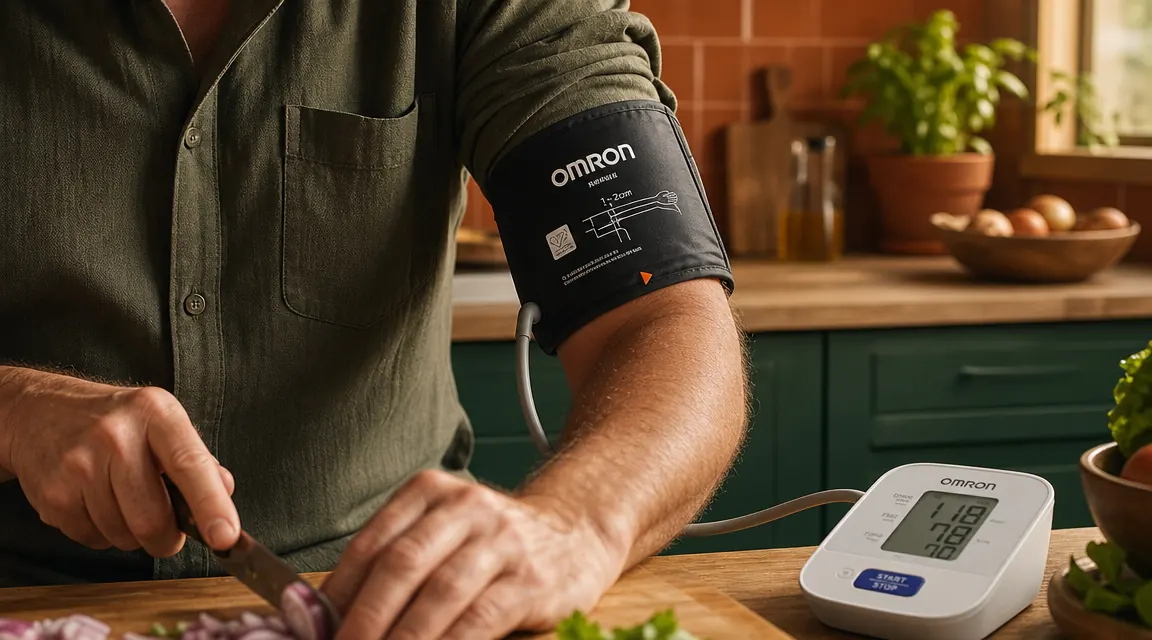
This is the step that almost no one does correctly. Five minutes of seated rest before taking a reading is not a suggestion; it is the core of the AHA home monitoring protocol. If you walked from the bedroom, climbed stairs, argued with someone, or even just hurried to sit down before an alarm, your sympathetic nervous system is still activated. Your blood pressure reflects that activation, not your resting state.
Sit in a chair with back support, both feet flat on the floor, legs uncrossed. Do not sit on the edge of the bed. Do not lean on a countertop. Your back must be fully supported so your muscles are not working to hold you upright. Set a timer on your phone for five minutes and do nothing. No scrolling, no television, no conversation. Just sit. This single step probably has more impact on reading accuracy than any other change you can make.
The monitor I recommend for this routine is the OMRON Bronze. The cuff is comfortable enough to leave on your arm during the rest period, which removes one more variable. You will not accidentally bump the cuff adjusting it after the timer goes off.
Step 3: Position Your Arm at Heart Level
Rest your left arm on a table or armrest so that the middle of the upper arm cuff is at the same height as your heart, roughly the level of your mid-sternum. If your arm rests lower, hydrostatic pressure adds false millimeters. If it rests higher, gravity subtracts them. Either way, you are not measuring what you think you are measuring.
A firm table works better than a soft couch cushion. Your arm should not be tensed or actively held up; it should be resting with zero muscular effort. If you need to prop the arm up slightly to reach heart level, fold a hardcover book under your forearm. The goal is passive support at the correct height.
I have seen patients with well-controlled hypertension brought back in for medication increases because every reading they took at home had their arm hanging at their side. Fix the arm position before you change the drug.
Step 4: Apply the Cuff Correctly
Wrap the cuff on your bare upper arm, not over clothing. Even a thin shirt sleeve affects accuracy because fabric compresses unevenly and the cuff cannot transmit pressure cleanly. The bottom edge of the cuff should sit two finger-widths, about one inch, above your elbow crease. The cuff indicator arrow, or the marker labeled 'artery,' should align over the brachial artery on the inside of your arm.
The cuff should be snug but not tight. You should be able to slide two fingers under the edge. Too loose and the cuff will not compress the artery correctly, giving a falsely high reading. Too tight and you will restrict blood flow before the measurement begins. The OMRON Bronze cuff fits upper arms from 22 to 42 centimeters in circumference, which covers most adults. If you are outside that range, OMRON sells both a small and a large cuff separately.
A common mistake I see: people wrap the cuff over the crook of the elbow rather than the upper arm. That is the wrong location for an upper-arm monitor. The brachial artery sits in the upper arm, not the forearm. Wrapping it too low means the sensor is reading the wrong vessel and the numbers will not be consistent with what your doctor measures.

Step 5: Take the Reading in Silence
Press the start button and stay still. Do not talk, do not look at your phone, do not shift in your seat. Any movement or vocalization during the reading engages muscles and activates the autonomic nervous system in ways that elevate blood pressure. Even the tension of watching the number climb on the screen, what clinicians call white-coat response, can push the systolic reading up by seven or eight millimeters. Look away from the monitor if you find yourself anxious during the measurement.
Some patients tell me they hold their breath while the cuff inflates because they are anxious. That actually raises intrathoracic pressure and affects the reading. Breathe normally, slowly, and let the device do its job. The OMRON Bronze takes roughly thirty seconds from the moment you press start to the moment it displays the result. Thirty seconds of stillness and regular breathing. That is all it asks.
Step 6: Wait One Minute, Then Take a Second Reading
The AHA protocol calls for two readings taken one minute apart. The first reading tends to run slightly higher because there is residual sympathetic activation from cuff inflation itself. The second reading, after one minute of rest, is more stable. Average the two. That average is the number to record and report to your doctor.
Set a one-minute timer between readings. Do not skip the wait. Some people take two readings back-to-back within ten seconds, which defeats the purpose entirely. The minute of rest allows the brachial artery to return to its resting diameter after the first compression.
The OMRON Connect app, which pairs with the OMRON Bronze via Bluetooth, automatically stores both readings with a timestamp. You can share the log directly with your doctor from the app. I have had patients whose cardiologist adjusted their medication based on a trend they spotted in the OMRON app log, a trend neither the patient nor the doctor would have seen from the once-a-month in-office check.
When to Measure: Morning and Evening, Not Just When You Feel Bad
A single reading tells you almost nothing. Blood pressure varies naturally throughout the day by twenty to thirty millimeters of mercury. It peaks in the morning hours after waking, dips in the afternoon, and rises again in the early evening. Measuring only when you feel symptoms means you are measuring during moments of stress or discomfort, which is not your resting baseline and tells your doctor very little about your medication's effectiveness.
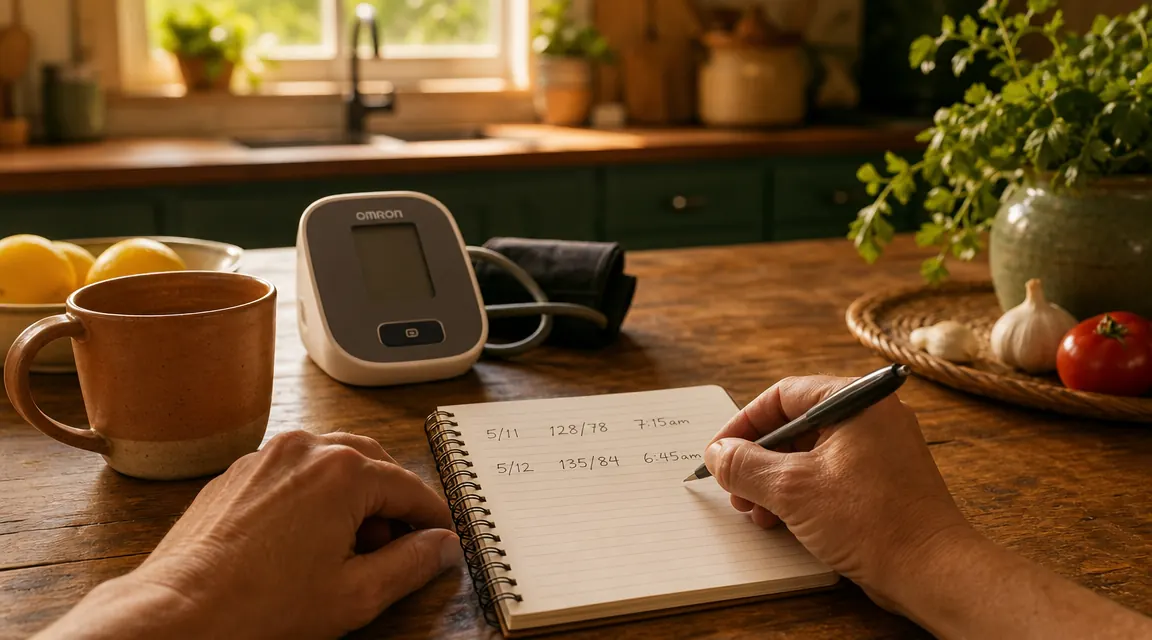
The protocol I teach families on my unit: measure twice in the morning, before medications and before breakfast, and twice in the evening, before dinner. Do this for seven consecutive days and bring the log to your next appointment. Seven days of morning and evening pairs gives your doctor something to work with. One reading from this morning gives them almost nothing.
A few additional rules worth noting. Do not take a reading within thirty minutes of caffeine, nicotine, or exercise. Caffeine alone can raise systolic pressure by three to fifteen millimeters for up to three hours, depending on how sensitive you are. And do not measure during pain, emotional distress, or right after a difficult conversation. If something happens that triggers a stress response, wait at least thirty minutes before measuring.
What Else Helps
The protocol above will get you readings that are actually useful. But a few additional habits make the monitoring practice more sustainable over months and years. Keep your monitor in the same place every time, ideally on the table where you take readings, so there is no hunting for it in the morning. Keep a dedicated paper log as a backup even if you use the app. Apps can fail, phones can be lost, but a paper notebook on the kitchen table always works.
If your readings are consistently elevated, do not change your medication dose on your own. Call your doctor's office and share the log. That is what the log is for. Conversely, if your readings are consistently lower than expected and you feel dizzy when standing, that is also worth a call. Overtreated hypertension carries its own risks for stroke survivors, particularly around falls and orthostatic hypotension.
For more on choosing the right monitor, see my full review of the OMRON Bronze after twelve months of daily use, linked below. And if you are deciding between the Bronze and the Silver, I have a direct side-by-side comparison that covers what the extra cost does and does not buy you.
Get readings your doctor can actually use, starting with the right monitor.
The OMRON Bronze upper-arm monitor is the one I send families home with from my unit. Clinically validated, fits arms 22 to 42 cm, pairs with the OMRON Connect app for shareable logs. Over 6,000 reviews and the number-one doctor and pharmacist recommended brand.
Amazon Check Today's Price on Amazon →