
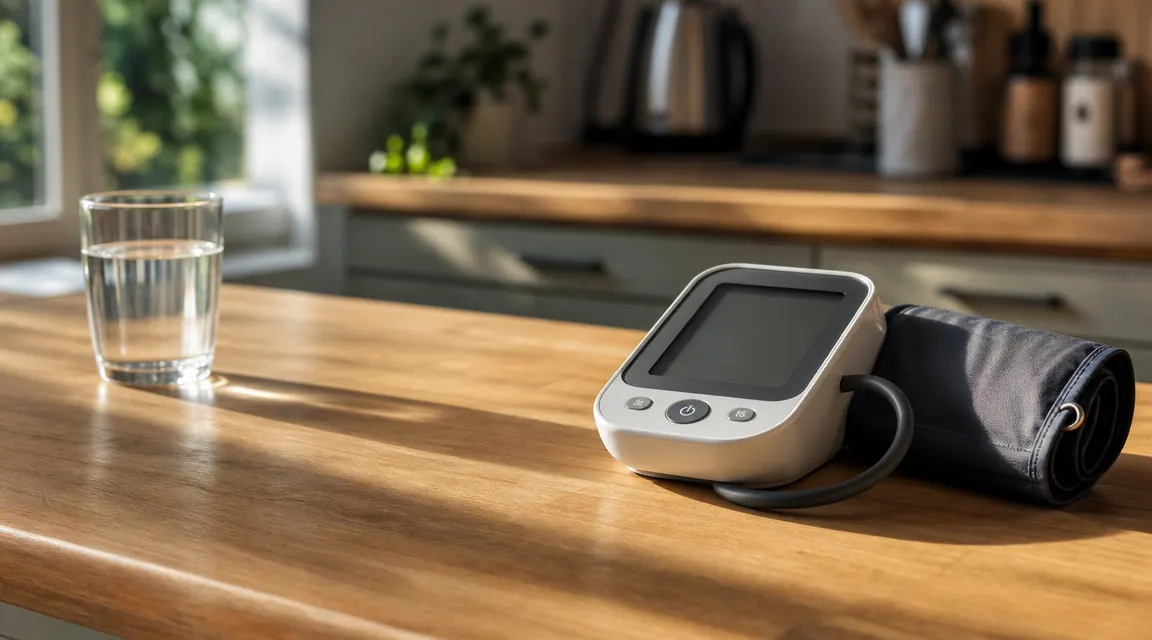
I get this question a lot. A family member just had a stroke, they're being discharged, and the neurologist says monitor your blood pressure at home daily. They pull up Amazon, find two Omron monitors side by side, and ask me: which one? The Bronze is about $43. The Silver is about $63. The Silver connects to your phone. Is the phone app worth $20 more for someone in stroke recovery? I've thought about this carefully, and my answer is almost always the same: start with the Bronze.
That's not a knock on the Silver. The Silver is a fine monitor. But after more than two decades watching stroke patients come back for follow-up appointments, I've seen what makes home BP monitoring succeed and what makes it fail. The app doesn't determine that. Habit does. And the Bronze, at a lower price with no setup friction, gets people into the habit faster. Let me show you exactly how these two monitors compare, and then I'll tell you which situations would actually push me toward the Silver.
| feature | left | right |
| feature | left | right |
| feature | left | right |
| feature | left | right |
| feature | left | right |
| feature | left | right |
| feature | left | right |
| feature | left | right |
| feature | left | right |
Where the Bronze Wins
The Bronze is clinically validated. That matters more than anything else on this list. Clinically validated means the device has been independently tested in a controlled setting against a reference standard and its readings fall within an acceptable margin. Many blood pressure monitors sold on Amazon are not validated. The Omron Bronze is. So is the Silver. Both clear this bar, and that's actually the most important spec on either device.
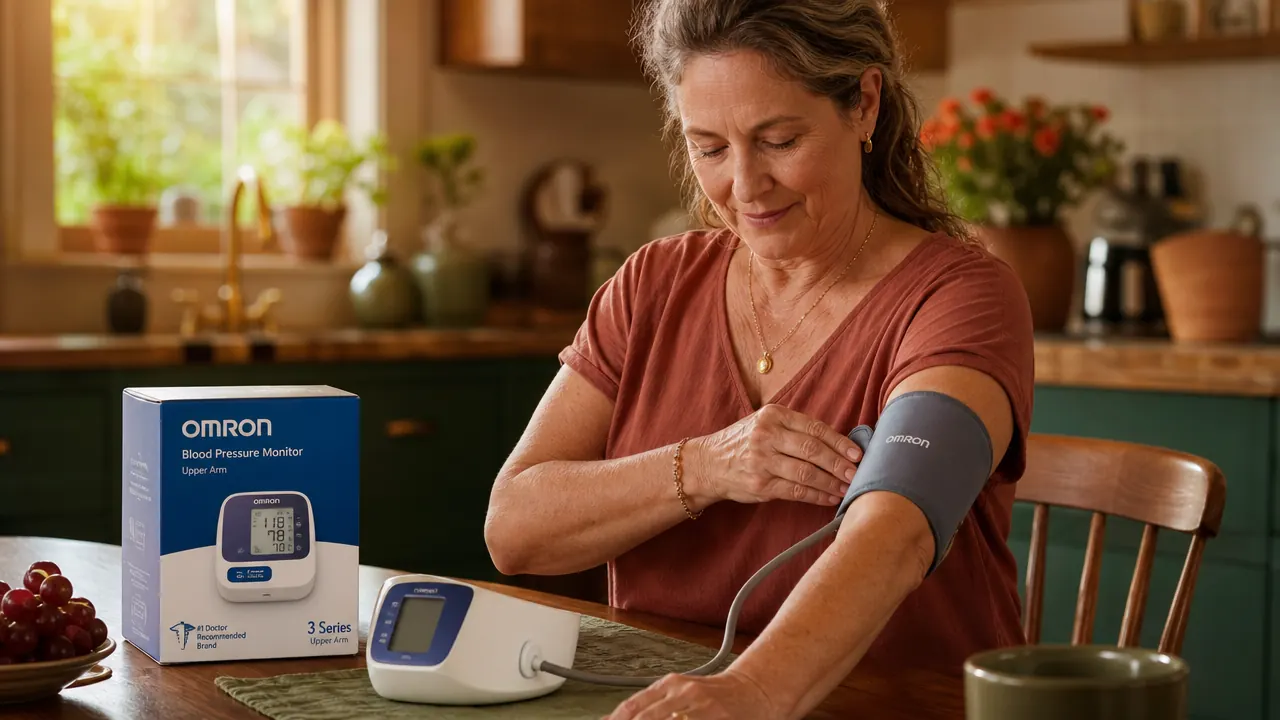
Where the Bronze edges ahead is simplicity. You take it out of the box, slide in four AA batteries, put the cuff on your left arm, press the start button, and you have a reading in about 30 seconds. There is no app to install, no Bluetooth pairing to debug, no account to create with an email address and a password your father-in-law will forget in a week. I've watched patients skip their morning reading because they couldn't remember which Bluetooth setting to toggle. That doesn't happen with the Bronze. It's just on and working.
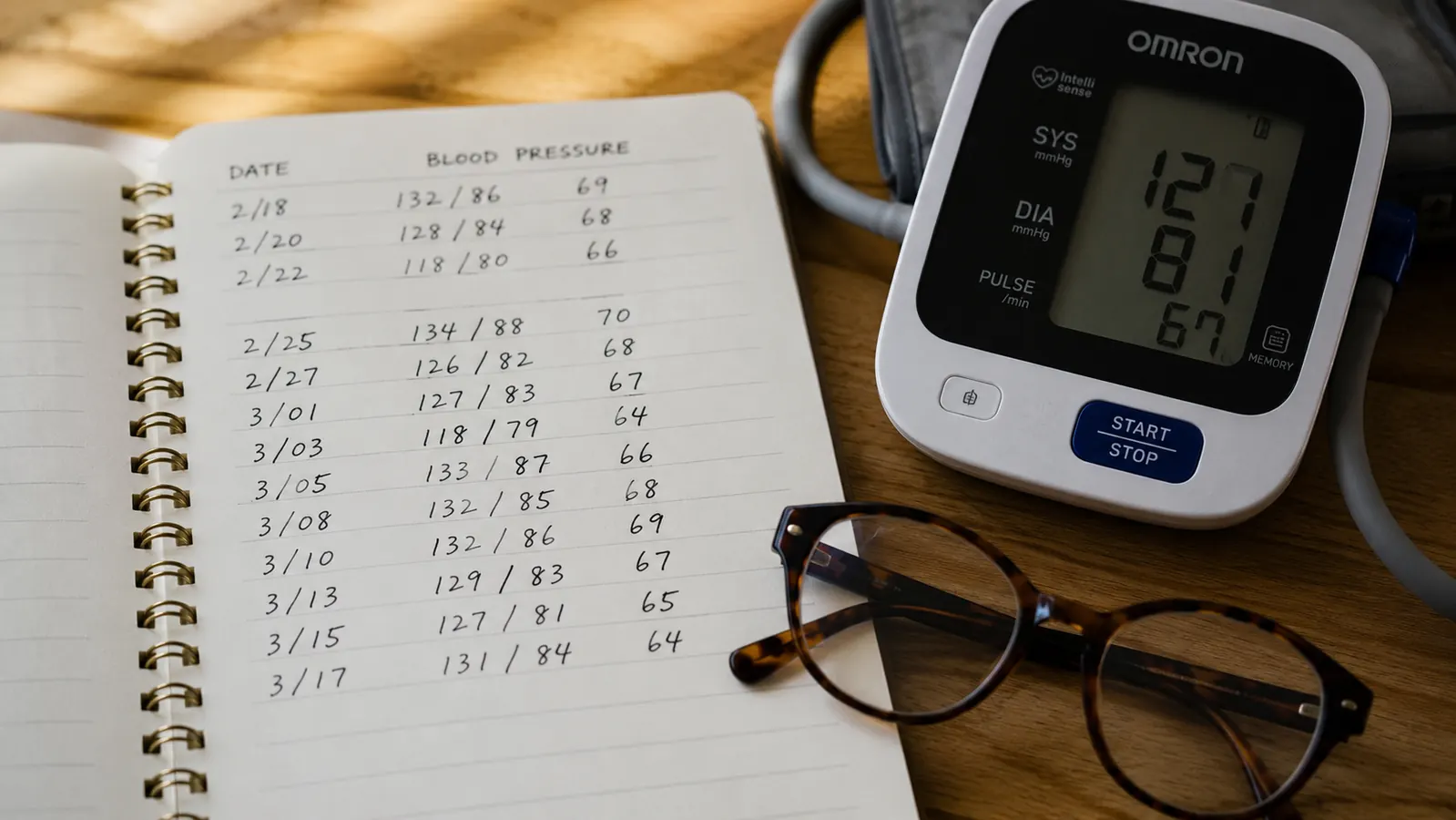
The 14-reading memory covers two weeks of daily readings if you're checking once a day, or one week if your doctor has you checking twice daily (common in the first 90 days post-stroke). Before your next neurology appointment, you scroll back through those 14 readings and read them aloud, or you write them in a notebook. Simple. The Bronze also averages your last three readings automatically, which is clinically useful, since BP fluctuates and a single reading tells you less than the average of three taken in the same sitting.
The monitor that gets used every morning is the right monitor. Setup friction kills habits, especially in the first 30 days after discharge when everyone in the household is already overwhelmed.
Where the Silver Wins
The Silver's main advantage is its 60-reading memory. If you're tracking twice daily over 30 days, you fill 60 slots in exactly one month. That's meaningful if you want to review a full month of data at a single glance without transcribing anything into a notebook. The Silver also syncs that data to the Omron Connect app via Bluetooth, which generates charts and trend lines you can email directly to your cardiologist. Some practices now accept Omron Connect exports as part of their remote monitoring workflow.
If the person using the monitor is already smartphone-comfortable, lives alone, and has a doctor who actively reviews app data between appointments, the Silver's features translate into real clinical value. You get a longer data window, an automated log, and a visual trend that a rushed physician can absorb in 10 seconds. Those are legitimate advantages. They're just not advantages that most stroke survivors in the first six months post-discharge are positioned to use consistently.
Most stroke survivors just need accurate, daily readings. The Bronze delivers exactly that, without the setup.
Clinically validated, #1 doctor-recommended brand, and straightforward enough that it actually gets used every morning. Check the current price on Amazon.
Amazon Check Today's Price on Amazon →The App Feature Everyone Overestimates
Here's something the Amazon listings won't tell you: both the Bronze and the Silver have Bluetooth and the Omron Connect app. The difference between them is not app-vs-no-app. It's 14 stored readings vs 60 stored readings. That framing changes the decision considerably. If you want the app, you can have it with either monitor, because both pair to the same Omron Connect platform on iOS and Android.
What this means in practice: if you're on the fence because you like the idea of graphing your readings over time, the Bronze still gets you there. Sync it after each reading and your app builds the trend history indefinitely, limited only by app storage rather than the device's internal memory. The Silver's 60-reading on-device memory only matters if you're taking readings without your phone nearby and need to store more than two weeks before syncing. That's a narrower use case than the listing implies.
How to Take a Reading That's Actually Accurate
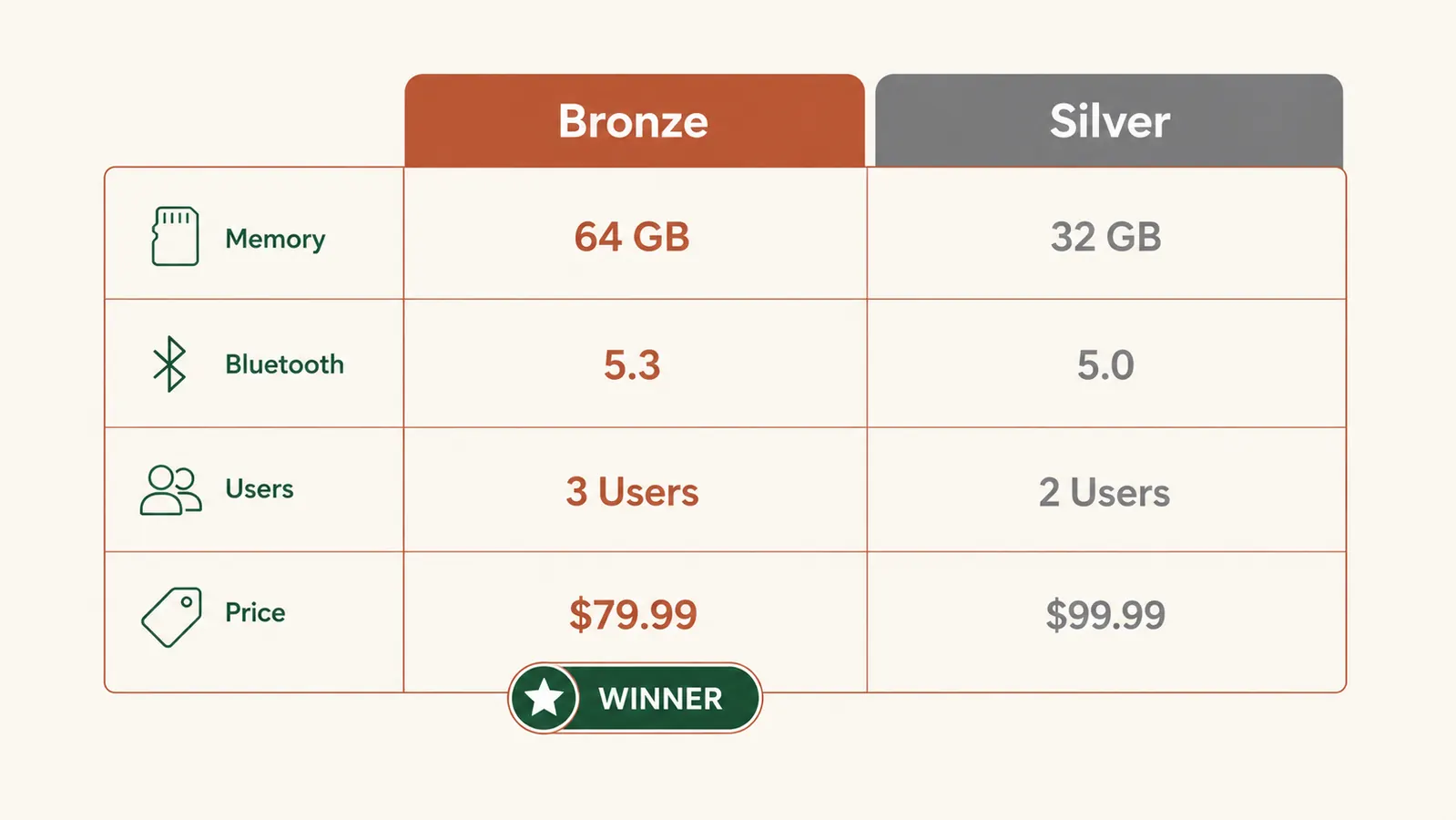
I want to say this regardless of which monitor you choose, because I have seen patients bring in their home readings and the numbers looked completely wrong, not because the monitor was broken, but because the technique was off. Sit quietly for five minutes before taking the reading. No coffee in the prior 30 minutes. Feet flat on the floor, not crossed. Back supported. Left arm resting on the table at heart level. The cuff goes on bare skin, not over a sleeve, and the bottom edge sits about an inch above the bend of the elbow. Don't talk during the reading. Don't move the arm.
If your reading comes back unusually high or low, wait two minutes and take another. The Omron average-of-three function is useful here. If three consistent readings are all elevated, that's information. If the first reading is 162 and the next two are 128, the 162 is almost certainly artifact from movement or cuff position. A good monitor can't compensate for poor technique, and the Omron Bronze, or Silver, won't either. The technique is the first thing to get right.
Who Should Buy the Bronze
The Bronze is the right choice for most stroke survivors, their spouses, and their caregivers who are setting up home monitoring for the first time. It's the right choice if the patient is 65 or older and not especially comfortable with apps. It's the right choice if there's any chance the setup process will become a barrier, because a monitor that sits in a drawer because no one could get the Bluetooth working is worth exactly nothing. It's also the right choice if budget is a consideration, because $43 for a clinically validated, upper arm, doctor-recommended monitor is genuinely fair value.
It's the right choice if you check once or twice daily and see your doctor or care team monthly, which is the standard follow-up cadence after a stroke. Fourteen readings covers two weeks of once-daily checks, which gives you plenty of data to review at any appointment. You can always write down readings in a small notebook if you want a longer running log, and many of my patients prefer the physical record anyway. Their doctor can flip through it quickly without asking them to pull up an app.
Who Should Buy the Silver
The Silver makes more sense in a few specific situations. If the patient or caregiver is already comfortable with smartphones and genuinely excited about tracking trends, the 60-reading memory and cleaner app experience are worth the $20 difference. If the treating cardiologist or neurologist has specifically asked for a longer digital record, usually for patients on medication titration where they're adjusting doses and watching for response, the Silver's larger memory and exportable data become genuinely useful. And if the patient travels frequently or goes stretches without their phone nearby, having 60 on-device readings instead of 14 provides more buffer.
What I'd avoid is buying the Silver because it feels more premium, or because more features always seems safer. More features don't equal more accuracy. Both monitors are clinically validated. Both use the same upper arm cuff design. Both report systolic, diastolic, and pulse. The Silver doesn't catch anything the Bronze misses. It just stores more of what it catches.
A Note on What Actually Lowers Stroke Risk
I want to be direct about something, because I think it gets lost in product comparisons. The monitor doesn't lower your blood pressure. What lowers blood pressure is acting on what the monitor tells you. Taking your medication consistently. Cutting sodium in your cooking. Moving your body even if that just means a 10-minute walk around the block. Sleeping enough. Reducing the chronic stress that keeps your nervous system in fight-or-flight. The monitor gives you the number. What you do with the number is the thing that matters.
The reason I recommend the Bronze for most people isn't that it's a better monitor in some technical sense. It's that removing friction from the daily reading habit is the single thing that determines whether a patient actually uses the tool. And a tool you use every day for a year at $43 beats a tool you stop using after two weeks at $63, every time.
If you're starting home BP monitoring after a stroke, the Omron Bronze gives you everything you need to do it right.
Clinically validated, upper arm, doctor-recommended, no setup headaches. See today's price and check that it ships to you.
Amazon Check Today's Price on Amazon →