
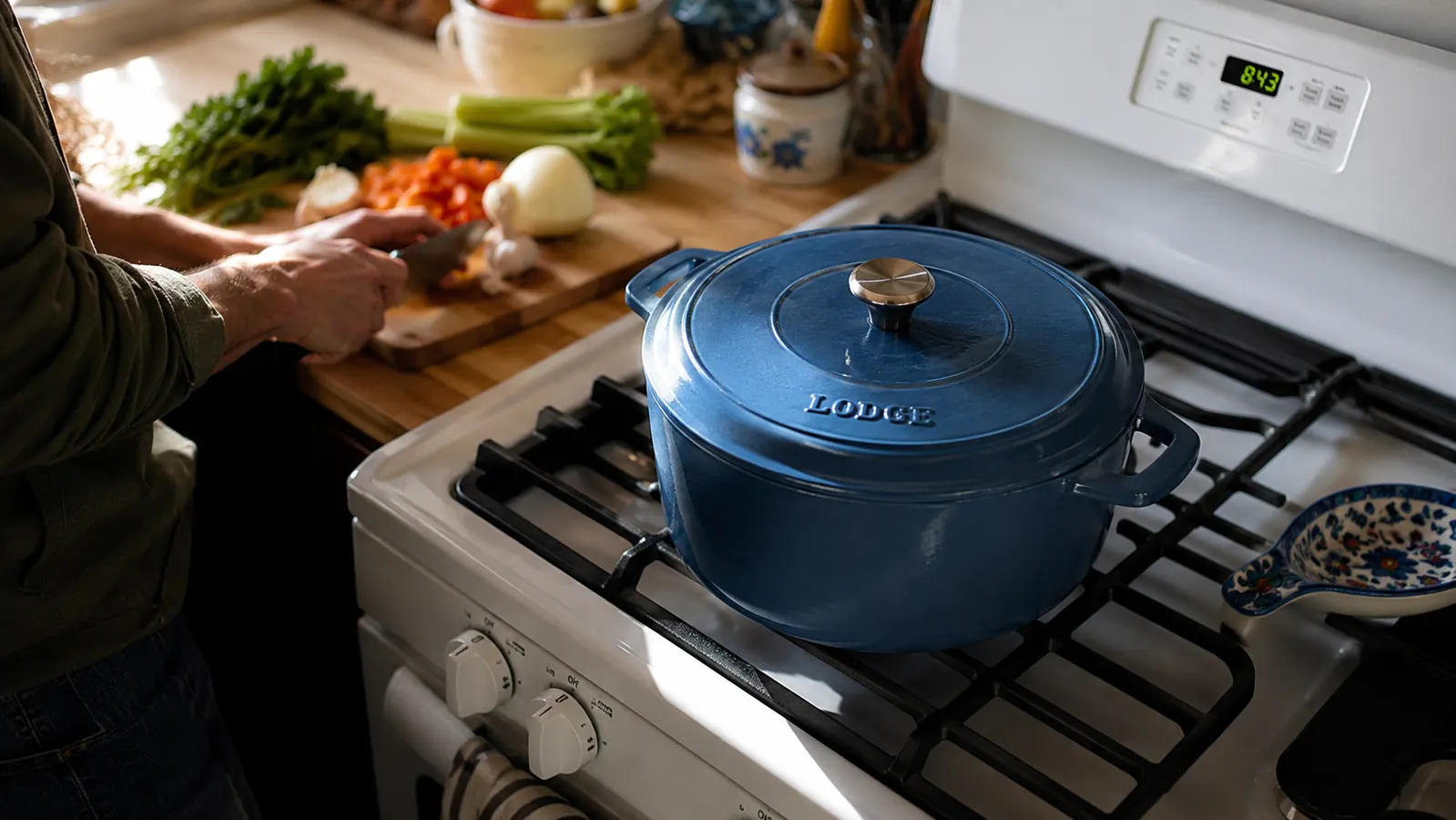
I spend my days on a stroke unit. I have sat across from more families than I can count and watched them nod along while a dietitian explains the DASH diet, 1,500 milligrams of sodium a day, less saturated fat, more whole foods cooked at home. They leave with a pamphlet. Most of them do not know where to start in the kitchen. So when the Lodge 6-quart enamel Dutch oven started showing up in my recommendations and in the hands of colleagues who also cook at home, I paid attention. I have been using one in my own kitchen for close to a year. And I want to tell you the things the Amazon listing does not.
This is not a review about how beautiful the terracotta color looks on a shelf, or how Instagram-worthy a beef bourguignon looks inside it. This is a review for someone who just got home from a hospital, or whose husband just got home from a hospital, and who needs to cook differently from now on and wants to know if this pot is genuinely worth the counterspace and the money. The short answer is yes. The longer answer involves some things you should know before you order.
The Quick Verdict
A genuinely excellent vessel for low-sodium braising and slow cooking, with real-world limitations that matter for older and post-stroke cooks. Honest about the weight, the enamel care, and the clean-up. Still worth it.
Amazon Check Today's Price →Your next batch of low-sodium soup deserves a pot that holds heat all the way through
The Lodge 6-quart enamel Dutch oven is one of the most practical tools I have found for DASH-diet cooking at home. See today's price on Amazon and check current availability.
Amazon Check Today's Price on Amazon →Let's Start With the Weight, Because Nobody Warns You
The Lodge 6-quart enamel Dutch oven weighs about 13 pounds empty. That is before you add a quart of chicken broth, a pound of dried lentils, and a full bag of chopped vegetables. Filled, you are looking at something close to 20 pounds, maybe more. On my stroke unit I talk every week with patients who have one-sided weakness, reduced grip strength, or fatigue that lingers for months after an event. For those patients, or for caregivers who are also in their 60s or 70s and maybe not as strong as they used to be, this is not a trivial detail.
This does not mean the Dutch oven is wrong for you. It means you should plan around the weight from day one. Keep it on a low shelf or inside a deep lower cabinet so you never lift it above shoulder height when it is full. Move it to the stovetop empty, fill it there, and drain or ladle out the contents before you try to move it again. My neighbor, 71 years old and two years post-stroke, does exactly this. She has never had a problem. She also told me that the first time she tried to carry it from the stove to the sink while it still had soup in it, she nearly dropped it. Learn from her.
I keep mine on the lowest shelf in the cabinet. I fill it on the stove and ladle it out before I move it. That one habit change made all the difference. I would not trade the pot.
Enamel Chipping: The Real Rules Nobody Reads
The interior of this pot is coated with a cream-colored enamel. It is smooth, it does not react with acidic foods like tomatoes, and it makes browning onions or searing chicken thighs genuinely pleasant because you can see what is happening on the surface. That enamel is also the most vulnerable part of the pot, and the listing photo does not come with a warning label.
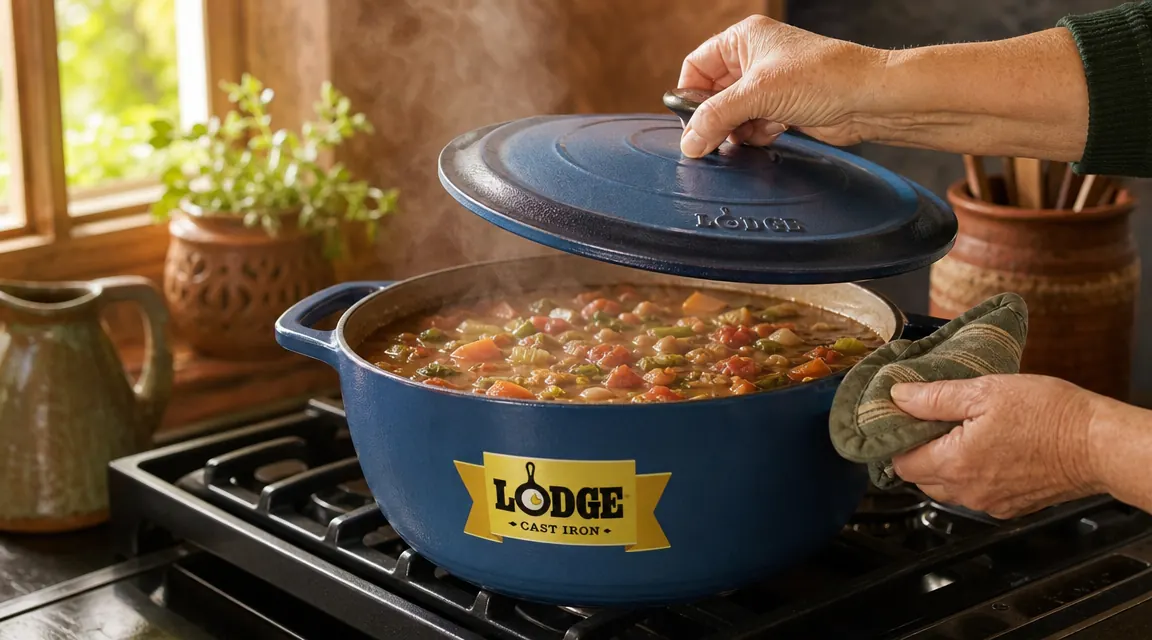
Enamel chips under two conditions: hard impact and metal utensils. Dropping the lid onto the rim, banging the pot against another pot in a crowded cabinet, or using a steel whisk or a metal spoon against the interior surface can all cause small chips. Once enamel chips, that chip does not grow back. A small chip on the interior surface is generally considered safe for cooking, but it is the beginning of a degradation pattern and it is preventable. Lodge's own guidance is to use wooden or silicone utensils only. I use a long-handled silicone spatula and a wooden spoon. I have not chipped the enamel. My colleague who used a metal ladle for the first six months did chip hers, and she was annoyed with herself, not with the pot.
One related point: do not put a cold Lodge Dutch oven on a screaming-hot burner. Cast iron takes time to heat, and the enamel expands with the metal underneath it. Rapid temperature swings, going from a cold refrigerator to a blazing gas flame, can stress the enamel over time. Start on medium or medium-low, let it warm up over two or three minutes, then raise the heat if you need to. For the low, slow cooking that most heart-healthy recipes call for, you rarely need to go above medium anyway.
The Cream Interior Stains, and That Is Normal
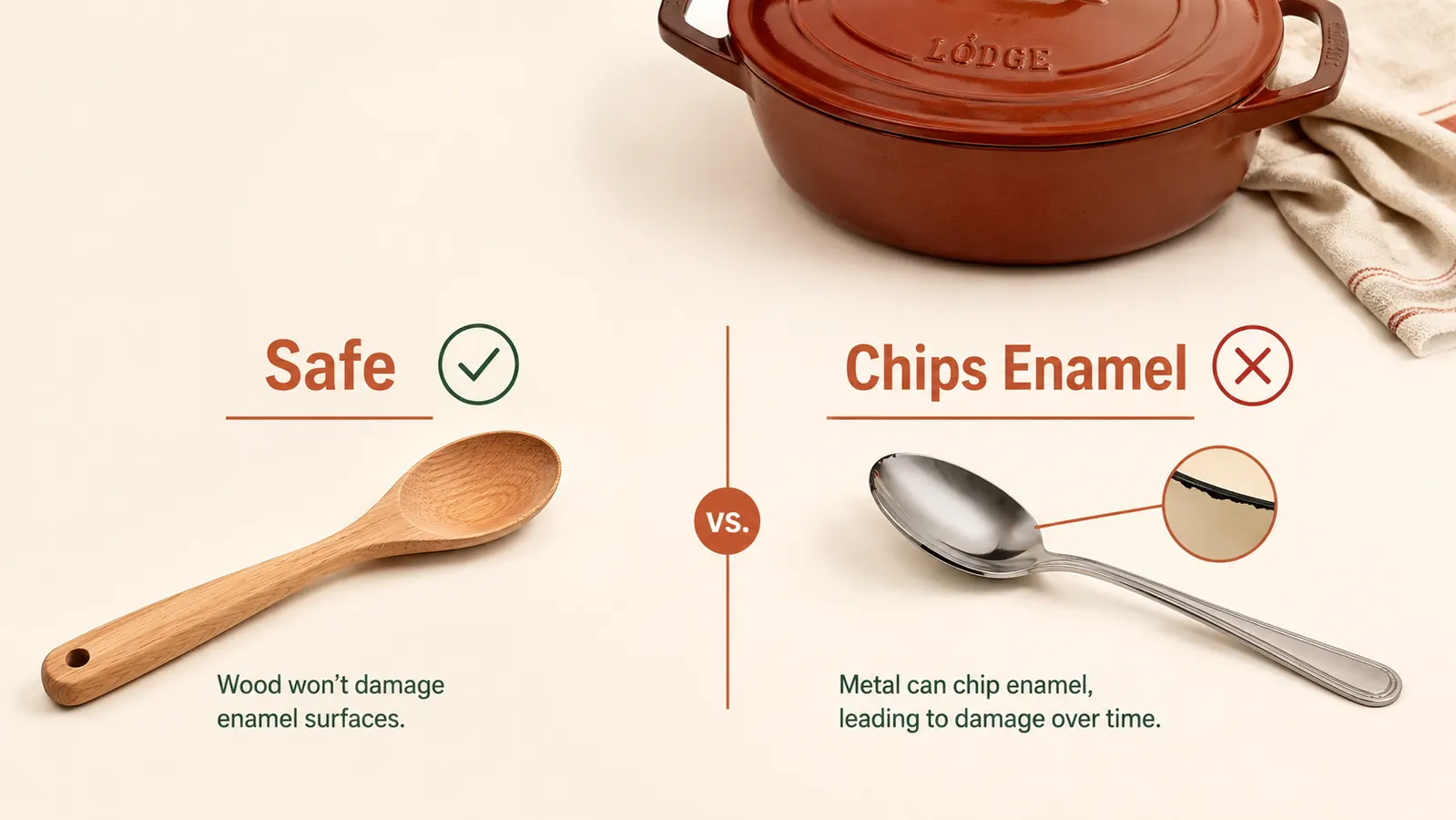
After a few months of regular use, the light interior of the Lodge will take on a patina. Coffee-colored stains from tomato-based stews, faint brown rings from the high heat line of a braise. This is cosmetic. It has nothing to do with whether the pot is sanitary or whether food will pick up off-flavors. But I mention it because several of my patients' families have returned or nearly returned a Lodge oven thinking it was damaged or dirty when it was simply seasoned with use.
If the staining bothers you, a paste of baking soda and water left on the surface for 20 minutes and then scrubbed gently with a non-abrasive sponge will usually lift most of it. Lodge also makes an enamel cleaner that works well. But my honest advice is to let it go. A stained Dutch oven that has made a hundred batches of low-sodium minestrone is doing its job. The discoloration is not hurting anything.
Hand-Wash Only Is Not Optional
Lodge says hand-wash only on the enamel Dutch ovens. The dishwasher will not cause it to explode, but the harsh detergents and the sustained heat cycle will degrade the enamel gloss over time and can dull the exterior finish and, more importantly, weaken the enamel's resistance to chipping. For a pot you are planning to use for the next ten years, the ten minutes of hand-washing is a small price.
The hand-washing itself is easy. Unlike bare cast iron, you do not have to avoid soap. Use dish soap, warm water, and a soft sponge. Nothing abrasive. The interior is smooth enough that food rarely sticks, especially once you have learned that this pot cooks hotter than you expect and that a heat setting of medium is genuinely adequate for most recipes. Rinse it, dry it with a towel immediately (do not let it air-dry in the rack because water sitting on the rim, which is bare cast iron, will start to rust), and you are done.
The rim of this Dutch oven where the lid meets the body is not enameled. It is bare iron. This is the only place that rusts if you neglect it. A light wipe with a barely-oiled paper towel after drying takes ten seconds and prevents any rust from forming. I mention this because it is the only real maintenance the pot requires beyond washing, and it is so minor that people who know about it never think about it again.
What It Does Exceptionally Well for Heart-Healthy Cooking
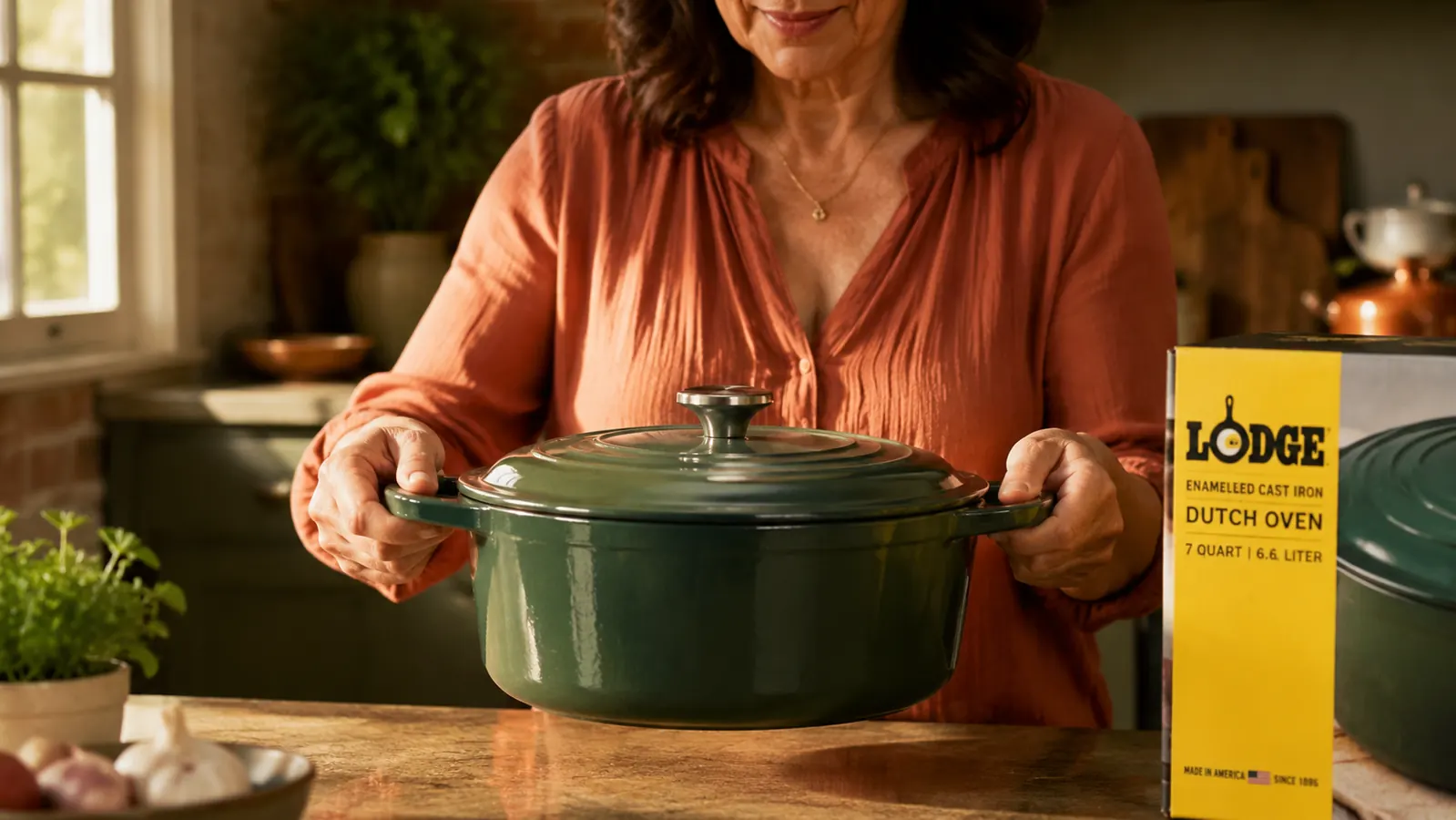
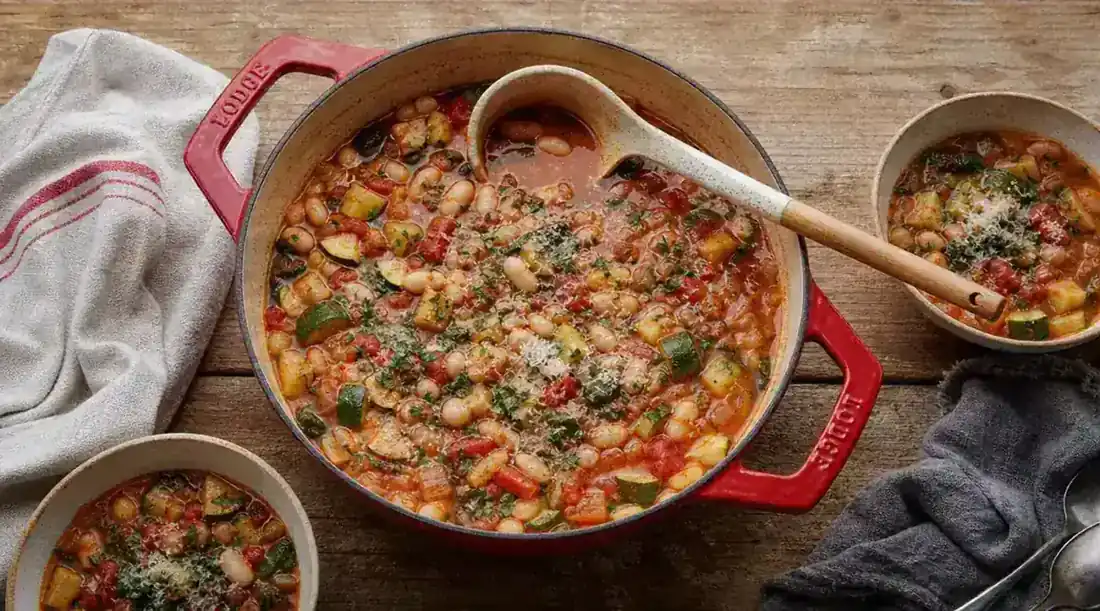
After covering the real limitations, I want to be clear about why this pot is the one I genuinely recommend to families leaving our stroke unit. The Dutch oven's defining characteristic is heat retention. Cast iron, once hot, stays hot and distributes that heat evenly across the entire base and up the sides. This matters for the style of cooking that the DASH diet and Mediterranean patterns favor: long, slow braises, thick bean and lentil soups, and gentle simmers where the goal is to coax flavor out of vegetables, herbs, and low-sodium stock without relying on the shortcuts of high sodium, added fats, or processed sauces.
The moisture-sealing lid is not marketing language. The heavy lid sits in the liquid channel around the pot rim and returns condensation to the food. A long braise in the Dutch oven is noticeably more moist and more flavorful than the same recipe done in a thin stockpot, because the liquid stays in the pot rather than evaporating off. For low-sodium cooking this is a genuine advantage: you are relying on concentrated vegetable flavor and herbs for your taste profile, and you cannot afford to lose moisture. The pot works with you on this.
I also want to note that this pot goes from stovetop to oven seamlessly, up to 500 degrees Fahrenheit. Heart-healthy baking, no-knead whole wheat bread, roasted chicken thighs with lemon and herbs, all of these happen in the same vessel you used for the stovetop browning step. Fewer dishes. Easier evenings. For a caregiver who is already exhausted, that simplicity matters.
For internal context on how this pot performs in a specific recipe sequence, the article on Lodge vs Le Creuset for heart-healthy cooking compares the Lodge head-to-head with the most common competitor at four times the price, and the piece on 10 reasons your cardiologist will thank you for a Dutch oven gets into the nutrition science of why slow-cooking preserves potassium and why that matters specifically for blood pressure management.
What I Liked
- Exceptional heat retention for low-sodium braises and soups that depend on concentrated vegetable flavor
- Moisture-sealing lid returns condensation, keeping long-cook recipes from drying out without added fat or salt
- Enamel interior does not react with tomatoes, citrus, or other acidic DASH-diet staples
- Stovetop-to-oven in one pot, up to 500F, reduces dishes and simplifies weeknight cooking
- Durable construction at a price point far below European alternatives
- Large 6-quart capacity lets you batch-cook a week's worth of heart-healthy soup in one session
Where It Falls Short
- 13 pounds empty, 18 to 20 pounds full, a real consideration for post-stroke patients with one-sided weakness or reduced grip
- Enamel chips with metal utensils or hard impact, requires wooden or silicone tools only
- Cream interior stains over time, purely cosmetic but jarring if you are not expecting it
- Hand-wash only, no dishwasher, requires immediate drying to protect the bare-iron rim from rust
- Takes longer to heat up than a stainless or aluminum pot, requires patience on the front end of every recipe
Who This Is For
This pot is the right choice for someone who is committed to cooking from scratch at home and who has the physical capacity to handle a heavy vessel safely. That includes most caregivers, most post-stroke patients who have retained reasonable bilateral strength, and anyone who is cooking heart-healthy meals and wants a single piece of equipment that handles soups, braises, stews, beans, and whole-grain baking without switching pots. If you are cooking three or four nights a week and you want the results to taste like food and not like a compromise, this pot gives you that.
Who Should Think Twice
If you or the person you are cooking for has significant one-sided weakness, poor grip strength, or upper extremity fatigue from a recent stroke, do not use this pot alone without a system in place. The empty pot is manageable. The full pot is a hazard if you lose your grip. Consider whether a 4-quart model would serve you better if you are cooking for one or two people and reducing the filled weight is a priority. Consider whether a partner or caregiver should be the one who moves the pot from stove to counter. And if you live alone and are cooking for yourself post-stroke, please be honest with yourself about what you can safely handle. A lighter enameled pot that you use is better than a Lodge that sits in the cabinet because it is too much to manage alone.
None of this means the Lodge is a bad pot. It means that the 38,000 people who left reviews were not mostly cooking for post-stroke households, and the things that matter in that context are different. I am telling you the things those reviewers did not think to mention.
If you can handle the weight safely, this pot will change how you cook for your heart
The Lodge 6-quart enamel Dutch oven holds heat, seals moisture, and makes the low-sodium braising that your doctor recommended genuinely worth making every week. Check the current price on Amazon before you decide.
Amazon Check Today's Price on Amazon →