After a stroke or a hypertension diagnosis, the first thing most patients hear is: watch your sodium. The second thing, usually whispered by a well-meaning family member, is: so I guess no more soup. That is not true, and it breaks my heart every time I hear it. Soup can be one of the most heart-protective meals you make, as long as you control what goes into it. I have been a stroke coordinator RN for over twenty years. On my floor, I have watched what uncontrolled blood pressure does to a brain. At home, I make soup in a cast iron Dutch oven at least twice a week. This guide is the exact method I use.
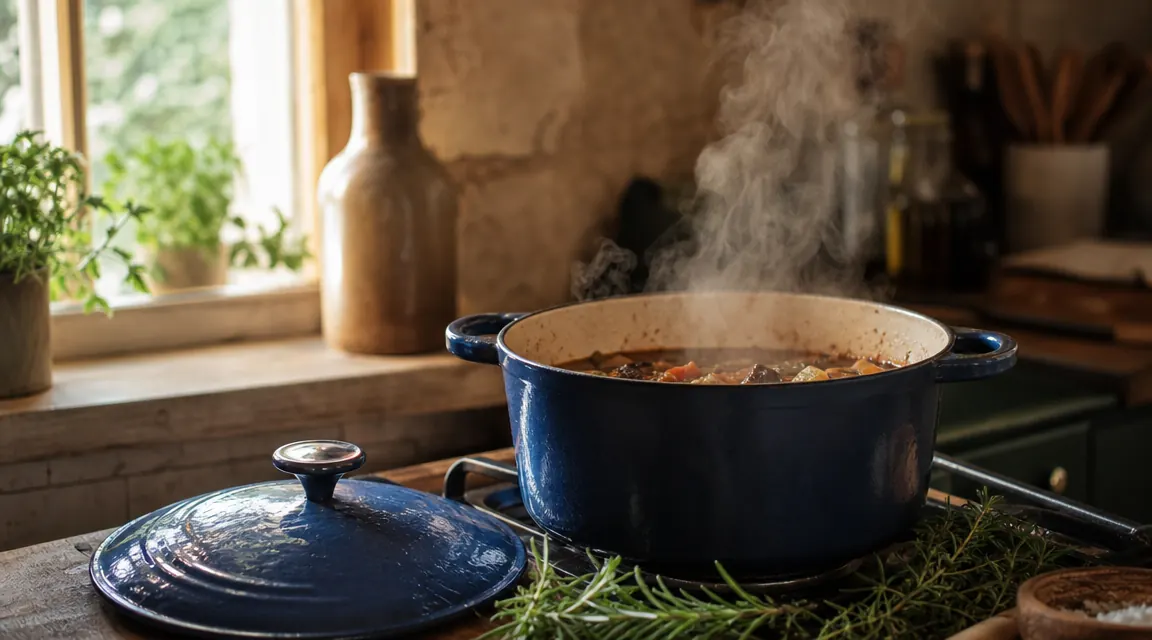
The Lodge 6-Quart Enameled Cast Iron Dutch Oven (ASIN B000N501BK) is the pot I reach for every time. The heavy lid traps steam and keeps moisture cycling inside the pot, which means aromatics like onion, garlic, and celery break down slowly and release their natural sweetness into the broth. You get depth of flavor that normally required salt to achieve. That is not a marketing claim. That is the chemistry of slow-cooked vegetables, and a well-sealed Dutch oven is the tool that makes it happen without a prescription.
Stop seasoning with salt. Start cooking with the pot that does the work for you.
The Lodge 6-Qt Enameled Dutch Oven locks in moisture and slow-builds flavor from aromatics, without added sodium. Over 38,000 ratings on Amazon, and the one I use in my own kitchen.
Amazon Check Today's Price on Amazon →Step 1: Understand Your Sodium Budget Before You Turn On the Stove
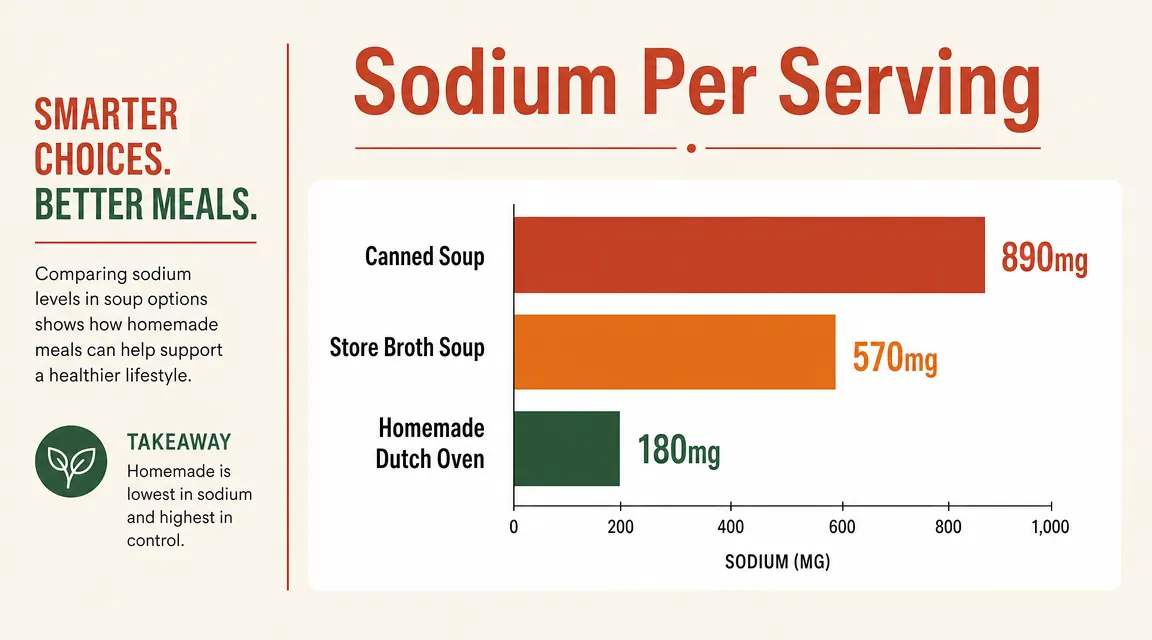
The DASH diet targets 1,500mg of sodium per day for people with high blood pressure or stroke history. A single can of commercial chicken noodle soup can carry 890mg in one serving, and many cans are labeled as two servings, which means the whole can is nearly 1,800mg before you have eaten anything else. That is not a small distinction. It is the entire daily budget in one bowl.
Before you start cooking, decide on your per-bowl target. I build my soups and stews to land between 150mg and 250mg of sodium per serving. That leaves room for a piece of whole grain bread, a salad with light dressing, and still come in under 1,500mg for the day. Write that number down. It is the constraint that drives every ingredient choice in the steps that follow.
A quick reference: 1 cup of most no-salt-added canned tomatoes has about 20-40mg. A cup of dried lentils has nearly zero. An ounce of parmesan stirred in at the end carries about 170mg, so use it sparingly or skip it entirely. Once you have the numbers in your head, sodium management stops feeling like deprivation and starts feeling like a puzzle you know how to solve.
Step 2: Choose a Stock That Does Not Undo All Your Work
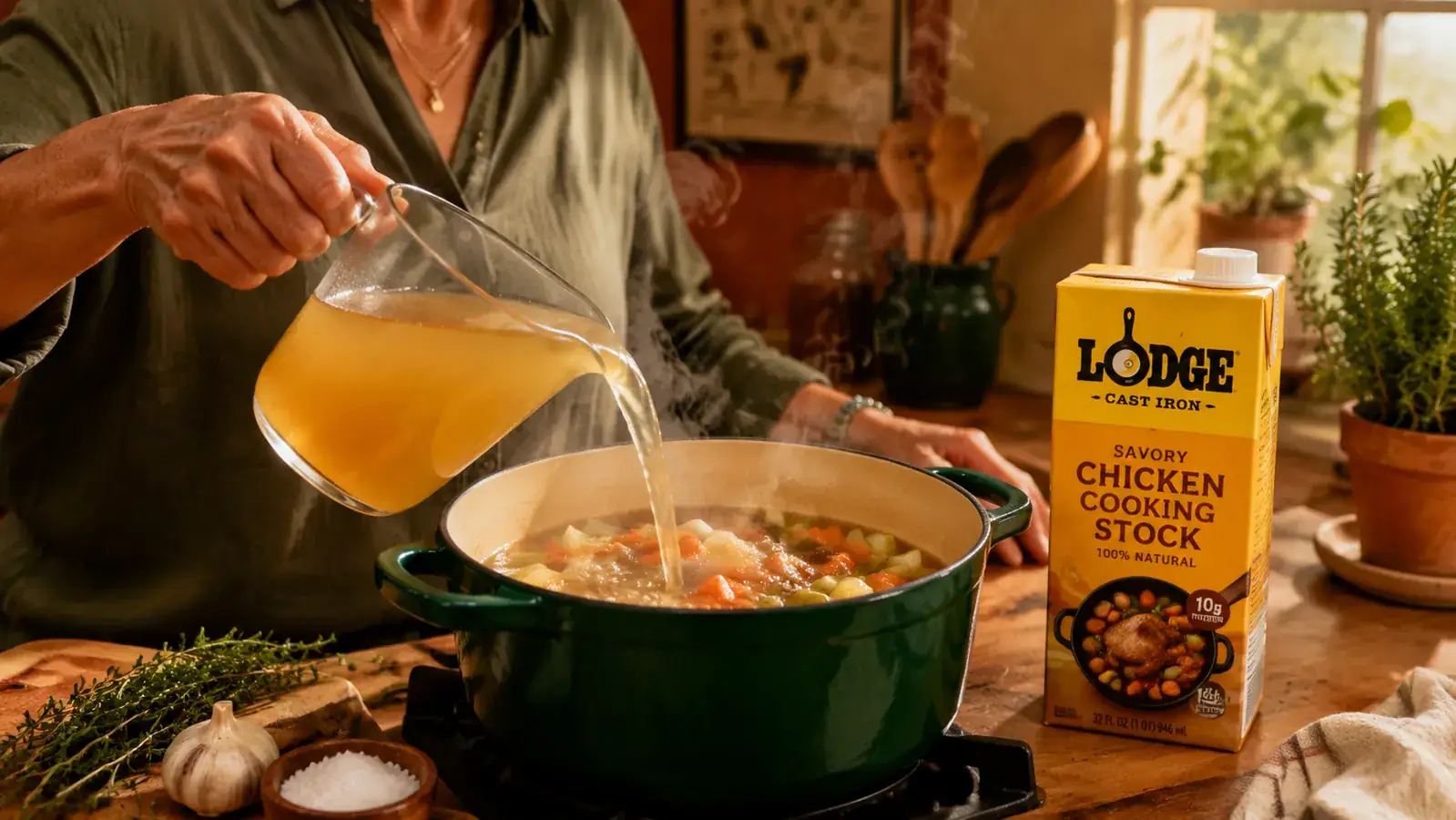
Stock is the single biggest sodium variable in any soup or stew. A standard carton of store-bought chicken broth has roughly 570mg of sodium per cup. If your recipe calls for 6 cups of broth, you have committed 3,420mg before the vegetables touch the water. That is more than two full days of DASH sodium in the base alone.
Buy no-salt-added stock or make your own. Pacific Foods and Imagine both make no-salt-added chicken and vegetable stocks that you can find at most grocery stores. Homemade is better and costs almost nothing: save vegetable scraps in a zip-lock bag in the freezer, simmer them with cold water in the Dutch oven for 45 minutes, strain, and refrigerate. Zero sodium, and the flavor is richer than anything in a carton because the Lodge holds heat evenly and extracts more from the vegetables during the simmer.
If you cannot find no-salt-added stock, dilute standard low-sodium stock 50/50 with water. A 40% sodium reduction with no loss of body in the final soup, because the Dutch oven concentrates flavor during the long cook.
Step 3: Build Flavor with Aromatics, Not Salt
This is the step most home cooks skip, and it is the reason so much low-sodium cooking tastes flat. Aromatics are the flavor foundation: onion, garlic, celery, carrot, fennel, leek, fresh ginger. When you cook them low and slow in a small amount of olive oil in the bottom of the Dutch oven before adding any liquid, something called the Maillard reaction begins to concentrate their natural sugars. The enameled surface of the Lodge distributes heat evenly, so the aromatics brown gently without scorching at medium-low.
I use this layering sequence for almost every soup and stew I make. Heat two teaspoons of extra-virgin olive oil in the Dutch oven over medium-low. Add one large diced onion and two stalks of celery. Cook, stirring occasionally, for eight to ten minutes until the onion is translucent and starting to go golden at the edges. Add four cloves of minced garlic and cook for two more minutes. Then add one teaspoon of dried thyme, a bay leaf, and either fresh rosemary or smoked paprika depending on the direction of the dish. Let the herbs bloom in the oil for sixty seconds before adding anything wet. That sixty seconds is doing more for your flavor profile than a full teaspoon of salt would.
The Lodge holds heat so evenly that my aromatics go golden without a single hot spot. No scorching, no stirring every thirty seconds. That steady heat is what pulls the sweetness out of the onion without burning it, and that sweetness is what makes people ask if I used more salt than I actually did.
Step 4: Add Vegetables and Protein in the Right Order
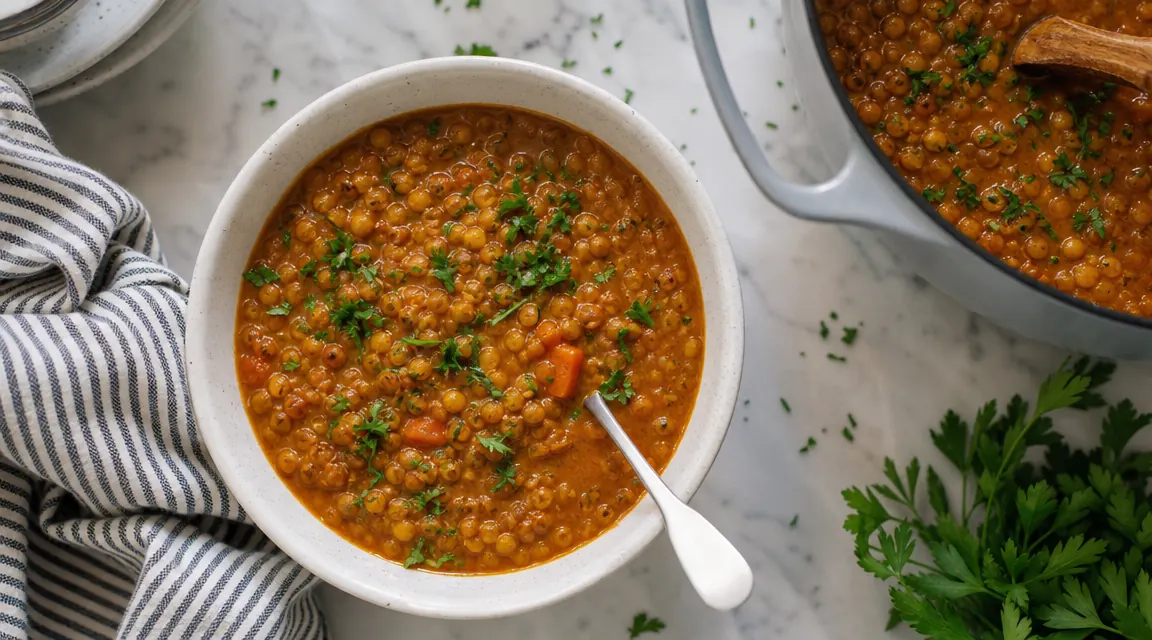
Dense vegetables go in first: potatoes, sweet potatoes, turnips, winter squash, parsnips. Cut them into 3/4-inch pieces for a stew, larger for a broth-forward soup. Add your stock or water at this point, bring the whole thing to a gentle boil with the lid on, then reduce to a low simmer. The moisture-sealing lid on the Lodge is not just a design feature. It creates a pressurized steam environment that speeds cooking on the dense vegetables without boiling away your broth.
After fifteen minutes, add medium-density vegetables: zucchini, green beans, mushrooms, canned no-salt-added white beans or lentils. These cook in ten to twelve minutes at a simmer. Delicate leafy greens like spinach or kale go in during the last three to five minutes. They take almost no time and they hold their color and their potassium content better when you do not overcook them. Potassium is genuinely important for stroke patients. It blunts the effect of sodium on blood pressure, and leafy greens are one of the best sources you have.
For protein, poached chicken breast or canned no-salt-added chickpeas work best. If you use chicken, simmer it whole in the broth for the first twenty minutes, then remove it, shred it with two forks, and stir it back in at the end. The Dutch oven's deep well holds enough liquid to submerge a whole breast without losing too much to evaporation.
Step 5: Finish with Acid and Fresh Herbs, Not the Salt Shaker
The most common complaint about low-sodium food is that it tastes dull. The fix is almost never more salt. It is acid. A tablespoon of fresh lemon juice or a splash of apple cider vinegar stirred in right before you serve brightens every flavor in the pot and makes your tongue perceive roundness and depth the way it would with a salty soup. This is not a trick. It is basic flavor chemistry, and it adds zero milligrams of sodium.
Fresh herbs at the finish are the second tool: flat-leaf parsley, fresh dill, basil, or cilantro depending on the dish. Dried herbs hold up through the long simmer and build flavor from the inside. Fresh herbs added at the very end, off the heat, give you a burst of brightness on the surface that makes the bowl smell and taste lively. Together, the acid and the fresh herbs do what most people reach for salt to accomplish.
A note on thickeners: if you want a heartier stew, mash a cup of the cooked beans or potatoes against the side of the Dutch oven with a wooden spoon and stir them back into the liquid. The starch thickens the broth naturally, adds body, and adds nothing to your sodium count.
What Else Helps
The Dutch oven is the core tool, but two other habits move the needle significantly for patients I work with. First: read labels on every canned item you use, including canned tomatoes, canned beans, and canned corn. The difference between a standard canned diced tomato and a no-salt-added version is often 250mg of sodium per half-cup serving. Over the course of a pot of soup, that difference compounds fast. I keep a printed sodium cheat sheet on my refrigerator. It took me fifteen minutes to make and I use it every week.
Second: portion size matters. A generous two-cup bowl of soup is different from a small one-cup serving. If your recipe yields 6 servings and you consistently eat two, you are eating twice the sodium you planned for. Using a ladle with a measured capacity makes this easy without feeling clinical. My ladle holds exactly one cup. I fill it twice and I know exactly what I am eating.
If you want to go deeper on tracking sodium in your cooking, the Nicewell food scale review on this site walks through how I use a digital scale to measure high-sodium ingredients like cheese, olives, and cured meats so I can include small amounts without blowing the budget. And if you are considering the Lodge Dutch oven and want my full fourteen-month assessment, the long-term Lodge Dutch oven review covers what to expect over time, including enamel care and heat management on both gas and electric.
The right pot makes low-sodium cooking something you will actually do every week.
The Lodge 6-Qt Enameled Cast Iron Dutch Oven is what I use in my own kitchen. Heavy lid seals in steam. Even heat builds flavor from aromatics. Enamel surface means nothing reacts with acidic tomatoes or lemon juice. One pot, hundreds of DASH-compliant meals.
Amazon Check Today's Price on Amazon →