
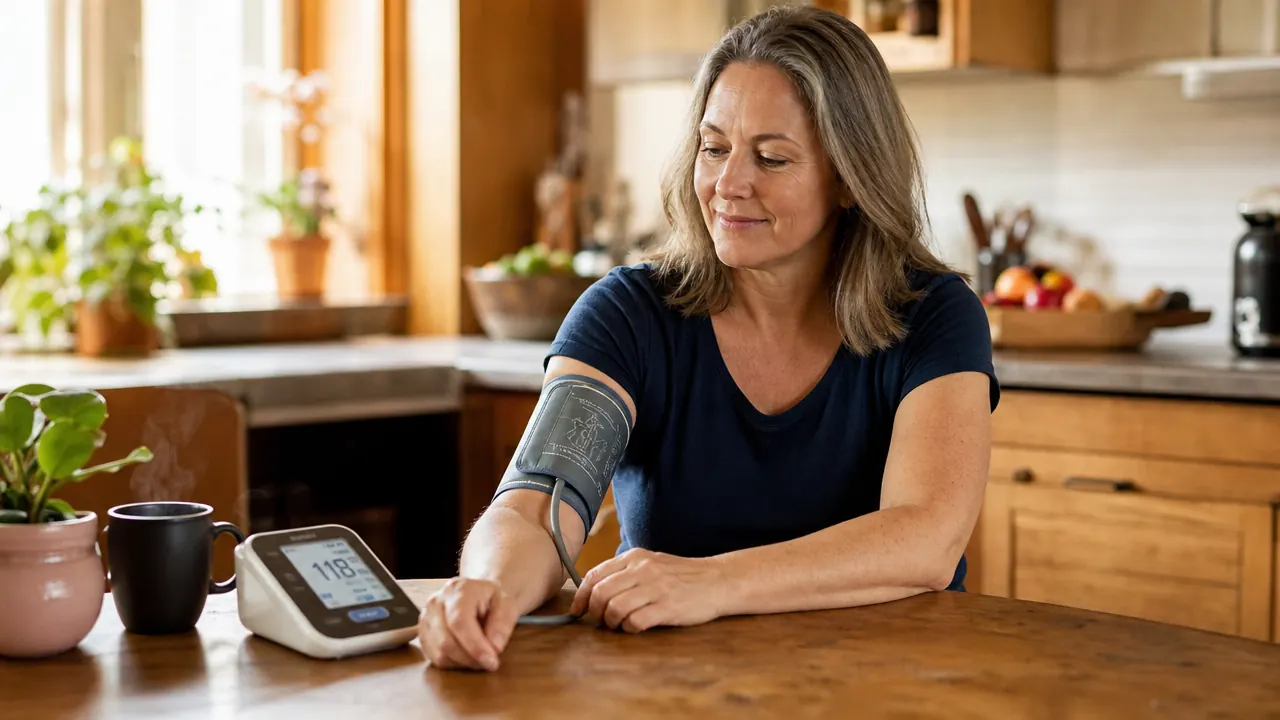
I have sat across from hundreds of stroke patients and told them the same thing their cardiologist told them: check your blood pressure at home, every morning, before you drink your coffee. I know what uncontrolled hypertension does to a brain. I have watched it happen, shift after shift, for twenty-three years. And yet, when my own numbers started climbing at 51, I did what most people do. I told myself I was stressed. I told myself it was the night shifts. I told myself I would deal with it after the holidays.
The holidays came and went. My systolic inched from 132 to 138 to 141. My cardiologist, who knows I work on a stroke unit and therefore has zero patience for my rationalizations, looked at me across the exam table and said, Theresa, you of all people know what we are looking at here. She handed me a referral for a home monitor. I stuffed it in my bag and did not open it for six weeks.
I am telling you this because I want you to know that resistance is not stupidity. It is fear. When you are the one with the numbers instead of the patient down the hall, something in you does not want the data to be real. A reading you do not take cannot scare you.
A reading you do not take cannot scare you. That logic kept me in the dark for six weeks. It also meant my cardiologist was flying blind.
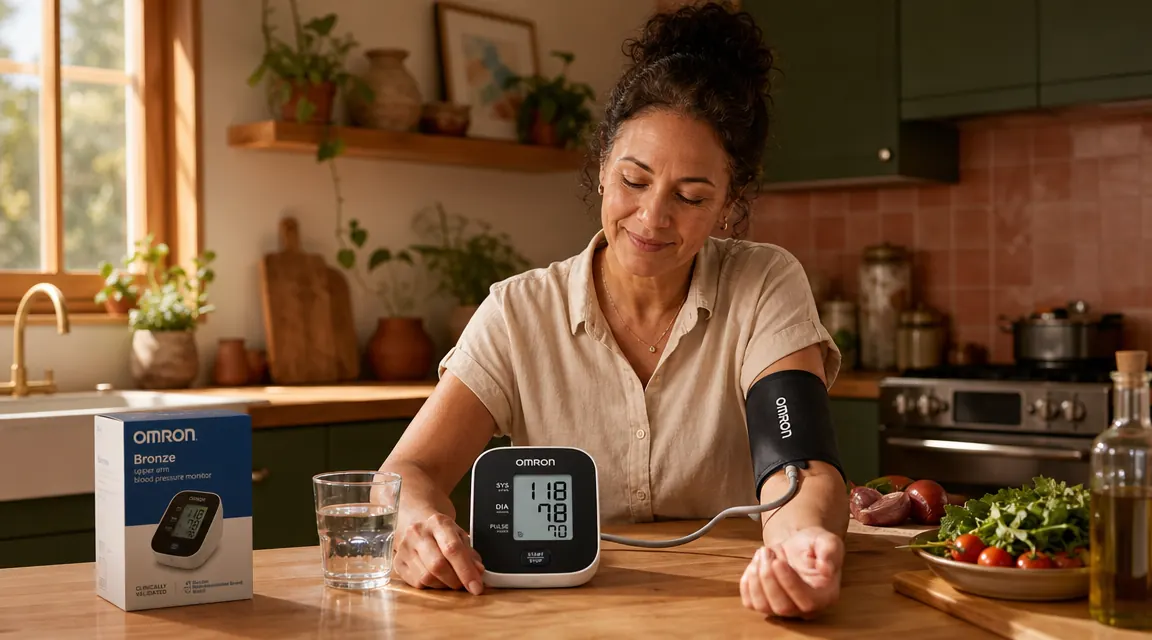
What finally broke the logjam was a slow Tuesday morning. I had nowhere to be until noon. I opened the bag, pulled out the box, and decided I would try it once just to satisfy my own curiosity. The monitor I had chosen was the Omron Bronze. My department stocks a version of the Omron line for patient education, so I was already familiar with the cuff design. The home version is nearly identical: a wide, pre-formed upper-arm cuff, large display, and a two-button interface simple enough that I recommend it to patients in their eighties. I wrapped the cuff around my left arm, sat quietly for five minutes the way I always tell patients to sit, and pressed the button.
The reading was 144 over 91. Not a crisis. But not a fluke, either. I took two more readings two minutes apart, the way the device prompts you to, and the numbers averaged out to 143 over 89. I wrote them down on a sticky note. Then I did the same thing the next morning. And the morning after that.
The monitor I use every morning: same Omron line trusted in clinical settings, sized for home use
The Omron Bronze is clinically validated, recommended by pharmacists, and straightforward enough to use correctly on your first try. It stores readings and pairs with the Omron Connect app so you can hand your cardiologist a real trend line instead of a single office number.
Amazon Check Today's Price on Amazon →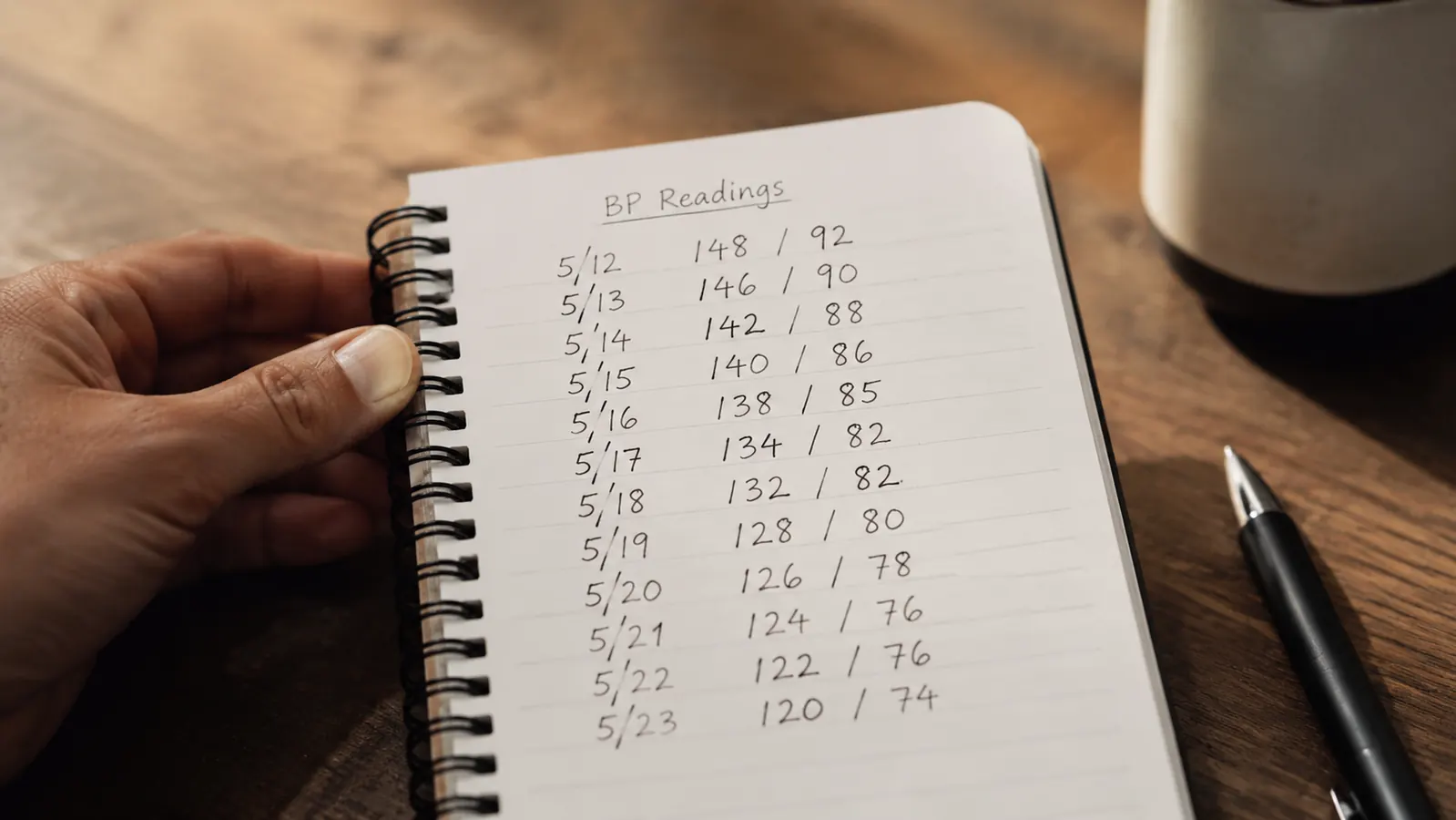
Within two weeks I had built what I now call my five-minute morning routine. It sounds almost embarrassingly simple, because it is. I get up, use the bathroom, and sit at the kitchen table. I do not pour coffee first. I do not check my phone. I sit for five minutes, sometimes doing a slow shoulder roll or two, nothing strenuous, just enough to let my body settle from lying flat to sitting upright. Then I take the reading. Two measurements, sixty seconds apart. I log them in the Omron Connect app, which keeps a running average and generates the kind of tidy trend chart a cardiologist can actually use.
After I take the readings, I pour a tall glass of water before the coffee goes in the machine. I started adding half a banana or a few slices of avocado to breakfast, not because anyone told me potassium magically lowers blood pressure, but because there is reasonable evidence that potassium helps the kidneys excrete sodium, and sodium load is a real driver of my numbers. The Omron data was showing me which mornings ran higher, and those mornings correlated with the nights I had eaten a restaurant meal or a salty snack. Seeing the pattern in the app made the connection undeniable in a way that my clinical knowledge alone never had.
Three months in, I walked into my follow-up appointment and handed my cardiologist my phone with the Omron Connect app open. She scrolled through ninety-three days of readings. She looked up and said, your averages are coming down. We are going to hold on any medication adjustment for now. That sentence, hold on any medication adjustment, was the sentence I had been trying to earn. Not because I am opposed to antihypertensives, I prescribe them to patients all the time, but because I wanted to know first what lifestyle could do on its own.
What I'd Tell You If We Were Sitting at My Kitchen Table

The monitor is not magic. The routine is not a cure. What the Omron Bronze gave me was reliable, consistent data that I could actually use, data my cardiologist could use, data that connected cause and effect in a way that scared me into paying attention to my own body the same way I pay attention to my patients.
If your doctor has told you to monitor at home and you have not started yet, I understand the resistance. I lived it. But here is what I know from both sides of the exam table: office readings are a snapshot taken under the worst possible conditions. You are anxious. You have been sitting in a waiting room. The cuff is cold and the nurse is in a hurry. Your home readings, taken five minutes after you wake up in a quiet room, are the number your cardiologist actually needs. The device that makes those readings clinically trustworthy is worth more than its price tag. The one I use every morning costs around forty dollars. That is less than one copay.
Start small. Sit down. Take the reading. Write it down or let the app do it for you. Do that every morning for two weeks, then show your doctor. What you will have is something most patients never bring to an appointment: evidence.
If you are going to build this routine, start with a monitor your cardiologist will trust
The Omron Bronze is the monitor I use and the brand I recommend to my stroke patients' families. Clinically validated for accuracy, simple enough to use correctly every day, and the app generates the trend reports your doctor wants to see.
Amazon Check Today's Price on Amazon →