On my stroke unit, I have watched the same conversation play out hundreds of times. The patient swears they eat healthy. They buy low-sodium bread. They stopped adding salt at the table. Their 24-hour urine sodium still comes back at 4,000 milligrams, twice the DASH target. The problem is almost never intention. It is measurement. Most people are estimating, and the human eye is a terrible sodium meter. A digital kitchen scale fixes this. Not because it is magical, but because it replaces a guess with a number.
The Nicewell Food Scale has over 53,000 reviews and a 4.7-star rating on Amazon. I keep one on my counter at home and I recommend it to every patient family I counsel. It reads to the gram, handles up to 22 pounds, and costs about what you spend on two restaurant meals. Below are the ten specific ways it helps you eat less sodium, each one grounded in a real mechanism I have seen play out in the kitchen and in the hospital.
Your cardiologist said 1,500mg. Your current measuring method is guessing.
The Nicewell Food Scale reads to the gram, tares to zero with a bowl on top, and fits in a kitchen drawer. It is the fastest single upgrade you can make to your sodium tracking.
Amazon Check Today's Price on Amazon →It exposes how much condiment you actually use
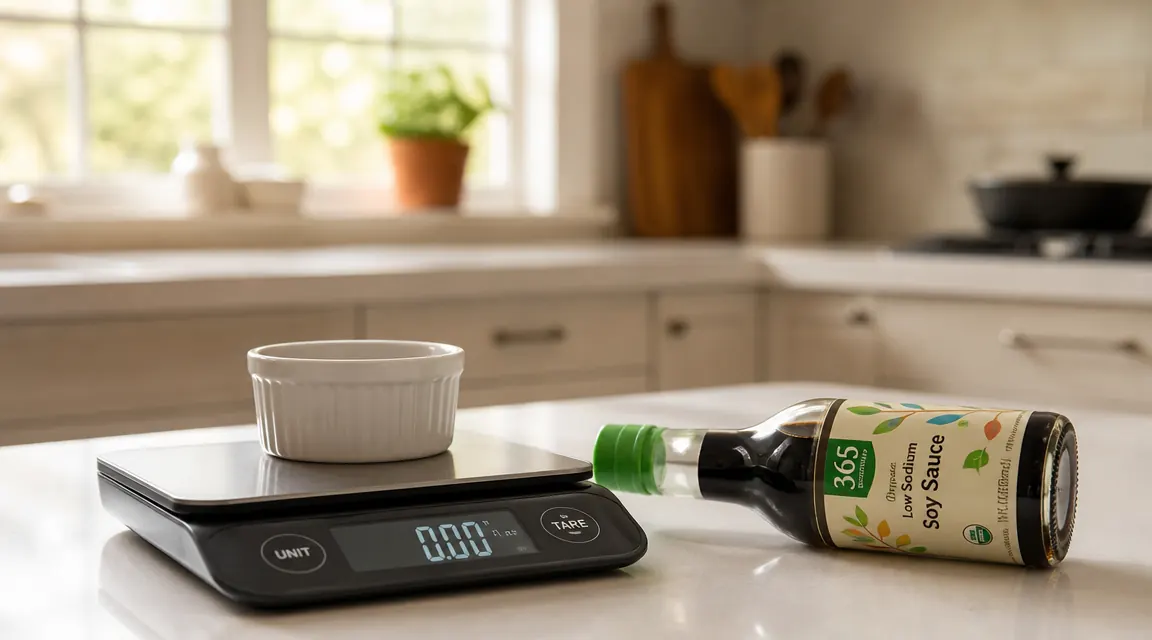
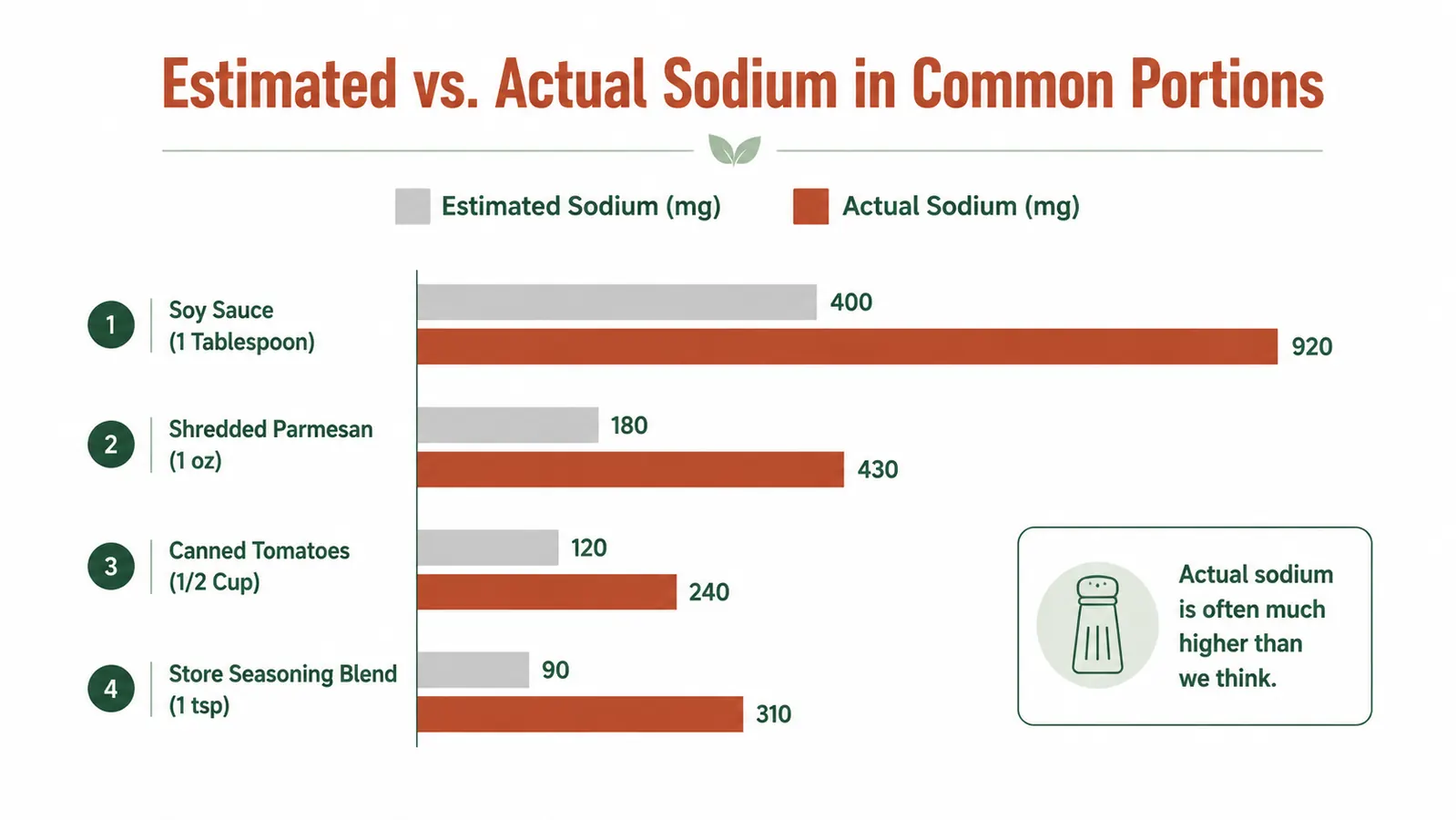
Soy sauce nutrition labels say 920mg of sodium per tablespoon. Most people free-pour soy sauce. Put your dish on the scale, tare it, then pour. A relaxed wrist easily delivers 25 to 30 grams of soy sauce, which is closer to two and a half tablespoons, not one. That is the difference between 920mg and 2,300mg in a single pour. The scale makes the pour visible as a weight, and most people immediately self-correct when they see the number climbing.
It decodes 'per serving' claims on the package
A can of chickpeas says 140mg sodium per half-cup serving. A half cup of drained chickpeas weighs about 120 grams. If you are scooping by volume with a measuring cup, you could be landing anywhere from 100 to 150 grams depending on how tight the pack is. Weighing directly to 120 grams gives you the sodium figure the label actually promises. That 30-gram swing is 35 extra milligrams per meal, which sounds small until you do it at every meal of the week.
It lets you weigh cheese without destroying the portion
Shredded parmesan is one of the sneakiest sodium sources in a heart-healthy kitchen. One ounce is the standard serving at about 450mg sodium, but a cup of shredded parmesan weighs roughly four ounces. Most people eyeball a cheese sprinkle as 'a little' and land at two to three ounces before they know it. Tare a small bowl on the Nicewell, spoon in parmesan until the display reads 28 grams, and stop there. One ounce. Done.
It makes batch cooking sodium math precise
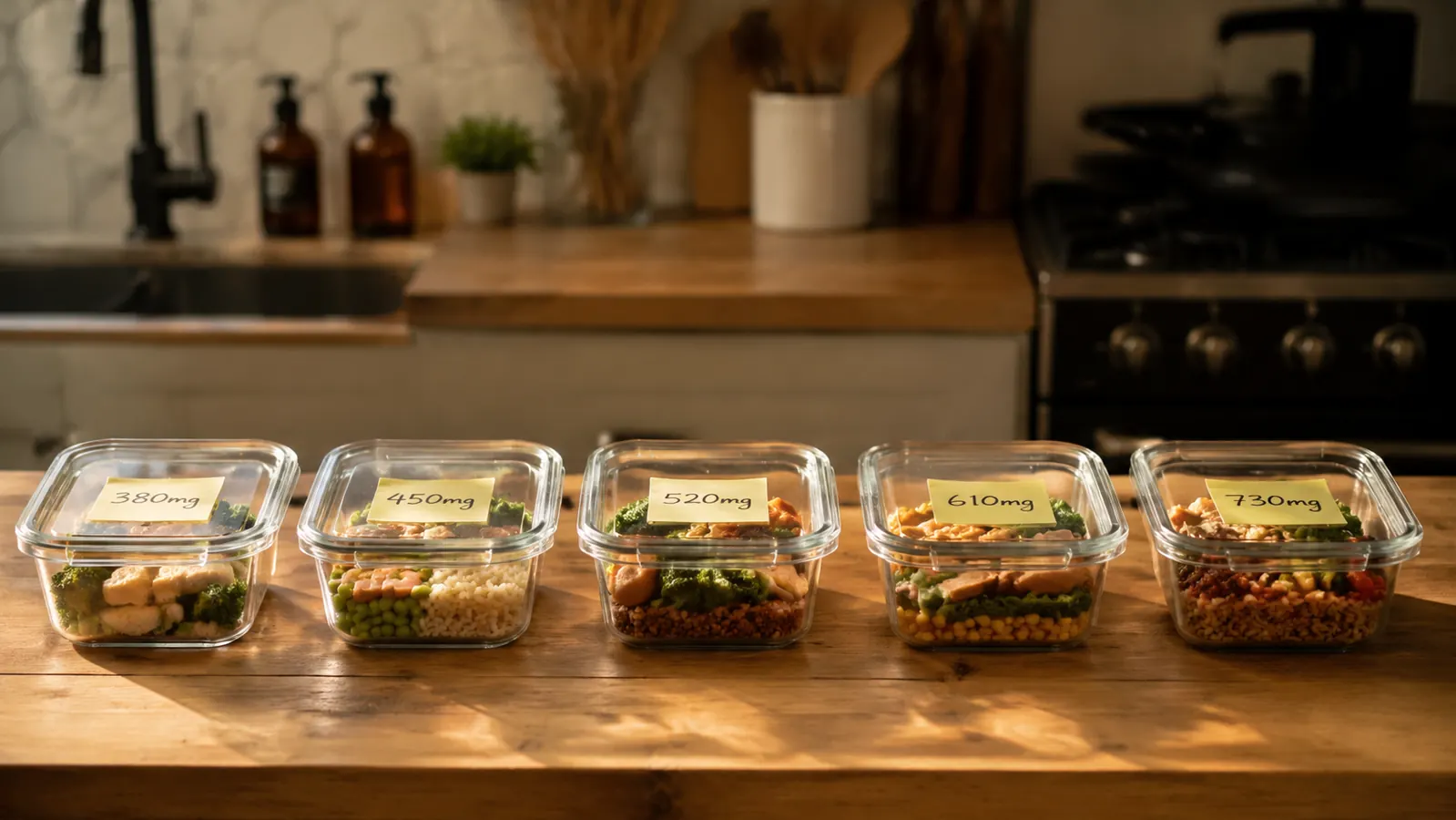
When you cook a big pot of soup and divide it into five containers, the sodium per container is only accurate if the portions are equal. If you ladle by eye and one container gets 40% of the pot, that container holds 40% of the sodium. Weighing each container to the same gram total before sealing guarantees the sodium math you did during prep actually holds across the week. This is the foundation of the meal prep routine I walk through in my guide to low-sodium lunch prep.
It catches hidden sodium in spice blends
Packaged seasoning blends, garlic salt, lemon pepper, steak rubs, and Italian seasoning mixes routinely contain 150 to 300mg of sodium per quarter teaspoon. A quarter teaspoon is roughly one gram by weight. The Nicewell reads to one gram, which means you can weigh a spice blend and know exactly how many grams you added, then multiply by the per-gram sodium figure on the label. Switching to single-herb spices (dried basil, smoked paprika, cumin) and weighing them the same way cuts spice-source sodium by 80% or more.
The patients who get their sodium down are not the ones with the most willpower. They are the ones who replaced estimation with a number. A scale does that in one step.
It helps you buy the right amount of protein at the store
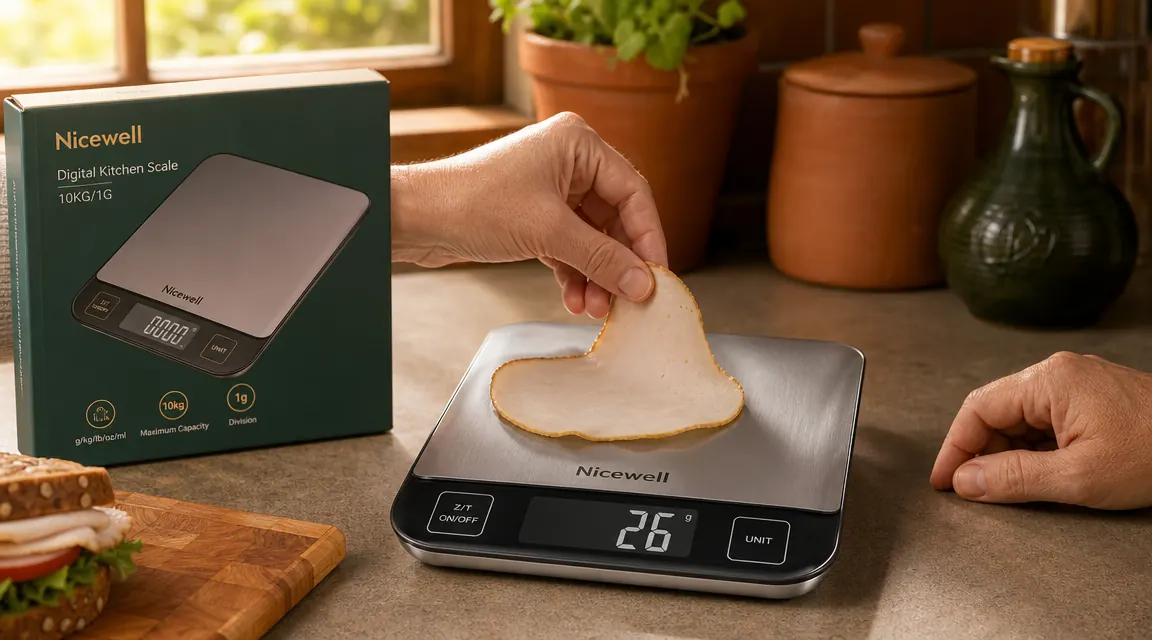
Deli meats and smoked fish are sodium bombs sold by the pound. If your cardiologist has you at two ounces of deli turkey per meal (about 400 to 600mg sodium depending on the brand), you need to know what two ounces actually looks like on your counter before you build that habit at home. One session with the scale and a fresh package teaches your eyes a calibration they keep for months. Think of it as a one-time investment in portion literacy.
It stops bread from sneaking past your sodium budget
Two slices of whole wheat bread is a 140mg sodium entry before you add any filling. But 'two slices' varies wildly by loaf. A thick artisan slice can weigh 50 grams while a standard sandwich slice is 28 grams. The sodium scales with the weight. Putting a plate on the Nicewell, taring it, and weighing your bread means you are tracking the sodium figure from the label's per-gram rate, not an assumed serving size that may not match your actual loaf.
It makes low-sodium recipes reproducible
When you find a soup or sauce your family actually likes that lands under 400mg sodium per serving, you want to be able to make it exactly the same way next time. Volume measurements drift, but weight does not. A recipe written with gram measurements for every ingredient is infinitely reproducible. I keep a small notepad next to my scale and write down the weight of every ingredient the first time a new low-sodium recipe works well. The second cook is identical.
It lets you safely use higher-sodium ingredients in smaller doses
Some ingredients add enormous flavor for very little weight: fish sauce, miso paste, anchovy paste, capers. A full teaspoon of miso is around 600mg sodium, but half a gram of miso dissolved into a large pot of soup adds only about 60 to 80mg while still giving depth. The scale lets you use these ingredients strategically rather than avoiding them entirely, which is the difference between food that feels like punishment and food you actually want to eat again.
It gives you a verifiable number to share with your care team
When a patient tells me their sodium is under 1,500mg, I ask how they know. If the answer is 'I think so,' we have a problem. If the answer is 'I weigh everything and log it in my phone,' the care team can actually use that data to calibrate medications and make informed decisions about fluid management. A documented, weighed food diary is clinical-grade information. A memory-based estimate is not. The Nicewell is the tool that makes the diary real.
What I'd Skip Instead
Sodium tracking apps without a scale are basically astrology. The app entry for 'shredded parmesan, 1 tablespoon' assumes a measurement you are not actually making. You are scooping by feel and logging by approximation. Apps are useful when the input is accurate, and the input is only accurate when it comes from a gram weight. Skip the apps until you have the scale. The scale is the foundation.
Skip the sodium tracking app until you have the scale. The app is only as good as the number going in.
One tool, 10 mechanisms, and a real shot at hitting your sodium target.
The Nicewell Food Scale reads to 1 gram, handles 22 pounds, and fits on any counter. If your doctor has given you a sodium number to hit, this is the most direct path to actually hitting it. My full eight-month review of the Nicewell covers accuracy testing, daily use, and what to watch for in the first week.
Amazon Check Today's Price on Amazon →