
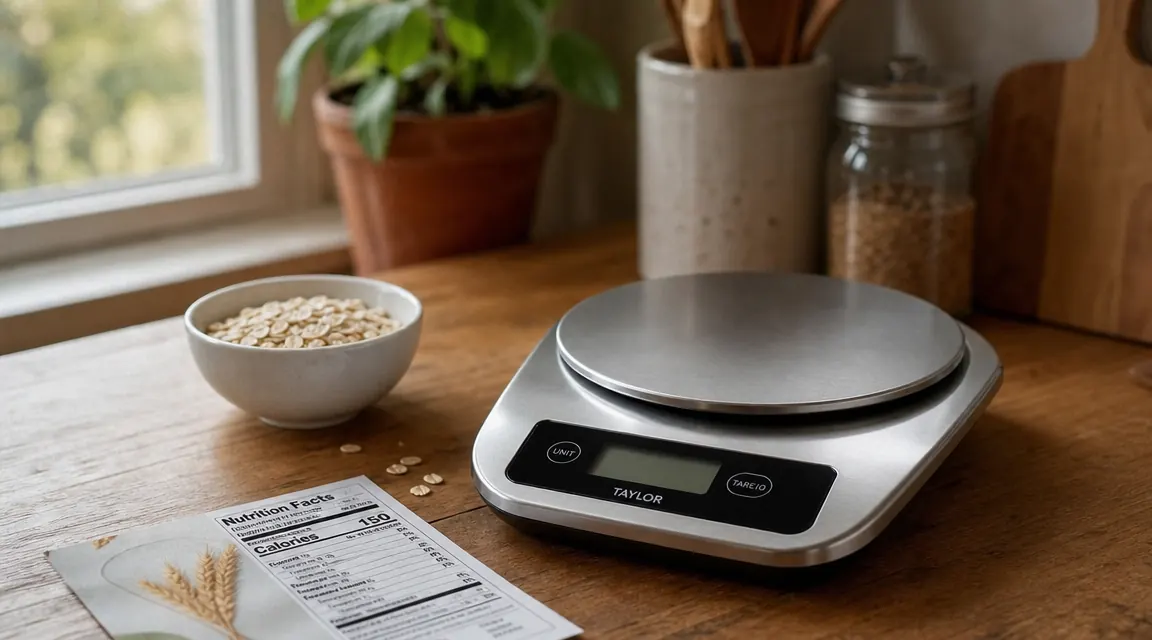
I have spent more than twenty years as a stroke coordinator RN. I know what happens to a brain when blood pressure goes unchecked for years, and I know how much of that pressure is driven by what people eat at home, not at restaurants. So when I started coaching my patients and their families on low-sodium cooking, I expected the hardest part to be getting them to read labels. It wasn't. The hardest part was getting them to understand that reading the label is not enough if you never measure what you put on the plate. The Nicewell Food Scale is the tool that finally bridged that gap in my own kitchen, and I've been using it nearly every day for eight months.
The scale itself is almost boring to describe. It weighs food. It shows grams and ounces. It has a tare button. What is not boring is what happens to your sodium math the first week you use one. I'll get to that.
The Quick Verdict
A precise, easy-to-clean scale that makes portion-truth visible, the single most underrated move in low-sodium cooking. Minor gripe: the display goes dark fast on auto-shutoff.
Amazon Check Today's Price →If your sodium target keeps slipping, you are probably eating more than you think, and a $25 scale fixes that.
The Nicewell 22lb Digital Scale reads to 1-gram precision, handles stainless steel durability, and has 53,000 reviews backing it. Check whether it is still in stock at the price I paid.
Amazon Check Today's Price on Amazon →How I Have Been Using It
My DASH diet sodium ceiling is 1,500 milligrams a day. My cardiologist set that after my own blood pressure started creeping up three years ago, which felt professionally embarrassing as a stroke nurse but was actually clarifying. I understood the stakes in a way that went past the textbook. I started cooking low-sodium at home seriously about eighteen months ago, but my first six months were mostly guesswork. I was estimating portions, eyeballing cheese, shaking spice blends into dishes without reading the back of the jar. My blood pressure came down a little, but my tracking was fiction. I was convincing myself I was hitting 1,500mg on days I was almost certainly at 2,200mg.
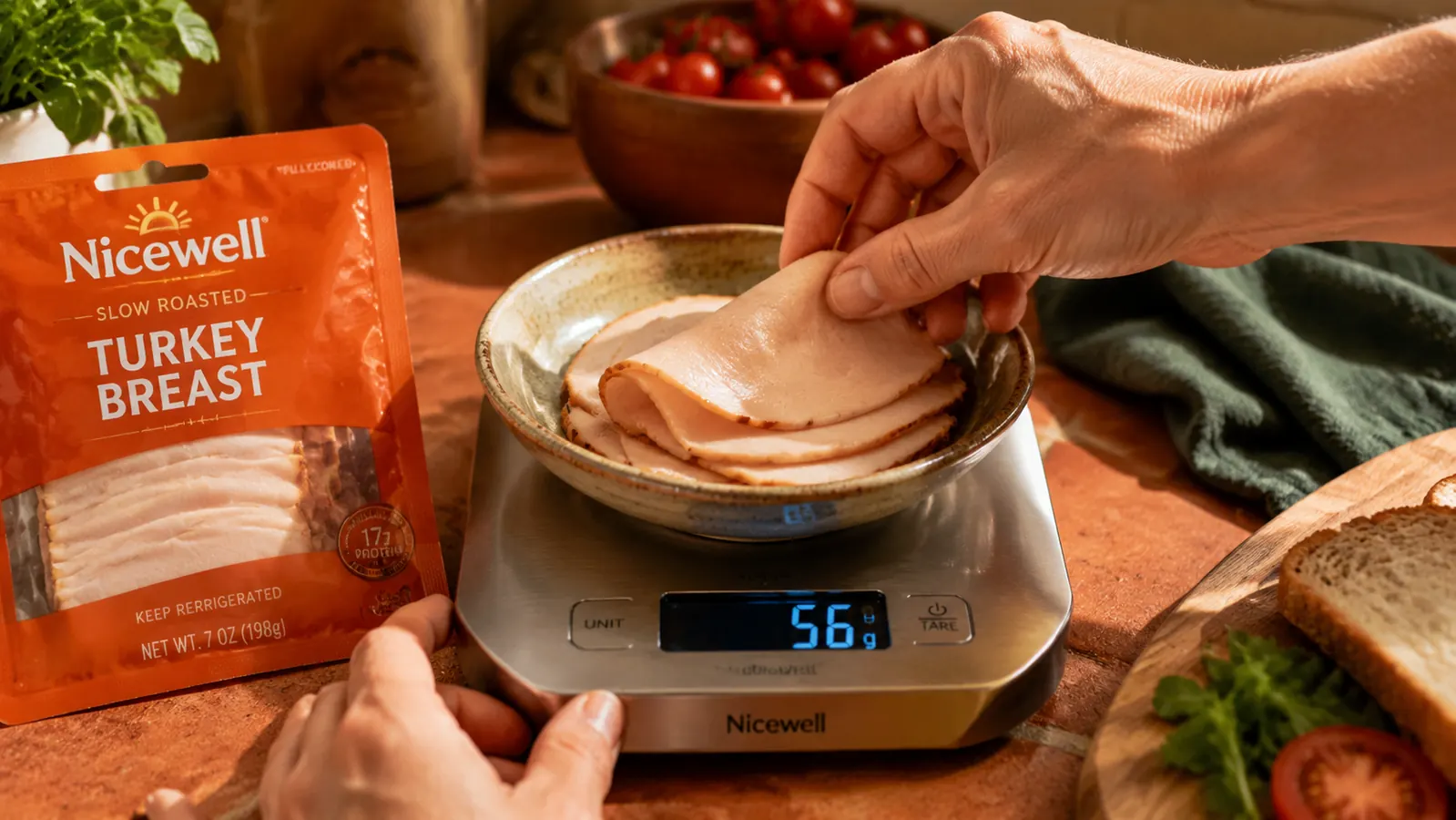
Eight months ago I ordered the Nicewell scale. My first week with it was genuinely unsettling. I weighed a portion of the low-sodium deli turkey I had been buying. The label said one serving was 56 grams and contained 360mg of sodium. What I had been putting on my sandwiches was closer to 95 grams. That is not one serving. That is 1.7 servings, or about 612mg of sodium from one ingredient in one meal. That kind of invisible overage is exactly what I warn families about in the hospital, and I was doing it myself.
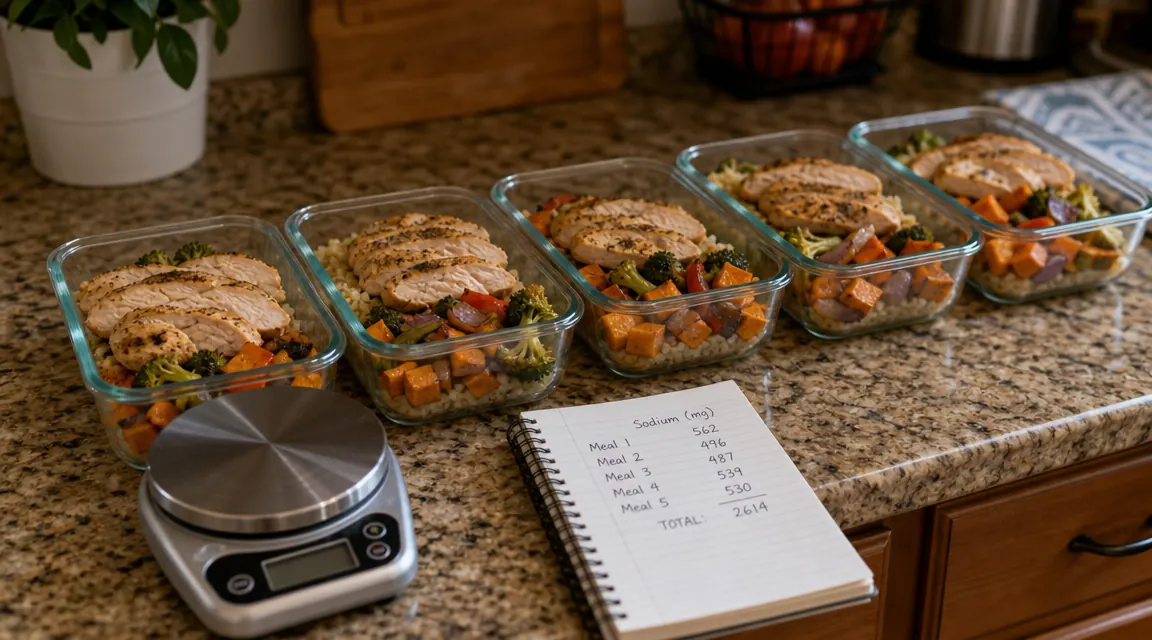
Since then the scale lives on my counter next to the cutting board. I use it to portion proteins, weigh cheese, measure salad dressing, and portion out homemade spice blends. I also use it when I meal prep on Sundays to make sure each container holds what I think it holds.
What the Scale Gets Right
The accuracy is the main thing. I tested the Nicewell against a calibrated lab scale we keep at the hospital using a 100-gram calibration weight. It read 100g on the nose three times in a row. I also compared it against another inexpensive kitchen scale I had been ignoring in a cabinet. That older scale was off by 4 to 6 grams on protein portions, which on a chicken breast is not a big deal for baking, but at 35mg of sodium per ounce it is a meaningful difference when you are tracking tightly.
The 1-gram precision matters more than most reviewers acknowledge. Many cheaper scales only resolve to 5 grams, which is fine for bread dough but sloppy for sodium tracking. If I'm weighing out 28 grams of shredded parmesan, I need to see the number tick up gram by gram so I can stop at exactly the portion I've budgeted for. The Nicewell does that.
The platform is stainless steel with a tempered glass overlay, and both clean with a damp cloth. That matters in a working kitchen. I've had cheaper scales with soft platforms that absorbed oil and smelled odd within a month. This one wipes down completely and shows no staining after eight months of daily use.
I was convinced I was hitting 1,500mg of sodium a day. My first week with a scale showed I was closer to 2,200mg. I hadn't changed what I was eating. I had only changed what I was measuring.
The Serving Size Problem Nobody Talks About
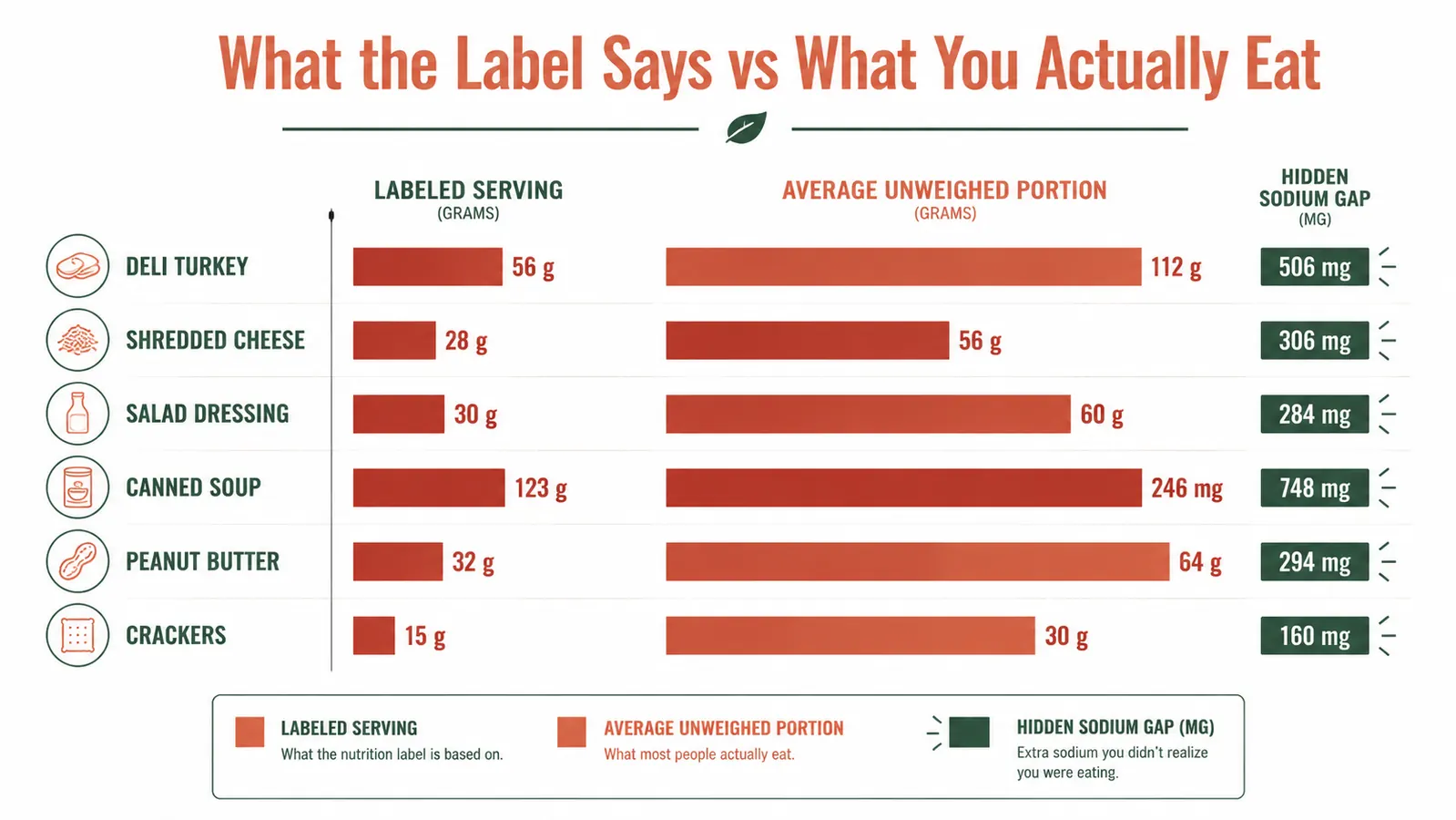
Here is the mechanism that matters, and it is something I now explain to every patient family I work with. A food label is accurate. The FDA has pretty tight standards for that. The problem is that the serving size on the label is a legal standard, not a behavioral one. Nobody pours exactly 32 grams of cereal or spoons out exactly 30 grams of peanut butter by hand. Most people pour or scoop until it looks right to them, and 'looks right' almost always means more than the label serving.
The consequence in sodium terms is brutal. Take a frozen dinner with 590mg of sodium that calls itself heart-healthy. If that container holds 1.5 servings, which many do, and you eat the whole thing, you have just consumed 885mg in a single meal. Your 1,500mg ceiling is now more than half gone on lunch. You didn't cheat. You weren't careless. You simply didn't know what 1.5 servings actually looked like on your plate.
The scale makes portion truth visible. It does not require willpower or habit change beyond the mechanical act of placing the bowl on the scale before you fill it. Tare it, fill it, read the number. That is the whole intervention. On the DASH diet, that one habit closes the gap between what people think they are eating and what they are actually eating faster than almost anything else I have seen.
Performance Over Time: Eight Months of Daily Use
The scale has held its calibration. I re-test against the calibration weight every few months and it has not drifted. The tare function still responds instantly. The stainless platform has one small scratch from a metal spoon I dragged across it, which is my fault, not the scale's. The display is crisp and the numbers are large enough that I can read them without reaching for my glasses if the kitchen light is on.
The one thing that irritates me is the auto-shutoff. The scale turns off after about sixty seconds of inactivity. If I'm working through a complex recipe and set the scale down to chop something, it is often off by the time I come back. I then have to turn it on, wait for it to zero, and re-tare my bowl. This is a minor nuisance but it is the most common complaint in the reviews too, so I want to name it clearly. If you are doing high-speed meal prep, it adds friction.
Battery life has been fine. I am still on the original batteries after eight months of daily use. The scale uses two AAA batteries and the low-battery indicator gave me a couple of weeks of warning before I swapped them.
What the Nicewell Does Not Do Well
It is not a smart scale. There is no Bluetooth, no app, no nutritional database. If you want a scale that automatically calculates sodium content by querying a food database, this is not it. You still need to do the math yourself: look up the sodium per gram from the nutrition label, multiply by your weighed portion, add it to your daily running total. Some people find that tedious. I find it clarifying, because the act of doing the math makes the numbers stick. But if you are someone who will not sustain a manual process, you would benefit from pairing this scale with a nutrition tracking app like Cronometer, which handles the calculation once you enter the grams.
It also has a 22-pound capacity, which sounds like a lot but means a large mixing bowl filled with a dense batch of dough can approach the limit. For standard meal prep portions and single-ingredient weighing, 22 pounds is more than enough. For very heavy baking projects, keep that ceiling in mind.
What I Liked
- 1-gram precision is accurate enough for tight DASH diet sodium math
- Stainless steel and tempered glass platform cleans completely with a wipe
- Held calibration over eight months of daily use without drift
- Large, easy-to-read display works without reading glasses in normal kitchen light
- Battery life easily exceeds six months of daily use
- 22-pound capacity handles everything from single portions to full meal prep batches
Where It Falls Short
- 60-second auto-shutoff interrupts longer cooking sessions
- No Bluetooth or app integration, all sodium math is manual
- No backlit display, dim kitchens require a lamp nearby
- One small platform scratch from a dragged metal utensil, user error but worth noting
How It Compares to What I Tried Before
Before the Nicewell I had an older no-name kitchen scale I picked up years ago for baking. It resolved to 5 grams, had a soft rubberized platform that absorbed smells, and the display died in about fourteen months. I also tried a slightly pricier OXO scale for about three weeks. The OXO is a genuinely good scale with a pull-out display that is easier to read under a large bowl. If you are doing serious baking and want a pull-out display, the OXO is worth the extra cost. For sodium tracking on the DASH diet, the Nicewell hits the same precision at a fraction of the price, and I find the platform easier to clean.
I have also recommended the Nicewell to four patient families over the past six months. Three of the four are still using it regularly. The fourth found manual sodium logging too tedious and stopped using any scale, which is honestly a data point about habit, not about the hardware. The tool only works if you use it.
Who This Is For
This scale is the right call if you are cooking at home for a sodium-restricted household and you are willing to do a few minutes of simple math at each meal. It works well for stroke survivors, their spouses and adult children, and anyone who has been told by a cardiologist to get under 1,500mg or 2,000mg of sodium daily. It is also a good fit if you are meal prepping for the week and want to make sure each container actually holds one serving, not one and a half. The price is low enough that even if you are skeptical, the experiment costs less than a restaurant meal.
Who Should Skip It
If you are looking for a smart scale with a built-in nutritional database, look at the Greater Goods Nutrition Scale or the Etekcity smart scale instead. Both cost more and do more of the math for you. If you are exclusively a baker and never need sub-5-gram precision, any basic scale will serve you. And if the idea of stopping to weigh food before every meal feels like more friction than you will realistically sustain, I'd be honest with you: the scale will sit in a drawer. The habit is the intervention, not the object. Start with one meal a day, lunch tends to be easiest, and build from there.
If you want to read more about building a practical DASH diet prep routine around a food scale, I walk through my full Sunday prep system in detail at How to Meal Prep a Week of Low-Sodium Lunches Using a Food Scale. And if you are weighing the Nicewell against the Etekcity, I compare both head-to-head at Nicewell vs Etekcity for DASH Diet Meal Prep.
Eight months of daily weighing moved my sodium tracking from guesswork to actual data. The scale cost less than two weeks of the specialty crackers I stopped buying once I saw how much sodium was in each handful.
The Nicewell 22lb Digital Kitchen Scale is in stock on Amazon with over 53,000 reviews and a 4.7-star average. Check the current price before it changes.
Amazon Check Today's Price on Amazon →