
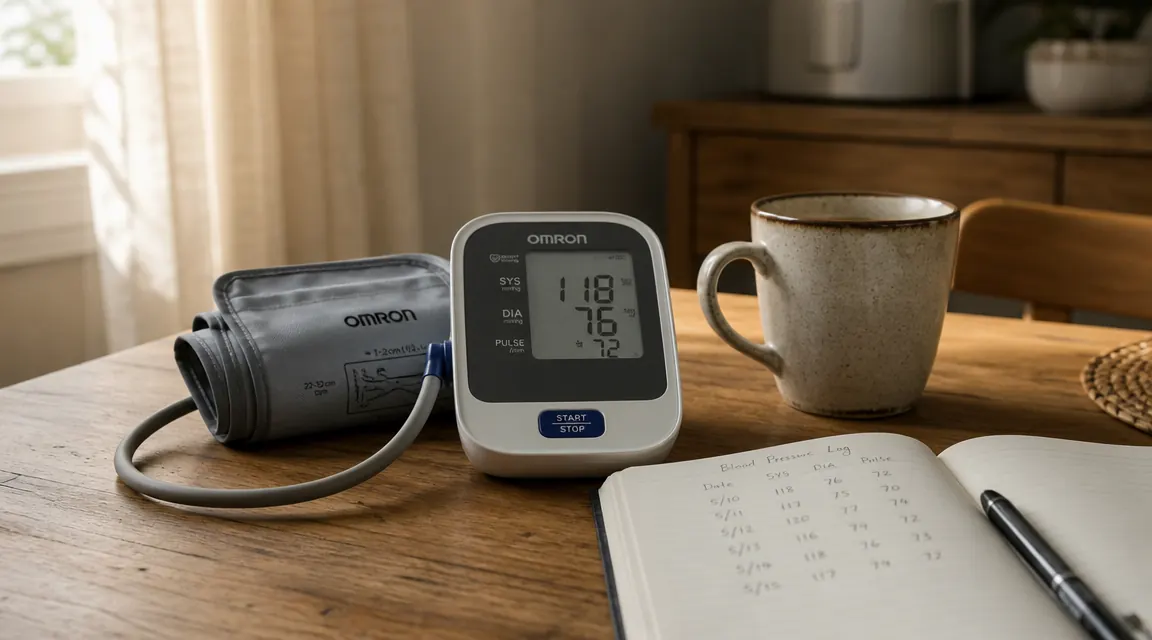
I want to tell you something I tell every stroke patient's family before they leave the hospital. When the discharge nurse hands you a stack of instructions and tells you to monitor blood pressure at home, most families nod, go straight to Amazon, type in 'blood pressure monitor,' and buy whatever has the most stars. Often that's the Omron Bronze. Sometimes that's exactly right. But there are four things about this device that the star rating doesn't surface, and for someone managing blood pressure after a TIA or stroke, those four things matter more than the rating itself.
I'm Theresa. I've been a registered nurse on a stroke unit for twenty-two years. I've helped hundreds of patients transition to home blood pressure monitoring. I recommend Omron to most of them. But I always give them the unfiltered version first, because finding out the limitations after you've already bought the device and panicked at a reading is a worse experience than knowing them going in. That's what this review is.
The Quick Verdict
Clinically accurate, simple enough for daily solo use, and fairly priced. The right choice for most stroke survivors, but only if you measure your arm first, understand the one-memory limit, and know that the irregular heartbeat alert is not a diagnosis.
Amazon Check Today's Price →If your doctor said 'monitor at home,' this is the one I'd hand you, with these caveats read first.
The Omron Bronze is the most widely recommended home BP monitor by cardiologists and pharmacists for a reason. Clinically validated, straightforward to operate, and built for daily use over years. Check the current price on Amazon.
Amazon Check Today's Price on Amazon →What Nobody Mentions: The One-Memory Limit
This is the thing that trips up stroke families the most. The Omron Bronze stores exactly 60 readings for one user. That's it. One user memory, not two. If two people in the same household are monitoring their blood pressure, you cannot share this device cleanly. You'd have to either clear the memory between users (losing the history) or buy two units. Many couples buying this after one partner has a stroke assume they'll both use it and share the data. You can't, not without losing one person's log.
The Omron Silver, which costs roughly $20 more, gives you two user memories of 80 readings each. If there are two people in your home who need to monitor, the Silver pays for itself in simplicity. But if it's just one person tracking their numbers daily, the Bronze's 60-reading memory is more than sufficient. At one or two readings per day, 60 readings covers a solid month of data to bring to your follow-up appointment. My recommendation: count the people, then choose the model.
There Is No App. That Is Fine, With One Condition.
The Amazon listing says 'Connect App' in the title. Patients buy the Bronze expecting to sync their readings to their phone automatically. It does not do that. The Bronze has no Bluetooth and no app connectivity. 'Connect' in the name refers to Omron's broader product line, not this specific model. If you need wireless syncing to the OMRON Connect app, you want the Omron Platinum or Omron Gold, both of which are priced higher.
Here is why I still recommend the Bronze to most of my patients: the app is not the habit. Writing readings in a paper logbook, which I provide with a small instruction sheet, is actually more reliable for older adults than expecting them to open an app each morning. When I visit patients at home for follow-up, the paper logbook is almost always filled out more consistently than their phone app. That said, if your cardiologist specifically wants to receive synced readings through a health platform, or if your own memory is variable after stroke, the app matters and you should step up to the Gold or Platinum.
The app is not the habit. I've watched patients with paper logbooks show up to appointments with three months of consistent readings. Their neighbors with Bluetooth monitors sometimes bring blank apps.
Cuff Fit Is the Hidden Accuracy Variable Nobody Warns You About
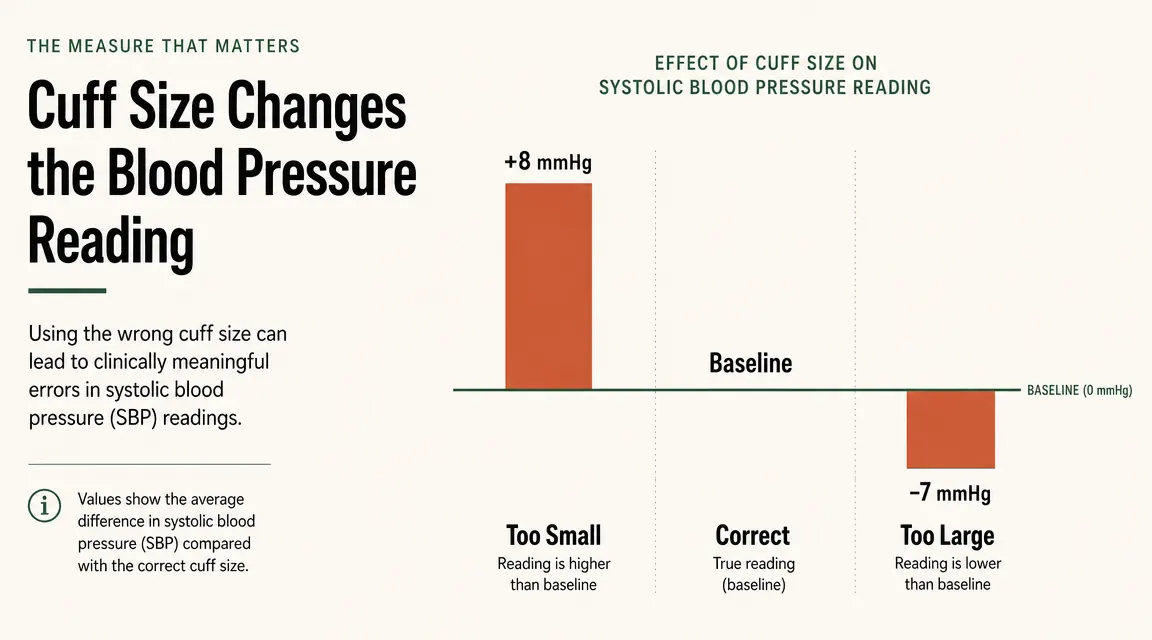
This is the most clinically important thing I will say in this review. A blood pressure cuff that doesn't fit your arm will give you wrong numbers. And wrong numbers for someone post-stroke are not a minor inconvenience. They can lead to under-treating high blood pressure or, equally dangerous, scaring yourself into an ER visit over a reading that was artificially inflated by a cuff that was too small.
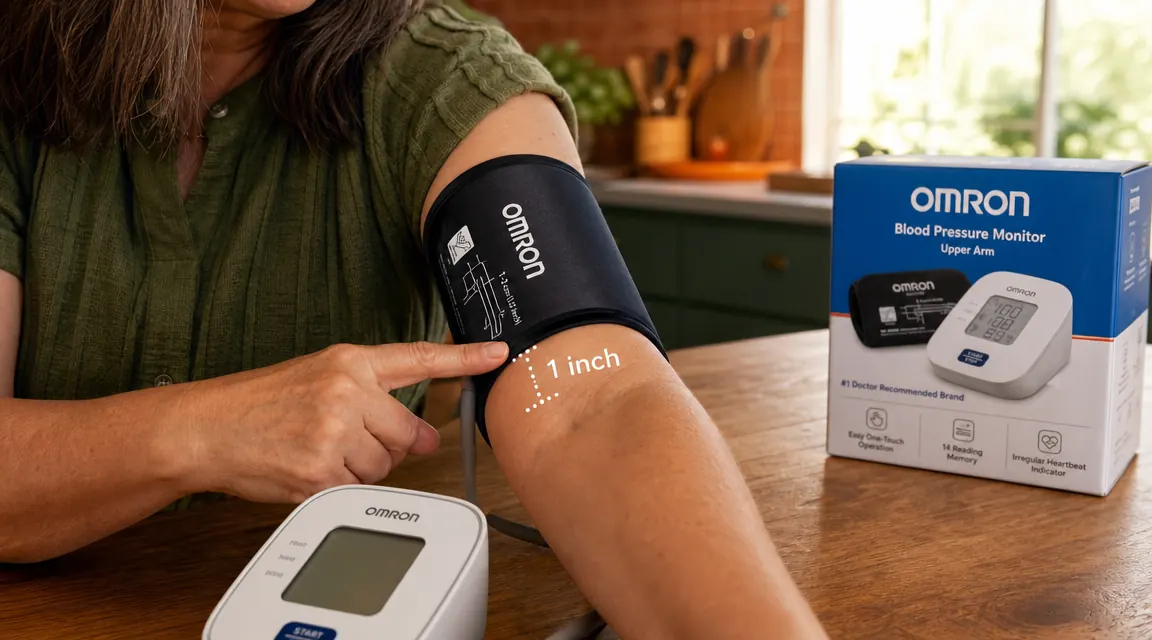
The Omron Bronze includes one D-ring cuff that fits upper arm circumferences of 9 to 17 inches. Before you buy, measure your upper arm at the midpoint between your shoulder and your elbow. If you're at the edge of that range, especially the upper edge, the readings may run 8 to 10 mmHg high. Omron sells a large cuff separately that fits arms up to 21 inches. If your arm is larger, buy the large cuff at the same time you buy the monitor. Do not assume the included cuff will work and then wonder why your numbers are different from the doctor's office.
There's also a fit issue on the low end. Very thin arms, common in older adults who've lost muscle mass or in patients with chronic illness, can cause the cuff to sit loosely and under-inflate, producing falsely low readings. If you're petite, measure first. Omron also sells a smaller cuff. Getting this right is worth the five minutes and the extra cost.
The Irregular Heartbeat Indicator: What It Means and What It Doesn't
The Bronze has a small heart icon that flashes during readings when the device detects an irregular pulse rhythm. This feature generates more alarmed phone calls than almost anything else I see in stroke follow-up. I've had patients call me at 7am convinced they were having another stroke because the heartbeat symbol flashed. Here is what I tell them every time.
The device is detecting irregular pulse intervals during the inflation and deflation cycle. Lots of things cause irregular pulse intervals that are completely benign: taking a deep breath, swallowing, coughing, moving your arm, talking, or even a minor premature contraction that your heart self-corrects in half a second. The indicator is also known to trigger in people with mild atrial fibrillation, which is clinically significant and worth discussing with a cardiologist, but even that requires a 12-lead EKG and a clinical assessment to confirm, not a flashing icon on a $43 home monitor.
My protocol for patients: if the icon flashes once in an isolated reading and the blood pressure number looks normal, retake the reading in five minutes after sitting completely still. If it doesn't flash again, log the normal reading and move on. If it flashes on three consecutive readings taken properly, call your care team, not 911. If you're also experiencing chest pain, shortness of breath, sudden confusion, facial drooping, or arm weakness, those are stroke symptoms and you call 911 immediately regardless of what the monitor says.
What the Monitor Actually Does Well
I've spent four sections on the gotchas because that's what this review is for. Now let me be direct about what the Bronze genuinely does well, because it does several things well enough that it's the first monitor I recommend despite those limitations.
The accuracy is clinically validated. Omron submitted this model for independent validation testing, and it performs within the accepted error range for a home blood pressure device. When patients bring their reading logs to my floor for comparison against our calibrated clinical units, Omron home monitors are consistently the closest match. The device is also remarkably simple to operate. One large button. No menus. No settings to fumble with. For a patient with any motor deficits after stroke, or for an older caregiver who is not comfortable with technology, that simplicity is a genuine clinical advantage.
The cuff inflates automatically and stops at the right pressure. The display is large and high-contrast with numbers big enough to read without glasses from a foot away. The device stores the last 60 readings and displays a morning average and evening average, which is useful for identifying white-coat effect versus true hypertension patterns. It runs on four AA batteries that last a year or more under daily use. The build quality is solid and feels like it will last several years, not several months.
What I Liked
- Clinically validated accuracy that holds up against hospital-grade equipment
- Single large button makes it operable for patients with mild motor deficits after stroke
- Large, high-contrast display is readable without glasses
- Automatic cuff inflation removes a source of user error
- Morning and evening averages help identify blood pressure patterns over time
- 60-reading memory is sufficient for one person's monthly log
- AA battery life runs well over a year with daily use
- Wide cuff range (9-17 inches) fits most adult arms with the included cuff
Where It Falls Short
- Single user memory means two people cannot share the device without losing data
- No Bluetooth or app connectivity despite 'Connect App' appearing in the product title on Amazon
- Irregular heartbeat indicator generates frequent false alerts that can frighten post-stroke patients
- Included cuff may not fit very large or very small arms, requiring an additional purchase
- 60 readings is a hard limit, older readings are overwritten when memory fills
- No AC adapter in the box, runs on batteries only
- No backlit display, readings can be hard to see in low light
How I Actually Use It: My Testing Protocol
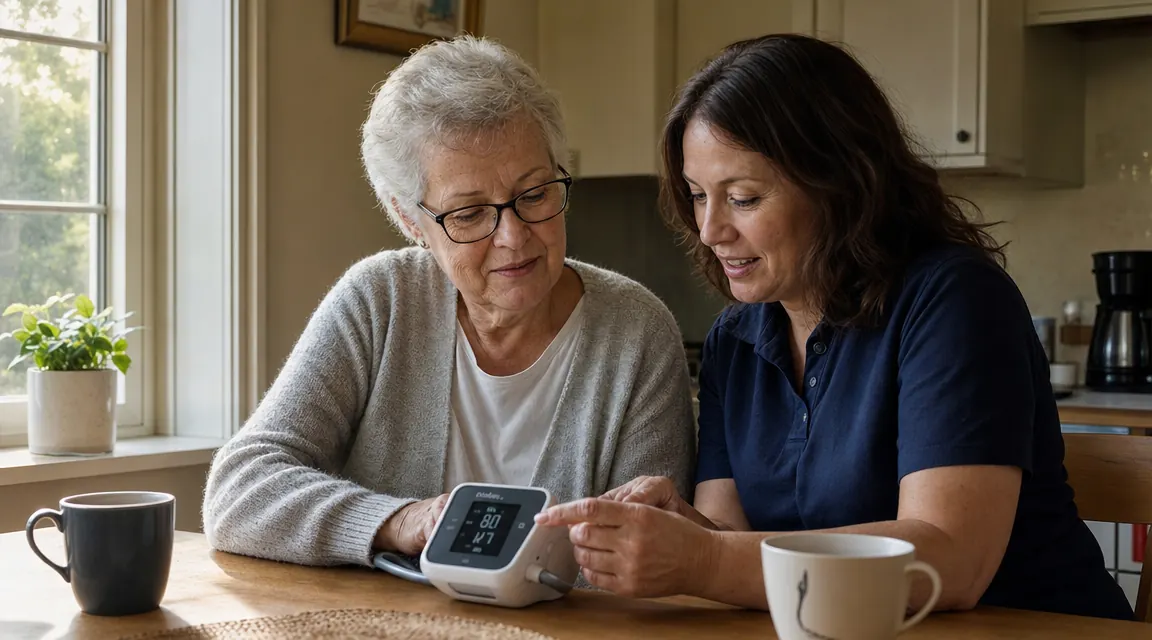
I keep an Omron Bronze on my own kitchen counter. I measured my upper arm before ordering (12.5 inches, firmly in the middle of the range), and I've compared its readings against the calibrated mercury column on my unit twice since I've had it. In both comparisons, the Bronze read within 2 mmHg of systolic and within 3 mmHg of diastolic. For home monitoring purposes, that's excellent.
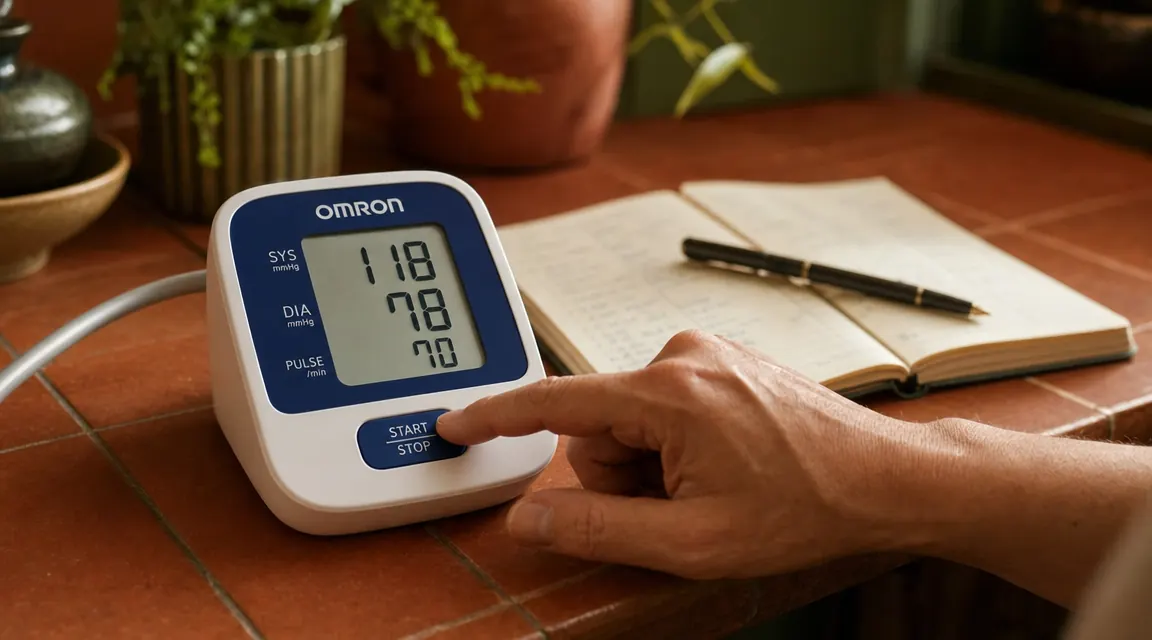
My morning routine: sit down, don't talk, rest my arm on the table palm up, take three slow breaths, press the button. One reading, logged in my notebook. That's it. I do not take three readings and average them, which is what some protocols recommend. For daily trending purposes, one consistent reading taken the same way at the same time every morning gives you more useful information than three readings taken inconsistently. Consistency in method is what makes home monitoring valuable to your cardiologist. The device supports that consistency well.
Who This Is For
The Omron Bronze is the right choice if you're a solo user post-stroke who wants a clinically accurate monitor, doesn't need phone syncing, has an arm circumference between 9 and 17 inches, and wants the simplest possible daily operation. It's also right for caregivers managing a single patient at home who want a device that doesn't require any technical setup or ongoing maintenance beyond changing batteries once a year. If your cardiologist asked you to start logging blood pressure and you're not sure what that looks like in practice, this device paired with a paper logbook is the lowest-friction way to build the habit.
Who Should Skip It
Skip the Bronze if two people in your household both need to monitor. Get two units or step up to the Silver. Skip it if your cardiologist specifically wants digital records or if you're enrolled in a remote patient monitoring program that requires Bluetooth sync. Skip it if your arm measures larger than 17 inches, you'll need the large cuff add-on and should factor that into the price comparison. And skip it if you have high anxiety around health readings, because the irregular heartbeat indicator, which cannot be disabled, will cause you stress on days when it fires without cause. For anxious patients, I sometimes recommend a model with a simpler indicator or no indicator at all, though the accuracy tradeoff is real.
For everyone else, the Bronze does exactly what your discharge instructions say it should do. It gives you a reliable, repeatable number every morning that you can bring to your follow-up appointment and your cardiologist can actually use. That is the whole job. This device does the whole job.
If you want to understand exactly how to take the most accurate reading possible from any home monitor, including sitting position, arm placement, timing relative to coffee and medication, and how to handle a reading that doesn't look right, I've written a step-by-step guide: How to Take an Accurate Blood Pressure Reading at Home. And if you're weighing the Bronze against the Silver for a stroke survivor specifically, I've done that comparison in full: Omron Bronze vs Omron Silver: Which Is Right for Stroke Survivors?
Your cardiologist wants a number at your next appointment. This is how you get it reliably.
The Omron Bronze is clinically validated, simple to use daily, and built to last. Measure your arm first, read the irregular heartbeat indicator the right way, and use a paper logbook. With those three things in place, this monitor will serve you well for years.
Amazon Check Today's Price on Amazon →