
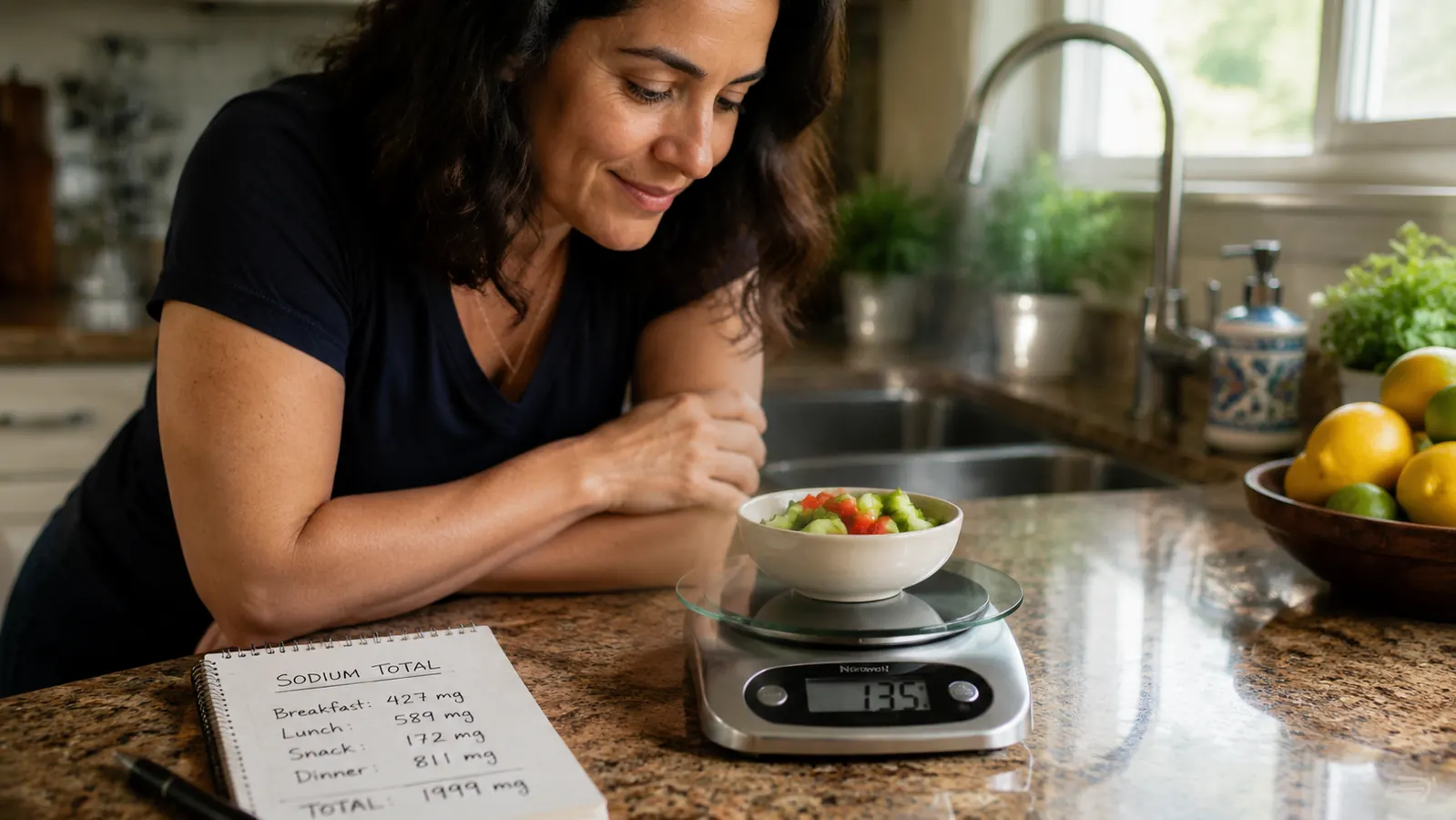
I have been a stroke coordinator for twenty-two years. I have watched what sodium does to a brain. So when patients or their families ask me what kitchen tools actually help them stick to the 1,500-milligram DASH target their cardiologist prescribed, I take that question seriously. The Nicewell food scale came up constantly. And honestly? It deserves most of the praise it gets. But there are four things the listing does not tell you, and if you are buying this to track dietary sodium after a cardiac event, not just to bake sourdough, you need to know them before you hand over your credit card.
This is not a list of dealbreakers. It is a list of surprises. And unlike most of the 53,668 Amazon reviews on this product, I am writing from the angle of someone managing a medically significant sodium budget, not someone perfecting a pie crust.
The Quick Verdict
A solid, accurate scale at an honest price, just go in knowing the two-minute auto-off will catch you mid-recipe, batteries are not USB-C, and the buttons get mushy after about a year of daily use.
Amazon Check Today's Price →You're weighing sodium, not just flour. Make sure the scale you use is actually built for daily kitchen work.
The Nicewell 22lb digital kitchen scale reads in grams and ounces, holds up to 22 pounds, and has a stainless steel platform that wipes down in seconds. Despite the gotchas I cover below, it is still the best option in this price range for DASH diet meal prep.
Amazon Check Today's Price on Amazon →How I've Used It
I bought this scale for my own kitchen about fourteen months ago, after recommending digital scales to dozens of patients and deciding I should use one myself. My cooking runs toward the kind of thing I tell patients to make: lentil soups, roasted vegetables, chicken thighs with dried herbs, whole-grain salads. Daily use. Multiple times a day when I am doing a Sunday prep session.
I also loaned it to a patient's wife, Connie, sixty-seven years old, whose husband had an ischemic stroke in March 2025. She is the one who first pointed out the auto-off behavior to me. She called me two weeks after she started using it, frustrated, and said she had been standing at her counter for three minutes trying to figure out why the display was blank. That call led me to really document what this scale does and does not do in a medically motivated kitchen.
Here is what I found across fourteen months of daily use, Connie's experience, and my own informal tests with calibration weights.
Gotcha One: The Two-Minute Auto-Off Will Catch You Mid-Recipe
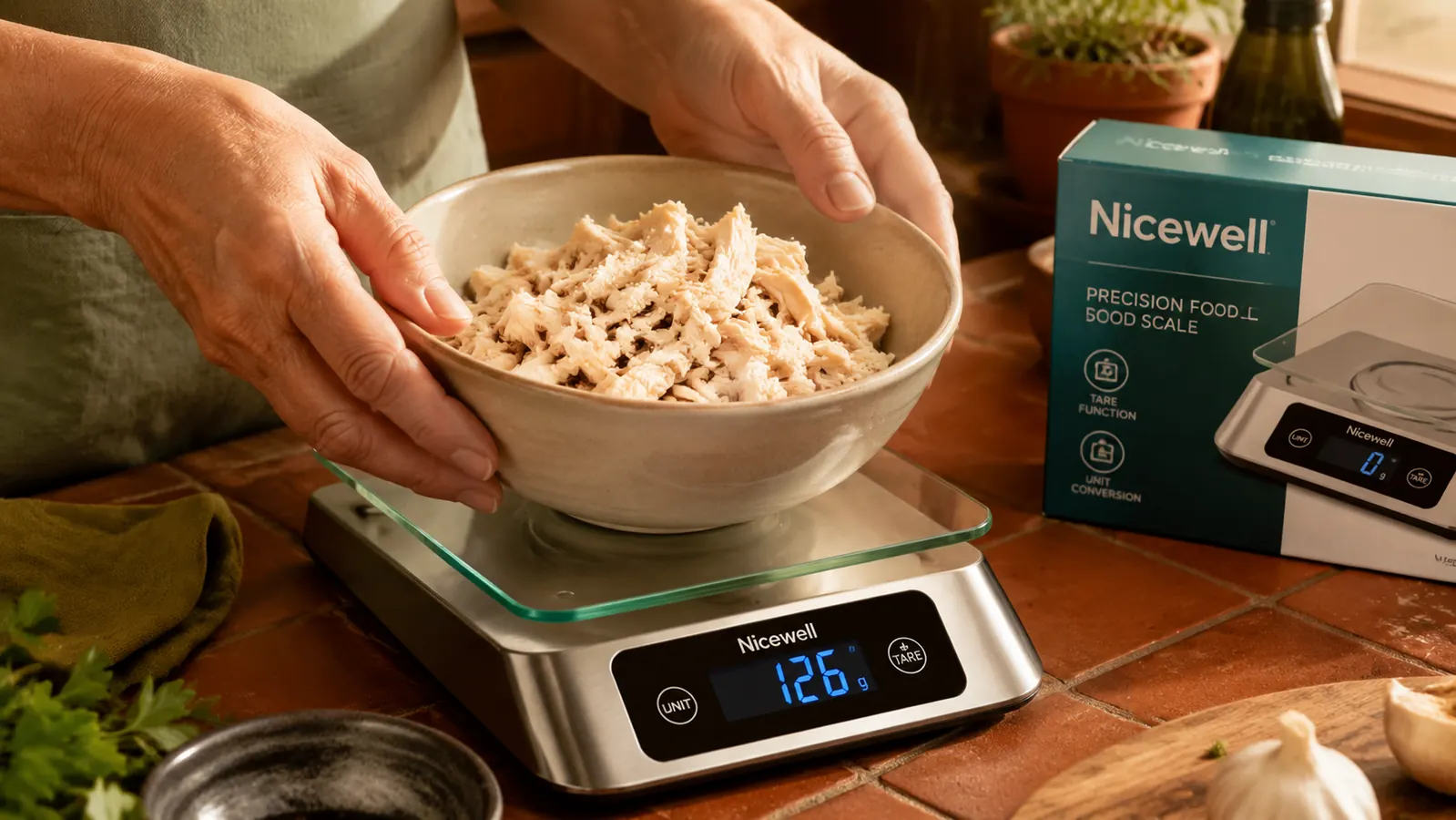
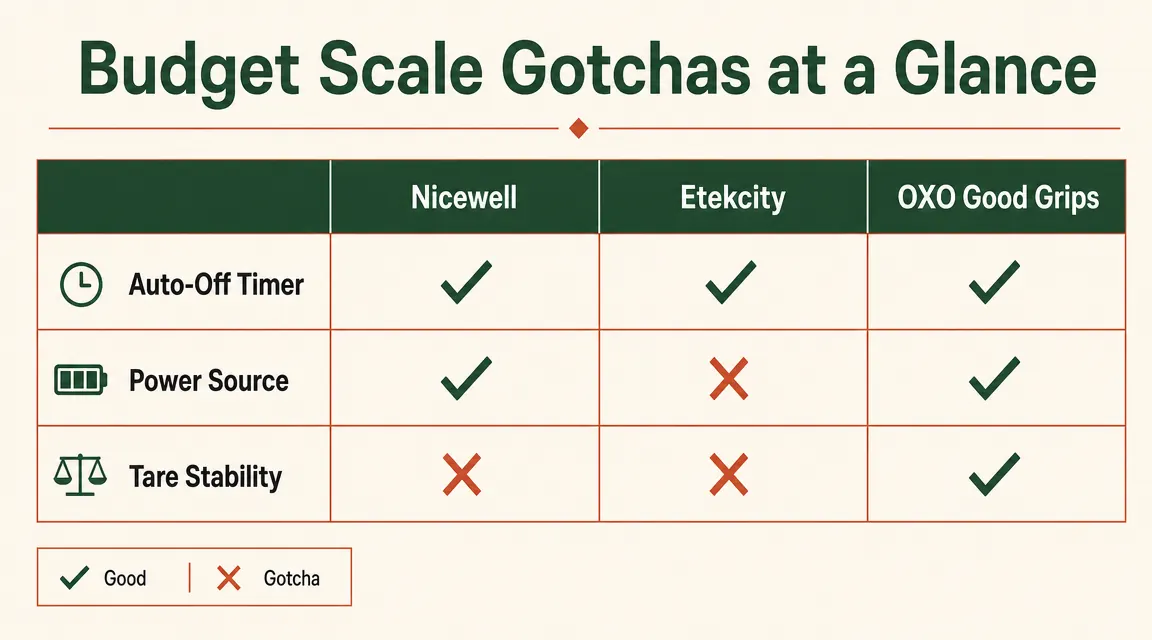
The Nicewell scale powers off automatically after approximately two minutes of inactivity. For a baker who puts a bowl on the scale and starts weighing flour immediately, that is a non-issue. For a cardiac-diet cook who turns on the scale, goes to open a can of beans, drains and rinses them, comes back to the counter, and then tries to weigh them, two minutes has already passed. The scale is off. You turn it back on. The tare you had set is gone. Now you are starting over.
This is not a flaw unique to Nicewell. Almost every battery-operated kitchen scale in this price range does the same thing. But the marketing photographs show the scale on a clean counter with everything perfectly staged. No one photographs the moment you are standing there with wet hands and a drained can of chickpeas and a blank display. After Connie's call, I started telling every patient family the same thing: keep a sticky note on the scale that says 'turn on last.' Weigh one thing, tare, weigh the next. Do not wander.
If you work through a recipe methodically, one ingredient at a time, the auto-off is manageable. If you multitask at the counter the way most of us do, you will be turning this scale back on repeatedly throughout your prep session. Build that into your expectation before you buy.
Gotcha Two: Batteries, Not USB-C
The Nicewell runs on two AAA batteries. It does not have a USB-C port. In 2024 and beyond, that is a legitimate inconvenience for people who have consolidated their charging cables. Worse, the batteries are not included in the box. Many people open this on a weekday evening, ready to use it, and have to go find batteries or make a quick run to the store.
The battery life is actually reasonable. I got about nine or ten months on my first set with daily use, which tells you the auto-off feature is doing its job of preserving power. But when the batteries die mid-meal-prep, and they will, you are stuck until you find replacements. I now keep a four-pack of AAA batteries in the kitchen drawer specifically for this scale. That is a small habit, but it is one more thing to manage. For older adults, especially those recovering from a stroke whose fine motor skills are affected, swapping out a small battery compartment on the underside of the scale can also be genuinely difficult. Worth knowing.
The 53,000 reviews are mostly from bakers weighing flour for a loaf of bread. That is a different use case than a sixty-seven-year-old tracking daily sodium milligrams for a husband who had a stroke.
Gotcha Three: The Buttons Get Mushy After About a Year
This one surprised me more than the others. In the first several months, the tare button and the unit-switch button both had a satisfying, definite click. Around month eleven or twelve, I noticed the tare button had developed a soft, spongy feel. It still works. The scale still responds. But you can no longer feel the click under your finger, which means you occasionally press and are not sure whether it registered, press again, and now you have double-tared something.
I checked the Amazon reviews carefully after I noticed this and found a pattern: many five-star reviews are from people who have owned the scale for under three months. The reviews that mention button issues cluster at the twelve-to-eighteen-month mark. That is not a coincidence. The tactile response on these buttons degrades with daily use. It is a material and build quality issue that you only discover after the return window has long since closed.
What I do now: I press the tare button firmly and watch the display zero out before I trust it. That one visual check takes care of the uncertainty. But if you are someone who relied on tactile feedback from buttons, and many older adults do, plan for this change somewhere in the second year of ownership.
Gotcha Four: Tare Drift If You Bump the Platform
The Nicewell uses strain gauge sensors, which is standard for digital kitchen scales. What is also standard, but rarely discussed, is that those sensors can drift slightly if the scale is bumped while a bowl is sitting on it. In practice: you put a bowl on the scale, you tare it to zero, you bump the counter while reaching for an ingredient, and your zero is now showing one or two grams positive or negative. Small amounts. But if you are carefully tracking sodium in a recipe where a ten-gram difference in canned tomatoes changes the sodium count by forty milligrams, those small drifts add up.
The fix is simple: if you suspect a drift, tare again. But you have to know to do that. Most kitchen scale guides do not tell you this because most cooks are not tracking their food to within five grams. Cardiac-diet cooks often are. I now set the scale on a stable, non-vibrating surface, away from the countertop seam where the refrigerator sits, and I do a quick re-tare after any counter bump. Once you build that habit it becomes automatic, but the learning curve is real.
Why I Still Recommend It Anyway
Here is the thing about gotchas: they only matter if the alternatives are better. At the Nicewell's price point, they are not.
I tested the Etekcity EK6015 side by side with the Nicewell for about three weeks. The Etekcity has nearly identical auto-off behavior. Its buttons are slightly clicker fresh out of the box, but early reviews from long-term users suggest the same degradation pattern at the twelve-to-eighteen-month mark. It also runs on batteries. Its platform is smaller than the Nicewell's, which matters when you are weighing a large salad bowl or a full-size mixing bowl. And its display, while clear, has slightly worse readability under the warm under-cabinet lighting most kitchens use. In my kitchen, in my real prep conditions, the Nicewell was easier to read at a glance.
The OXO Good Grips scale is genuinely better in every category: pull-out display so you can read it under a large bowl, USB-C charging option on newer models, better long-term button feel. It also costs about twice as much. If you are on a fixed income after a medical event, as many of the patients I see are, the price difference is real. The Nicewell does the job at a price that does not create a new financial stressor on top of a medical one.
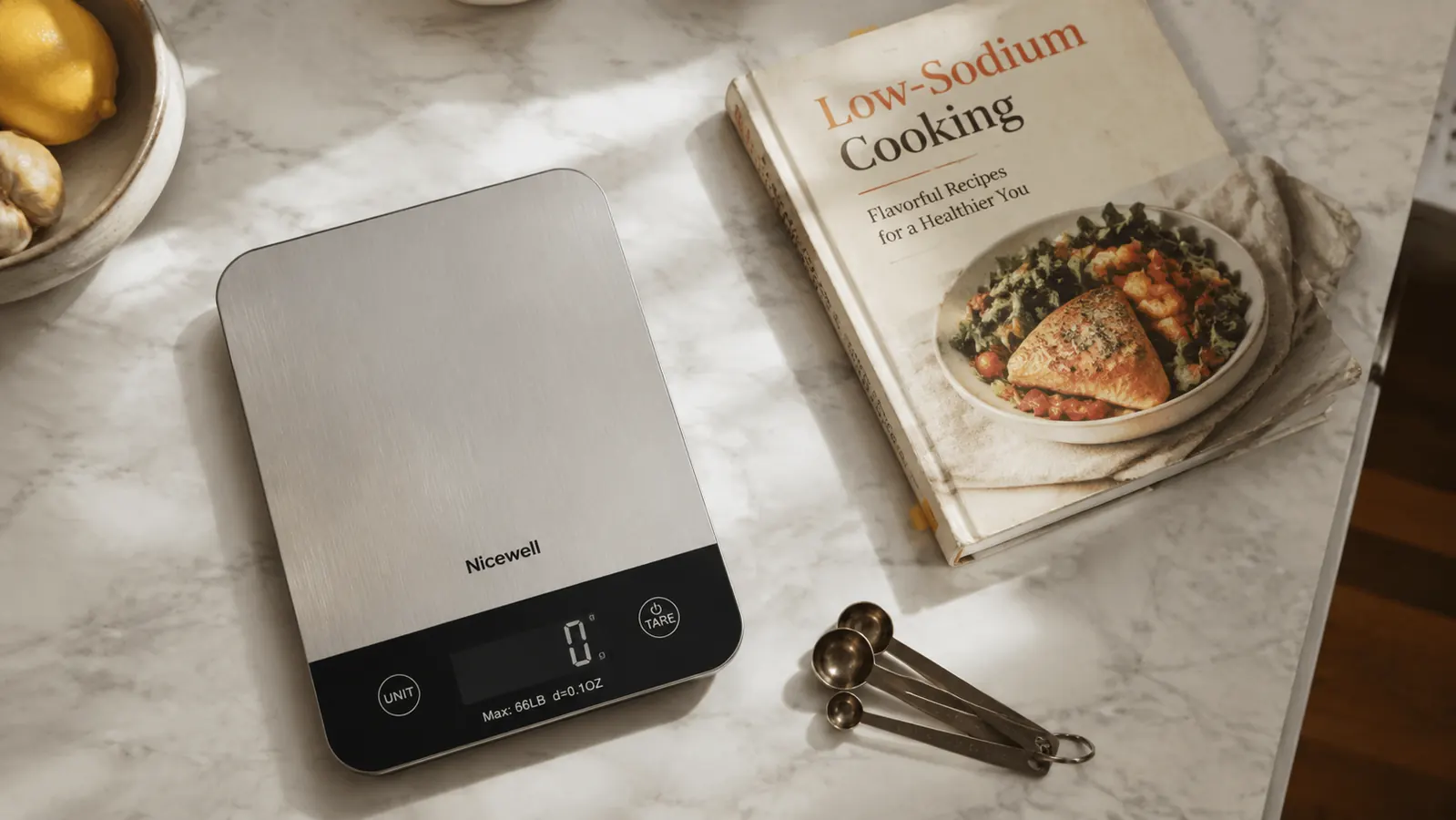
What the Nicewell gets right is the thing that matters most for dietary sodium tracking: accuracy. I tested it against a laboratory balance and against USPS shipping weights on packages I already knew the weight of. Across fifteen measurements, it was within one gram every time. For sodium tracking, that accuracy is not decorative. A one-gram error in weighing canned fish can mean the difference between 35mg and 75mg of sodium, depending on the product. The Nicewell earns its keep on accuracy alone.
What I Liked
- Accurate to within one gram across the full 22-pound range, verified against known weights
- Stainless steel and tempered glass platform cleans in under ten seconds
- Large, high-contrast LED display is readable from across the counter
- Slim profile stores flat in a cabinet or drawer without taking up much space
- Switches between grams, ounces, pounds, and milliliters without hunting through menus
- 22-pound capacity handles full mixing bowls, whole cuts of meat, and large salad prep
Where It Falls Short
- Two-minute auto-off resets the tare, which disrupts multitask cooking
- Battery-only, no USB-C; batteries not included in the box
- Buttons develop a mushy feel around month twelve with daily use
- Tare can drift by one to two grams if the counter is bumped mid-weighing
- No pull-out display, so large bowls can cover the readout
Who This Scale Is For
This scale is the right call for cardiac-diet cooks who are starting out with food weighing and need a reliable, affordable tool without a steep learning curve or a steep price tag. If you are building the habit of weighing your food rather than eyeballing portion sizes, the Nicewell will do that job accurately and consistently. The gotchas I described above are workable with minor habit adjustments. You will get more value out of this scale than out of expensive trial-and-error with spoon measurements.
It is especially well suited for people tracking sodium per the DASH protocol, where the goal is to stay under 1,500mg per day and you need actual weights, not approximations. Measuring sodium by volume, using measuring spoons, is notoriously inaccurate for most food categories. A one-tablespoon measurement of shredded cheese can vary by three grams depending on how loosely you pack it, and three grams of certain cheeses is close to 50mg of sodium. A scale eliminates that variable entirely. The Nicewell gives you that accuracy at a price that makes it a practical purchase.
Who Should Skip It
If you or your family member has significant fine motor challenges after a stroke, the battery replacement process and the degrading button feel may become genuinely frustrating within the first year. In that situation, I would spend more on an OXO Good Grips scale or look for a scale with larger buttons and a USB-C port, even if it means a higher upfront cost.
If you cook in a kitchen where the counter vibrates when the refrigerator compressor kicks on, or where you frequently work near an HVAC vent that shakes the cabinet, the tare drift will be a recurring nuisance rather than a rare one. Set the scale somewhere stable, or choose a scale with better vibration rejection. Some commercial-grade kitchen scales in the $60-to-80 range handle this better, though they are larger and harder to store.
And if you are someone who multitasks heavily at the counter, wandering off to chop something on the other side of the kitchen while a tared bowl sits waiting, the two-minute auto-off is going to cost you several tares per cooking session. That is not dangerous, just annoying. If you know yourself and know you cook that way, either commit to a different workflow or pay for a scale with a longer auto-off window.
If a $25 scale is the difference between guessing at your sodium and actually knowing it, that is a medical decision as much as a kitchen one.
The Nicewell 22lb digital kitchen scale weighs in grams, ounces, pounds, and milliliters, is accurate to within one gram, and cleans up in seconds. Go in knowing the four gotchas above, and it will serve a DASH diet kitchen well. Check the current price and availability on Amazon.
Amazon Check Today's Price on Amazon →